
HBO’s Industry has captivated audiences with its unflinching portrayal of cutthroat investment banking, raising questions about how much of the show’s high-pressure world reflects actual experience. The answer lies in the backgrounds of creators Konrad Kay and Mickey Down, two former bankers who transformed their disillusionment with finance into one of television’s most critically acclaimed dramas.
[my_movie_db id=90812 type=tvshow]
From Trading Floors to Television Scripts
Kay and Down didn’t plan to become investment bankers. Both attended Oxford University, Kay studying English literature and Down focusing on theology, where they collaborated on film criticism for their school newspaper. However, the 2008 financial crisis paradoxically made banking the dominant career path for their graduating class, as campus recruiters offered what seemed like the only stable option in an uncertain economy.
“No one we knew had any interest in those fields before attending Oxford,” Down explained in an interview with CBR. “Then suddenly, it was all about internships, consulting, banking… These paths, which had previously been foreign to us, became the most significant options”.
Down left his banking position after approximately one year, while Kay persisted at Morgan Stanley for roughly three years before being made redundant, an outcome he later called “the best thing that ever happened to me”. Kay’s termination meeting would later inspire actual scenes in the series, with his boss delivering the news in a brutally matter-of-fact manner that perfectly encapsulates the show’s tone.
The Authenticity Behind Pierpoint & Co
While Industry isn’t based on a specific true story, nearly every detail draws from Kay and Down’s lived experiences. Down actually worked in the exact department depicted for the character Gus during the show’s opening episodes, bringing intimate knowledge of the nocturnal rhythms of mergers and acquisitions work.
“Me and Mickey were adamant that we wanted to get 100 percent of everything right that we could texturally about the world,” Kay told Radio Times. This obsessive commitment to authenticity extends beyond dialogue to the visual design of office spaces, the cadence of workplace conversations, and even the specific anxieties that plague junior bankers.
The fictional Pierpoint & Co. represents an amalgamation of prestigious London financial institutions rather than a direct analog to any single bank. Kay confirmed that finance professionals watching the show would recognize it as “slightly sensationalized, a little bit heightened, but the essence of the world is almost totally correct”.
The show’s realism reportedly unsettled banking executives, with the CEO of Morgan Stanley allegedly calling the global head of HR demanding they “get this off the air” after discovering one of their former employees had created it.
The Creative Journey to HBO
The path from banking to television wasn’t immediate. After leaving finance, Kay and Down spent years writing scripts, producing plays, and creating low-budget short films in London. “We had a mindset, especially at the beginning, that we had to say yes to everything, develop any idea, and accept any job,” Kay recalled.
Their breakthrough came while working on another project for production company Bad Wolf. When their boss learned about their banking backgrounds, she mentioned wanting to develop a show about the finance industry. Kay and Down pitched HBO, dusting off an old spec script and burning through approximately 70 drafts of the opening episode before receiving a commission for two episodes and a detailed series roadmap.
“We didn’t know what we were doing,” Kay admitted about the first season. “What you saw in seasons one and two were two guys building the plane as we flew it”.
Blending Memory With Modern Finance
The creators deliberately merged their memories from the early 2010s with contemporary updates to reflect how investment banking has evolved. This temporal blending allows Industry to feel both nostalgic to former bankers and relevant to current finance professionals.
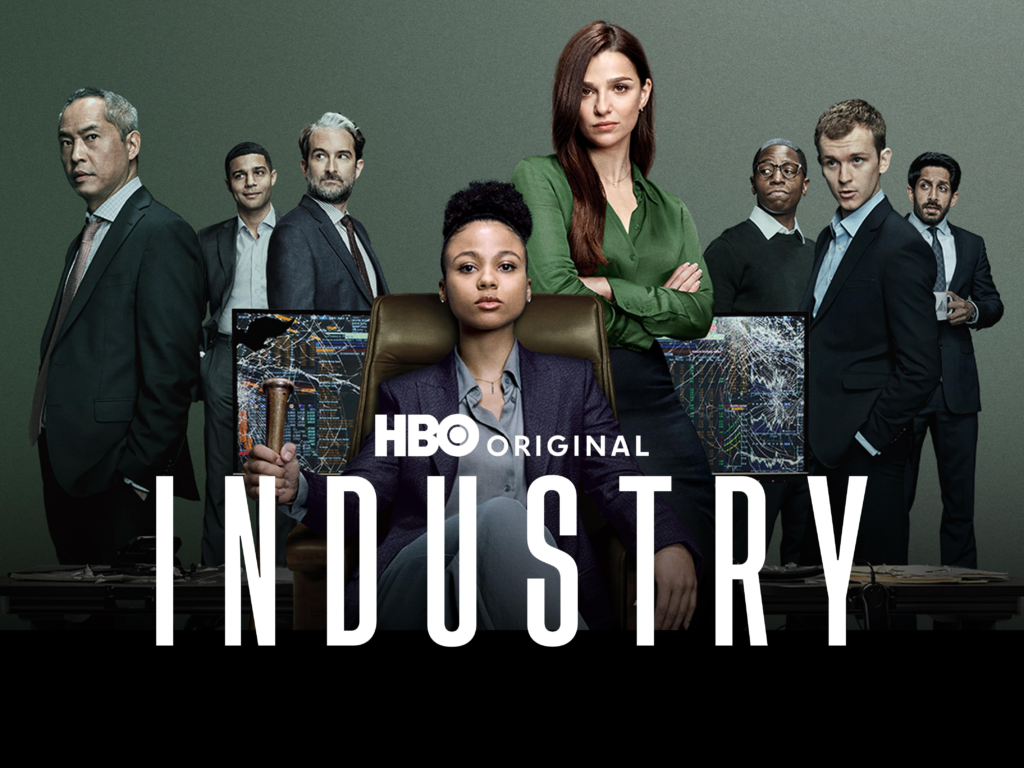
The show’s casting philosophy reinforced this authenticity. “We were trying to do this super, hyper-realistic look at a trading floor, and we wanted the graduates to look like children,” Kay explained. By building a massive trading floor set and casting relatively unknown actors, the production team recreated the overwhelming sensation Kay and Down experienced when first entering the banking world.
Cultural Shifts in Finance Careers
Down’s brother-in-law attended Oxford five years after the creators graduated and noted a dramatic shift: “No one was going into finance, consulting, or law”. While some students still pursued these traditional paths, the trend had pivoted toward startups and technology ventures.
This generational change adds poignancy to Industry‘s narrative, positioning it as both a contemporary drama and a period piece documenting a specific moment when investment banking dominated elite university career trajectories.
Industry season 4 premiered on January 11, 2026, continuing to explore the personal and professional lives of young bankers navigating an industry that Kay and Down understand from the inside out. Their journey from reluctant bankers to acclaimed showrunners proves that sometimes the best creative material comes from careers you never intended to have.
Check out It’s Netflix Nerd for our latest reviews, ending explanations, and recommendations.