

Character: Jonathan Byers
Portrayed by: Charlie Heaton
Seasons: 1-5 (Main Cast)
First Appearance: Season 1, Episode 1 (“The Vanishing of Will Byers”)
Key Traits: Protectiveness, Artistic Vision, Self-Sacrifice, Working-Class Resilience, Quiet Strength
Role: The Photographer, Family Caretaker, Reluctant Fighter, Artist
Signature: Camera, The Smiths, choosing family over everything
Jonathan Byers spent five seasons being everyone’s second choice.
That’s harsh, but it’s true. And after covering Stranger Things since 2016, watching Charlie Heaton bring this character to life with quiet intensity and understated pain, I need to talk about why Jonathan’s journey matters—even though the show itself sometimes seemed to forget he was there.
Jonathan started as the outsider with a camera. The poor kid. The weirdo who took creepy photos. The brother so devoted to finding Will that he’d burn down the world to save him.
He ended as… still kind of the outsider. Still poor. Still defined primarily by his relationships to other people rather than his own identity.
But here’s the thing: Jonathan’s arc isn’t about becoming someone new. It’s about finally giving himself permission to want something for himself instead of always sacrificing for everyone else.
That journey—learning that self-preservation isn’t selfishness, that you can’t pour from an empty cup, that choosing yourself occasionally doesn’t make you a bad person—is painfully real for anyone who’s ever been their family’s caretaker, the responsible one, the person everyone leans on until you’re crushed under the weight.
Let me break down Jonathan Byers’ complete journey from parentified teenager to the artist who finally chose his own path—even if it took nine years to get there.
The Parentified Teenager (Season 1)
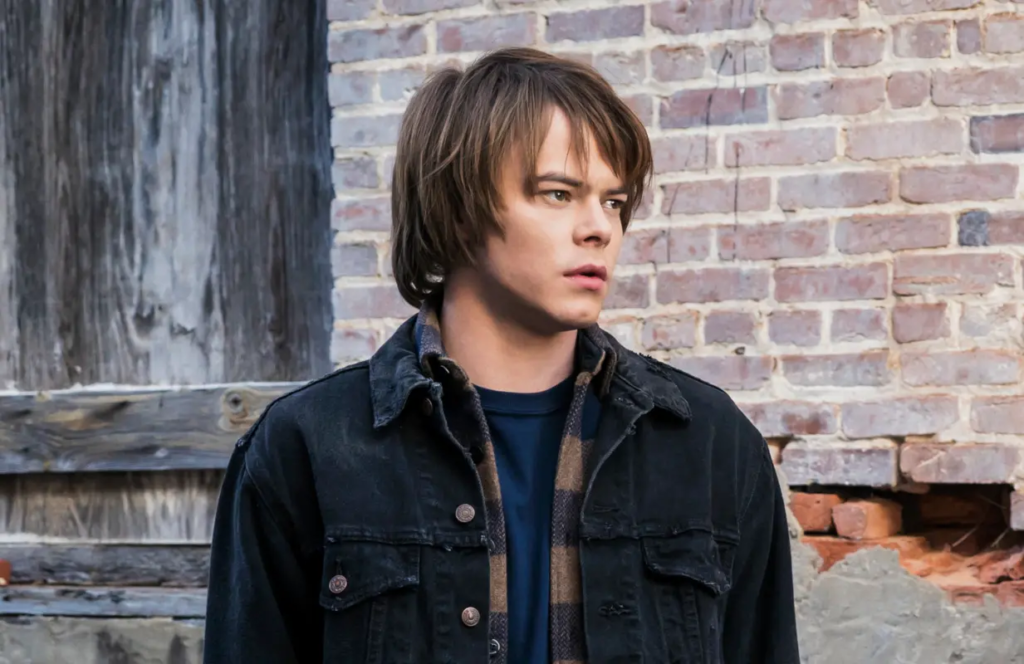
Jonathan doesn’t get to be a kid. That’s established immediately.
The Responsible Son
Season 1 opens with Jonathan’s reality: single mom working multiple jobs, younger brother who needs looking after, absent father who sends checks (sometimes) but no actual support.
Jonathan’s the man of the house by default. He makes Will breakfast. Drives him to school. Works after school to help with bills. Comes home to make dinner. Does homework late at night.
He’s seventeen and living like a thirty-five-year-old supporting a family.
That’s parentification—when children are forced into adult caregiving roles because actual adults can’t or won’t fulfill those responsibilities. It steals childhood. Creates anxiety. Makes you believe your worth equals your usefulness to others.
Jonathan’s entire identity is built on: I am needed, therefore I matter.
The Camera as Shield
Jonathan’s camera is his only personal interest. The one thing that’s his rather than obligation.
Photography lets him observe without participating. Capture moments without being in them. Create art that expresses what he can’t say aloud.
It’s also distance. The camera creates literal barrier between Jonathan and the world. He can watch, document, preserve—but he doesn’t have to engage.
That’s protective mechanism for someone who learned early that engaging fully means getting hurt.
Will’s Disappearance
When Will vanishes, Jonathan’s entire identity collapses. His purpose—protect Will, take care of Will, be the brother Will needs—fails catastrophically.
Watch Charlie Heaton’s performance in early Season 1. Jonathan’s barely holding together. The guilt, the fear, the desperate need to fix this because that’s what he does—he fixes things for his family.
The scene where Jonathan sees Will’s “body” at the morgue and breaks down? That’s not just grief. That’s failure. Jonathan’s one job was keeping Will safe, and he failed.
The Creepy Photo Incident
Jonathan takes photos of Nancy and Steve’s party from the woods. Including photos of Nancy undressing.
This is portrayed as creepy—because it is creepy. Violating someone’s privacy with a camera crosses serious boundaries.
But the show also uses it to reveal Jonathan’s isolation. He’s literally outside looking in. Watching normal teenagers do normal things from the shadows because he doesn’t know how to be part of that world.
Steve breaking Jonathan’s camera is positioned as justified anger. And it is. But it’s also destroying the one thing Jonathan has that’s purely his. The one outlet for his artistic vision.
That camera represented Jonathan’s identity outside “Will’s brother” and “Joyce’s son.” Smashing it was symbolic violence.
Partnership With Nancy
Jonathan and Nancy team up to investigate. Two outsiders—one by economics, one by choice—who see what others miss.
Their partnership works because neither needs the other to be different. Nancy doesn’t judge Jonathan’s poverty. Jonathan doesn’t judge Nancy’s privileged guilt.
They just work together effectively because shared trauma and shared purpose create bonds faster than romantic attraction ever could.
Fighting the Demogorgon
The trap they set for the demogorgon—Christmas lights, gasoline, desperate planning—shows Jonathan’s practical intelligence.
He’s not book-smart like Nancy. He’s survival-smart. Knows how to improvise weapons. Knows how to fight dirty when necessary.
That working-class resilience—making do with what you have, fighting with whatever’s available—defines Jonathan’s approach to everything.
Guilt, Justice, and First Love (Season 2)
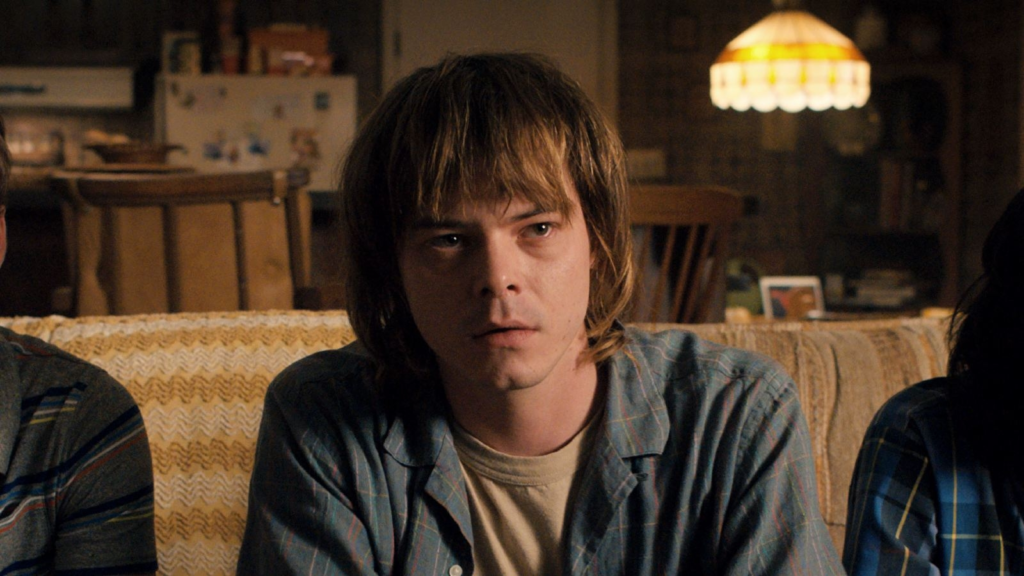
Season 2 has Jonathan supporting Joyce through Will’s possession while developing a real relationship with Nancy.
Will’s Possession
Will’s back but not back. The Mind Flayer’s inside him. Jonathan watches his brother suffer and can’t fix it.
This is Jonathan’s nightmare: Will needs protection and Jonathan’s powerless to provide it. All his caretaking instincts are useless against interdimensional possession.
The helplessness destroys him. Jonathan’s identity is “person who protects Will.” When he can’t do that, who is he?
Bob Newby’s Role
Bob Newby enters as Joyce’s boyfriend. He’s kind, supportive, everything a stepfather should be.
For Jonathan, Bob’s complicated. On one hand, Bob genuinely helps. He’s there for Joyce. He’s good to Will. He’s trying.
On the other hand, Bob represents Jonathan’s potential obsolescence. If Joyce has a partner, if Will has a father figure, does the family still need Jonathan in his caretaking role?
That’s threatening for someone whose entire identity is built on being needed.
Bob’s death is tragic for many reasons, but for Jonathan it’s also confirmation: see? You can’t relax. You can’t let someone else handle things. The moment you stop being vigilant, people die.
The Barb Justice Mission
Jonathan and Nancy’s mission to expose Hawkins Lab is Jonathan fully supporting Nancy’s needs.
He’s risking everything—government retaliation, family safety, his future—to help Nancy get justice for Barb. Because that’s what Jonathan does. He sacrifices his needs for people he cares about.
Nancy needs this. Therefore Jonathan will make it happen. His own concerns are secondary.
Falling for Nancy
Jonathan and Nancy’s relationship develops naturally through partnership. Shared danger. Shared purpose. Mutual respect.
But there’s also class tension underneath. Nancy’s from comfortable money. Jonathan’s working-class. She can take risks he can’t afford. She has safety nets he doesn’t.
Jonathan’s hyperaware of that gap. It manifests as defensiveness sometimes. As feeling “less than” even when Nancy never treats him that way.
That insecurity—feeling like you don’t deserve good things because you’re poor—runs deep. Jonathan’s not just falling for Nancy. He’s terrified he’s not good enough for her.
The Snow Ball
Season 2 ends with Jonathan working the Snow Ball as photographer. He’s literally behind the camera watching everyone else have fun.
That’s perfect metaphor for his life: present but not participating. Documenting joy without experiencing it. Essential but invisible.
Nancy approaches him. They dance. For one moment, Jonathan’s not behind the camera—he’s in the moment.
But even that moment is short. Because Jonathan’s got responsibilities. Always responsibilities.
The Hawkins Post and Class Tension (Season 3)
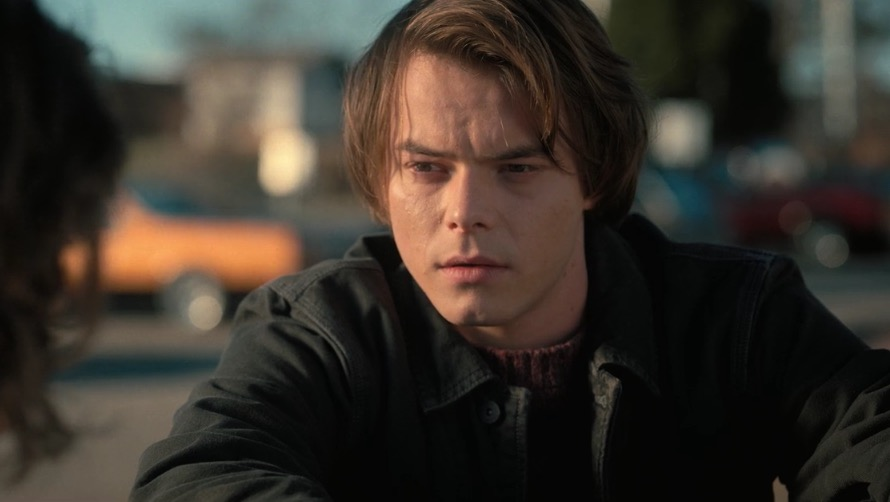
Season 3 has Jonathan and Nancy interning at the Hawkins Post. Jonathan’s excited—this is career opportunity he desperately needs.
Working-Class Survival vs. Middle-Class Principles
The core conflict between Jonathan and Nancy in Season 3 is class tension disguised as personal disagreement.
Nancy wants to pursue the rat story despite their bosses dismissing it. She’s right that something’s wrong. Right to investigate.
But Nancy can afford to make waves. Her family’s financially secure. Getting fired would be embarrassing, not catastrophic.
Jonathan cannot afford to lose this job. His family needs his income. If he gets blackballed from journalism before even starting, what then?
This is the impossible position working-class people face constantly: Do the right thing and risk economic ruin, or compromise your values to survive?
Jonathan chooses survival. Tells Nancy to back off. That looks like cowardice or complicity, but it’s pragmatism born from necessity.
When Nancy’s Right
Of course Nancy’s right. There is a story. There is danger. And Jonathan knows it.
But being right doesn’t pay bills. Being right doesn’t feed families. Being right doesn’t protect you from vindictive bosses who can destroy your career before it starts.
Jonathan’s frustration isn’t about Nancy being wrong. It’s about Nancy not understanding that moral courage is expensive luxury when you’re poor.
The Apology
Jonathan apologizes for not supporting Nancy. Acknowledges she was right.
But the underlying tension doesn’t resolve: Jonathan will always have to make calculations Nancy never faces. His survival requires compromises she’ll never understand from inside her economic security.
That’s not anyone’s fault. It’s structural inequality making relationships between different classes perpetually complicated.
Fighting the Mind Flayer
Despite their tension, Jonathan and Nancy fight together. They burn down the Hawkins Post. Fight possessed Billy. Face the Mind Flayer at Starcourt.
Jonathan’s still there. Still protecting Nancy. Still fighting despite being exhausted and scared and carrying too much weight.
Because that’s what Jonathan does. Shows up. Fights. Protects people even when he’s running on empty.
California, Distance, and Feeling Inadequate (Season 4)
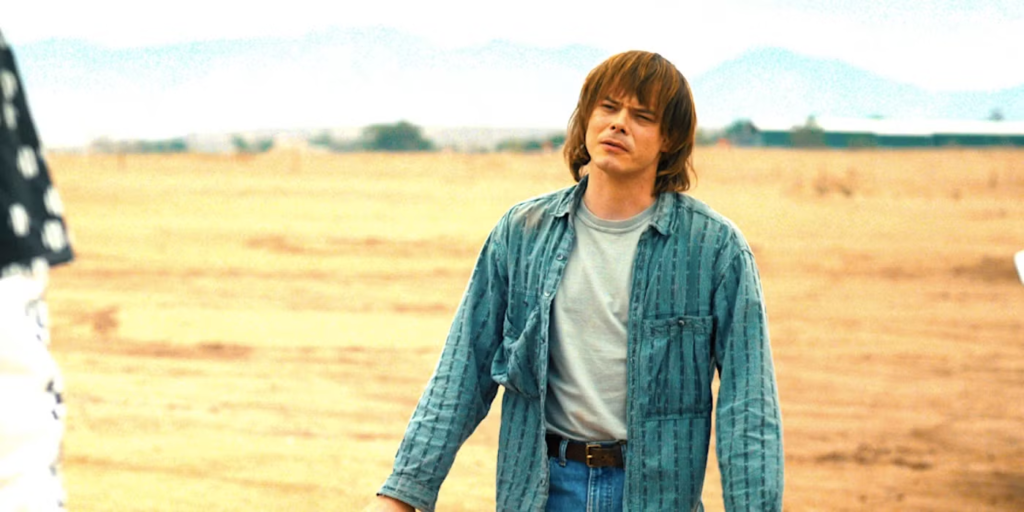
Season 4 splits Jonathan from Nancy geographically. The Byers move to California. Jonathan’s suddenly in long-distance relationship while dealing with new city, new school, new stresses.
The Argyle Friendship
Jonathan befriends Argyle—stoner pizza delivery guy with perpetually chill energy.
This friendship is huge for Jonathan. Argyle’s the first friend Jonathan’s had who’s just… a friend. Not someone he’s protecting. Not someone connected to Upside Down trauma. Just a regular guy who thinks Jonathan’s cool and wants to hang out.
Argyle represents something Jonathan’s never had: normalcy. Friendship without obligation or crisis bonding.
The Weed Problem
Jonathan starts smoking weed regularly in California. Like, a lot.
The show plays this partly for comedy. Jonathan and Argyle’s stoner energy provides comic relief.
But there’s darker implication: Jonathan’s self-medicating. Dealing with anxiety and pressure and responsibility through substance use.
He’s overwhelmed. The move disrupted everything. Will’s struggling. Joyce is distant pursuing Hopper theories. El’s losing powers and dealing with bullying. The family Jonathan’s supposed to hold together is fracturing.
So he smokes. Because that makes things manageable temporarily. Because he doesn’t have better coping mechanisms. Because nobody’s taking care of him so he’s taking care of himself the only way he knows.
Missing the Visit
Jonathan’s supposed to visit Nancy during spring break. He doesn’t come.
He wants to. But he doesn’t have money for the trip. And he can’t admit that to Nancy without feeling like a failure.
So he makes excuses. Avoids the conversation. Lets Nancy think he doesn’t care when actually he cares so much that admitting he can’t afford the trip feels humiliating.
This is poverty’s psychological damage: The shame makes you isolate. Makes you lie. Makes you push away people you love because admitting you need help feels like admitting you’re worthless.
The “You’re Pulling Away” Fight
When they finally talk, Nancy accuses Jonathan of pulling away. She’s not wrong.
Jonathan is pulling away. Because he doesn’t know how to be the boyfriend she deserves. Because California changed him. Because he’s realizing they want different futures.
Nancy wants journalism career. Ambition. Purpose.
Jonathan wants… he doesn’t even know. He’s never had the luxury of wanting things for himself. He wants to want things. But years of self-sacrifice left him hollow.
The College Application Secret
Jonathan hasn’t told Nancy he applied to community college in California, not the school near her. He’s choosing to stay close to family rather than follow her.
It’s not about loving her less. It’s about: Will needs him. Joyce needs him. El needs him. How can he abandon them to pursue his own desires?
But he can’t articulate that to Nancy without sounding like he’s choosing them over her. Which he is. Because that’s what Jonathan always does—chooses family obligation over personal happiness.
The Road Trip to Save El
When El’s arrested, Jonathan immediately mobilizes. Argyle, Mike, Will—they’re driving cross-country to save her.
This is Jonathan in crisis mode. The mode he’s most comfortable in. When emergency hits, Jonathan knows exactly who he is: the protector. The problem-solver. The person who shows up.
It’s the calm periods where he falls apart. Because then he has to think about his own life, his own future, his own desires. And he has no idea who he is outside “person everyone relies on.”
Building the Makeshift Sensory Tank
Jonathan helps build the salt bath sensory deprivation tank so El can find Max psychically.
This shows Jonathan’s practical intelligence again. Give him a problem and limited resources, he’ll improvise solution. That’s survival skill. That’s working-class ingenuity.
He’s not brilliant like Dustin or Suzie. He’s just practical and resourceful and good at making do.
Finding Purpose Through Art (Season 5)
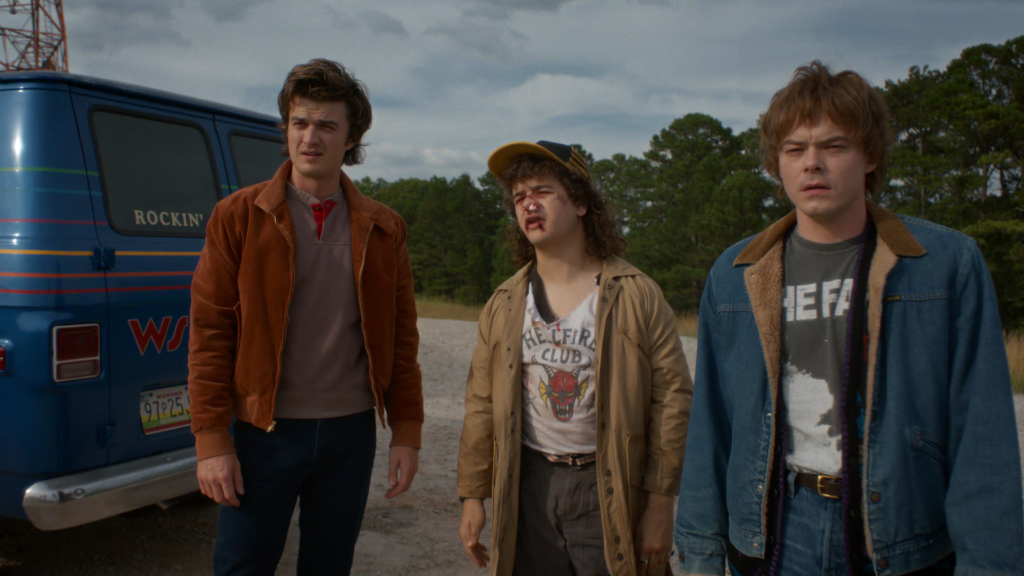
Season 5’s epilogue reveals Jonathan’s ultimate path: NYU film school, making political documentaries.
The Anti-Capitalist Film
Jonathan’s making The Consumer—anti-capitalist documentary examining American consumerism and class inequality.
This is perfect for Jonathan. He’s finally making art that matters to him. Art that speaks to his experiences. Art that processes his class resentment and economic anxiety through creative lens.
For the first time, Jonathan’s pursuing something for himself. Not to help family. Not to support girlfriend. Not to fulfill obligation.
Just because he wants to.
NYU vs. Staying with Family
Jonathan chose NYU—three thousand miles from California. That’s huge.
He left. He chose his education, his art, his future over being physically present for daily family caretaking.
That doesn’t mean he stopped caring. It means he finally accepted: he can’t sacrifice himself indefinitely. At some point, he has to live his own life.
What Nancy and Jonathan’s Ending Means
The show doesn’t explicitly show Nancy and Jonathan together or broken up in the epilogue. They’re geographically separated—Nancy in Hawkins at the Herald, Jonathan at NYU.
That ambiguity is probably intentional. Maybe they’re long-distance. Maybe they ended. Maybe they’re taking a break.
What matters is: Jonathan chose his path independent of Nancy. His decision about college wasn’t determined by their relationship. He chose what he needed.
For someone who spent his entire life making decisions based on others’ needs, that’s revolutionary.
The Camera as Career
Jonathan’s camera—the thing Steve broke in Season 1, the artistic outlet that was always secondary to survival—became his career.
Photography led to film. Film led to documentary. Documentary gave him voice to process his experiences and advocate for others facing similar struggles.
The tool he used for distance and observation became tool for engagement and activism.
That’s beautiful character arc: the defense mechanism becomes the purpose.
Jonathan’s Relationships: The Weight of Caring
Jonathan and Will: The Brother Who Carried Too Much
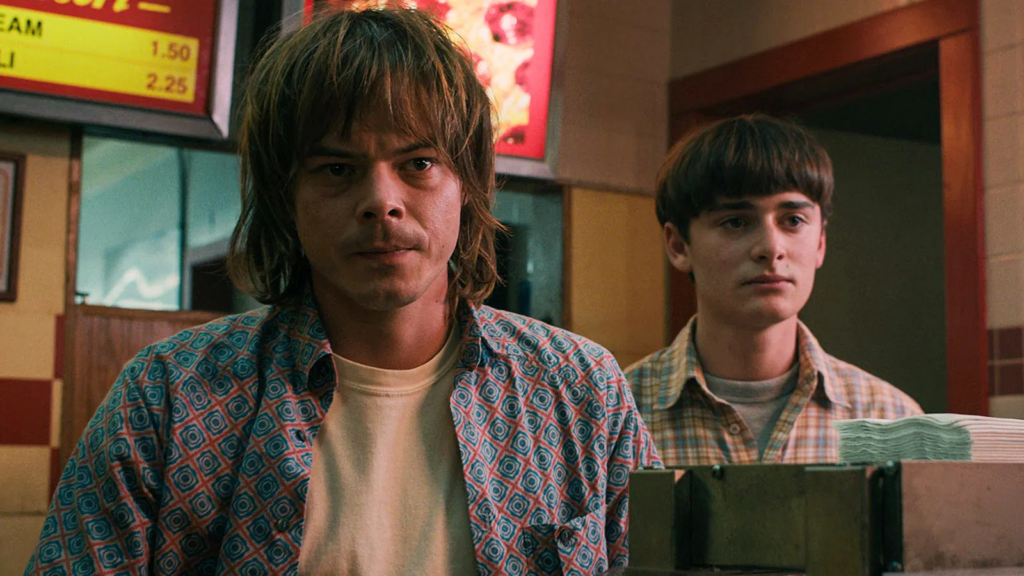
Jonathan’s relationship with Will is foundational to his character. He’s not just Will’s brother—he’s Will’s protector, surrogate father, primary emotional support.
That’s too much weight for a teenager to carry. But Jonathan carries it anyway because who else will?
Will’s disappearance, possession, sexuality struggles—Jonathan’s always there. Always supportive. Always putting Will’s needs first.
But that caretaking comes at cost. Jonathan never gets to just be a brother. He’s always performing parental role he shouldn’t have to perform.
By Season 5, Will’s more independent. Less needful of constant protection. That’s healthy for Will but destabilizing for Jonathan—if Will doesn’t need him as intensely, what’s Jonathan’s purpose?
Jonathan and Joyce: Parentified Child
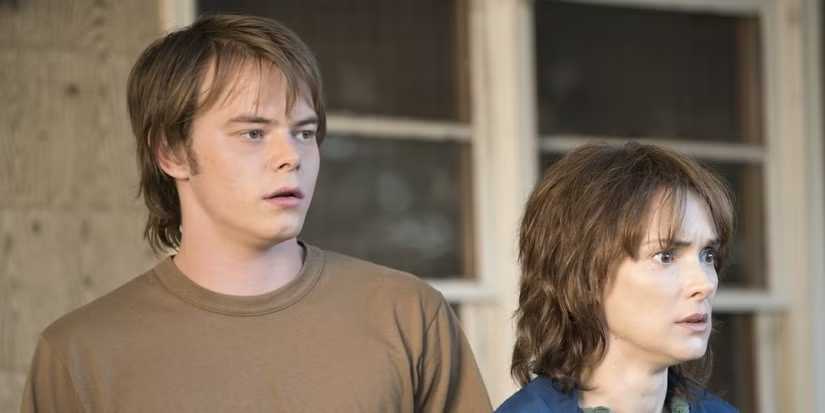
Joyce is a good mom who’s overwhelmed by impossible circumstances. She does her best.
But her best often requires Jonathan to step up. To be the responsible adult when she can’t be. To sacrifice his needs for family stability.
That’s parentification. And it damages children even when parents don’t mean to cause harm.
Jonathan loves Joyce. But he also resents her. Resents that he never got to be a kid. Resents carrying adult responsibilities before he was ready.
That resentment is buried deep. Jonathan would never voice it. But it’s there, manifesting as reluctance to leave, inability to prioritize himself, belief that his needs matter less than others’.
Jonathan and Nancy: Class Divide Love

Nancy and Jonathan’s relationship is genuine love complicated by structural inequality.
Nancy sees Jonathan clearly. Values his intelligence and integrity. Doesn’t judge his poverty.
But she also doesn’t fully understand how poverty shapes every decision Jonathan makes. How it creates anxiety Nancy never experiences. How it limits his choices in ways she can’t comprehend from inside her economic security.
Their relationship works when they’re united against external threat. Struggles when they’re navigating normal life where their class differences create friction.
That’s realistic. Love doesn’t conquer all. Sometimes love isn’t enough when material conditions create incompatible needs.
Jonathan and Argyle: First Real Friend
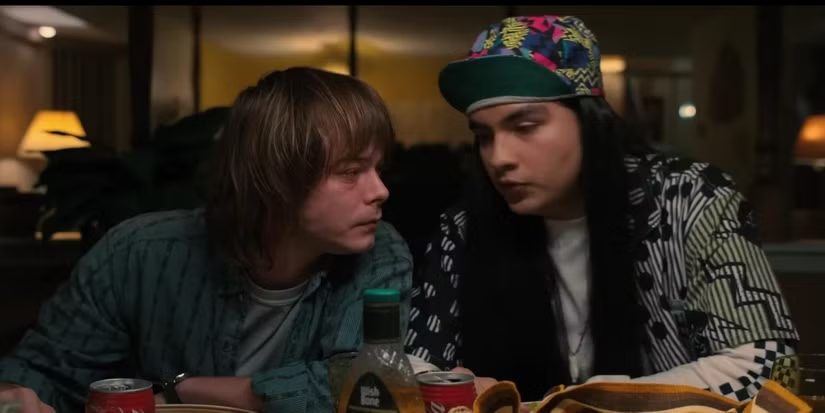
Argyle’s the first friend Jonathan makes on his own terms. Not trauma-bonded. Not obligation-based. Just genuine friendship.
Argyle thinks Jonathan’s cool. Wants to hang out. Doesn’t need anything from him except company.
That’s foreign to Jonathan. He’s so used to relationships where he’s needed that friendship without caretaking feels wrong initially.
But Argyle teaches Jonathan: you can just exist. You don’t have to earn friendship through usefulness. People can like you for who you are, not what you provide.
That’s revolutionary lesson for someone who learned his value equals his utility.
Jonathan and Bob: The Father Figure He Couldn’t Accept

Bob Newby genuinely tried to be good stepfather. He cared about Joyce. Was kind to Will. Tried to connect with Jonathan.
Jonathan couldn’t accept it. Couldn’t let Bob take some of the weight. Couldn’t trust anyone else to protect his family.
Bob’s death confirmed Jonathan’s worst belief: you can’t rely on anyone else. The moment you let someone else handle things, they die and you’re left holding everything again.
That’s trauma response. But it’s also self-fulfilling prophecy. Jonathan’s inability to accept help ensures he’s always alone with the burden.
Charlie Heaton’s Performance: Understated Pain
Let’s talk about what Charlie Heaton brought to Jonathan Byers.
The Quiet Intensity
Heaton’s performance is all quiet intensity. Jonathan rarely has big emotional moments. Instead, Heaton communicates through:
- Exhausted body language
- Perpetual tension in shoulders and jaw
- Eyes that are always slightly worried
- Voice that rarely rises but carries weight
That understated approach makes Jonathan feel real. He’s not performing emotions dramatically. He’s just tired person carrying too much.
The Camera Work
Heaton incorporated Jonathan’s photography into his physicality. The way he holds cameras. How he frames shots. The artist’s eye evaluating composition.
That specificity makes Jonathan’s artistry believable. He’s not just character with camera—he’s photographer with specific aesthetic vision.
Chemistry and Tension
Heaton’s chemistry with Natalie Dyer (they’ve dated since 2016) brought natural intimacy to Nancy and Jonathan’s relationship. The comfort between them feels earned, not acted.
His dynamic with Noah Schnapp (Will) convincingly portrayed protective older brother who’s also exhausted by that protection. The love is real but so is the weight.
The Weed Comedy and Drama
Season 4’s stoner Jonathan could’ve been pure comedy. Heaton played it with enough underlying sadness that you see the self-medication, not just the jokes.
Jonathan’s not getting high because it’s fun. He’s getting high because it’s the only thing that makes life manageable.
Heaton never loses that thread even in comedic scenes.
Beyond Stranger Things
Heaton’s career beyond Stranger Things (The New Mutants, various indie films) shows range. But Jonathan remains his defining role—the working-class kid carrying his family’s weight, sacrificing his own dreams until he finally gives himself permission to want something.
Why Jonathan Byers Matters
Jonathan represents experiences that don’t get portrayed enough:
Parentified Children
Jonathan’s parentification—being forced into adult caretaking role as child—is common in working-class families, single-parent households, and families with absent or addicted parents.
It creates adults who:
- Struggle to prioritize their own needs
- Feel guilty for wanting things for themselves
- Believe their worth equals their usefulness
- Have difficulty accepting help
- Carry overwhelming anxiety about letting people down
Jonathan’s arc validates those experiences while showing: you can heal. You can learn to want things for yourself. Self-preservation isn’t selfishness.
Working-Class Struggles
Jonathan’s constant economic anxiety is realistic for working-class teenagers:
- Needing job to help family
- Can’t afford college application fees or visits
- Makes decisions based on money, not desires
- Feels shame about poverty
- Carries stress parents can’t shield him from
That representation matters. Poverty isn’t just background detail—it shapes every choice Jonathan makes.
The Artist Who Almost Gave Up Art
Jonathan nearly abandoned photography. It seemed impractical. Self-indulgent. Not useful to family.
His ending—making art that processes his class experiences—validates: art matters. Creative expression isn’t luxury. It’s legitimate purpose.
For working-class kids who are told “practical career or nothing,” Jonathan’s journey says: you can be both practical and creative. Your art has value even if it doesn’t immediately generate income.
Caretaker Burnout
Jonathan’s exhaustion, his self-medication, his inability to want things for himself—that’s caretaker burnout.
When you’re responsible for others’ wellbeing from young age, you burn out. You lose sense of self. You don’t know who you are outside caretaking role.
Jonathan’s arc says: it’s okay to step back. It’s okay to prioritize yourself. You can’t help others if you’re destroyed by the weight of helping.
My Take After Nine Years
I’ve spent nearly a decade watching Jonathan Byers carry weight that would crush most people, sacrifice his needs reflexively, and slowly—painfully slowly—learn that he’s allowed to want things for himself.
And here’s what strikes me most:
Jonathan’s arc is the least flashy and most necessary.
He didn’t have dramatic redemption like Steve. Didn’t have superpowers like El. Didn’t have obvious hero moments like Nancy.
He just… showed up. Every day. Carried responsibilities he shouldn’t have to carry. Sacrificed his needs for others. Fought monsters while also fighting poverty, anxiety, and burnout.
That’s real heroism. Not the movie kind. The exhausting everyday kind that nobody notices because it’s not dramatic.
Jonathan’s ending—at NYU making anti-capitalist art, finally doing something for himself—isn’t triumphant victory. It’s quiet achievement of someone who finally gave himself permission to exist outside utility to others.
After nine years of parentification and self-sacrifice, Jonathan Byers became an artist. Chose education. Pursued purpose.
That’s not just character development. That’s healing.
And for every kid who’s been their family’s caretaker, who’s sacrificed their dreams for others’ survival, who’s forgotten how to want things for themselves—Jonathan’s journey says: you’re allowed. You’re allowed to choose yourself. You’re allowed to want.
That permission matters more than any superpower.
Jonathan Byers: Complete Journey Explained
From parentified teenager carrying his family’s weight to artist finally choosing his own path—Jonathan’s nine-year arc proves that the greatest courage is learning you’re allowed to want things for yourself.
The Actor Who Brought Jonathan to Life
[my_movie_db id=1448222 type=person]
About It’s Netflix Nerd
This deep character analysis was brought to you by It’s Netflix Nerd, where I’ve been obsessing over Stranger Things since Jonathan first picked up that camera. I break down every character arc, analyze every thematic choice, and help you understand why these stories matter beyond the monsters and special effects.
Want more Stranger Things character breakdowns? Check out It’s Netflix Nerd for complete analyses built on years of actually caring about these characters’ journeys.