

Character: Robin Buckley
Portrayed by: Maya Hawke
Seasons: 3-5 (Main Cast)
First Appearance: Season 3, Episode 1 (“Suzie, Do You Copy?”)
Key Traits: Intelligence, Sharp Wit, Linguistic Ability, Authenticity, Loyal Friendship
Role: The Decoder, Steve’s Platonic Soulmate, LGBTQ+ Representation, Truth-Teller
Signature: Sarcasm, language skills,band geek energy, the coming out scene
Robin Buckley entered Stranger Things in Season 3 and immediately became essential.
Not because she had superpowers. Not because she was romantically involved with anyone. But because Maya Hawke created a character so sharp, so funny, so unapologetically herself that you couldn’t imagine the show without her after one season.
Robin represents something rare in television: a queer woman whose storyline doesn’t center on tragedy, whose coming out is met with immediate acceptance, whose most important relationship is a platonic friendship with a straight man, and whose intelligence and wit make her indispensable without ever being reduced to “the smart one” stereotype.
I’ve covered Stranger Things since 2016, and Robin’s introduction in Season 3 changed the show’s dynamic fundamentally. She gave Steve a platonic soulmate. She gave the party someone who could crack Russian codes and decode conspiracies. She gave queer viewers representation that felt joyful instead of painful.
Let me break down why Robin Buckley’s journey from sarcastic ice cream scooper to confident college student choosing herself is one of Stranger Things’ most important additions—even though she only got three seasons to make that impact.
The Scoops Ahoy Introduction (Season 3)
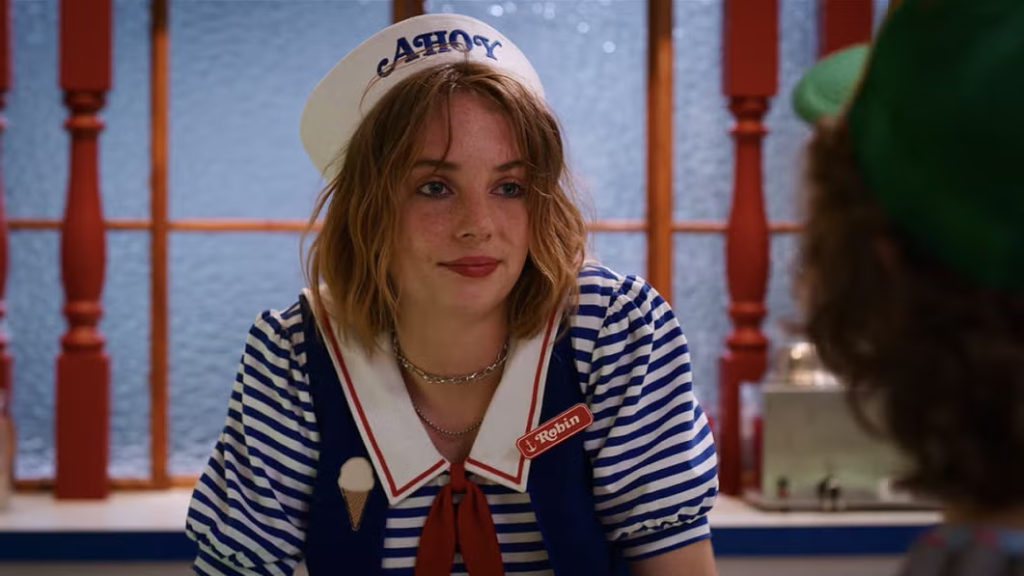
Robin enters working at Scoops Ahoy ice cream parlor in Starcourt Mall alongside Steve Harrington. The dynamic is immediately adversarial.
The You Suck Board
Robin keeps a running tally of Steve’s failed flirting attempts with customers. Every strikeout gets a mark on the “You Rule / You Suck” board.
Steve sucks. A lot.
This establishes Robin’s character immediately: she’s observant, sarcastic, doesn’t worship Steve’s former King Steve status, and finds joy in his romantic failures.
But it’s not mean-spirited. There’s affection underneath the mockery. Robin’s invested enough in Steve’s love life to keep detailed count. She cares even while pretending not to.
The Band Geek vs. The Jock
Robin makes clear she knows Steve from high school. She remembers King Steve. Remembers his friends being cruel. Remembers feeling invisible to people like him.
She was band geek. He was popular jock. They existed in completely different social ecosystems despite attending the same school.
That history creates tension. Robin doesn’t trust that Steve’s actually changed. She assumes the “good guy Steve” thing is performance. That underneath he’s still the jerk who ignored people like her.
This is realistic social dynamic: high school hierarchies don’t dissolve just because you graduate. The resentment lingers. The person who was cruel (or complicit in cruelty through silence) doesn’t get immediate forgiveness just because they’re working a minimum wage job now.
Cracking the Russian Code
Robin’s linguistic ability is established when she cracks the Russian transmission Dustin intercepted.
She speaks French, Italian, Spanish, and apparently enough Russian to decode military communications. She’s not just smart—she’s specifically linguistically gifted in ways that make her invaluable.
This matters for representation: Robin’s intelligence isn’t generic “smart girl” trope. She has specific skills. Learns languages because she’s genuinely interested, not because the plot needs her to solve something.
That specificity makes her intelligence feel real rather than convenient plot device.
The Investigation Partnership
Robin and Steve team up to investigate the Russian code. This is where their dynamic shifts from antagonistic coworkers to genuine partners.
Robin discovers she actually likes Steve. He’s brave. He’s loyal to Dustin. He’s genuinely trying to protect kids from danger. He’s not performing heroism—he’s just doing it.
Steve discovers Robin’s brilliant and funny and sees him clearly without the King Steve mythology. She treats him like a regular person, which is exactly what Steve needs.
Their partnership works because they balance each other. Robin’s sharp intellect and cynicism counterbalances Steve’s emotional openness and optimism. Steve’s bravery and protectiveness counterbalances Robin’s tendency toward overthinking and anxiety.
The Russian Base Infiltration
Robin and Steve (with Dustin and Erica) infiltrate the secret Russian base under Starcourt Mall. They discover the Russians are trying to reopen the gate to the Upside Down.
When they’re captured, tortured, and drugged, Robin and Steve’s friendship solidifies through shared trauma.
The drugged bathroom scene—where they’re giggling and honest and vulnerable while coming down from Russian truth serum—is when their dynamic becomes unbreakable.
They’ve been through something horrific together. And instead of it destroying them, it bonded them permanently.
The Bathroom Confession (Season 3)
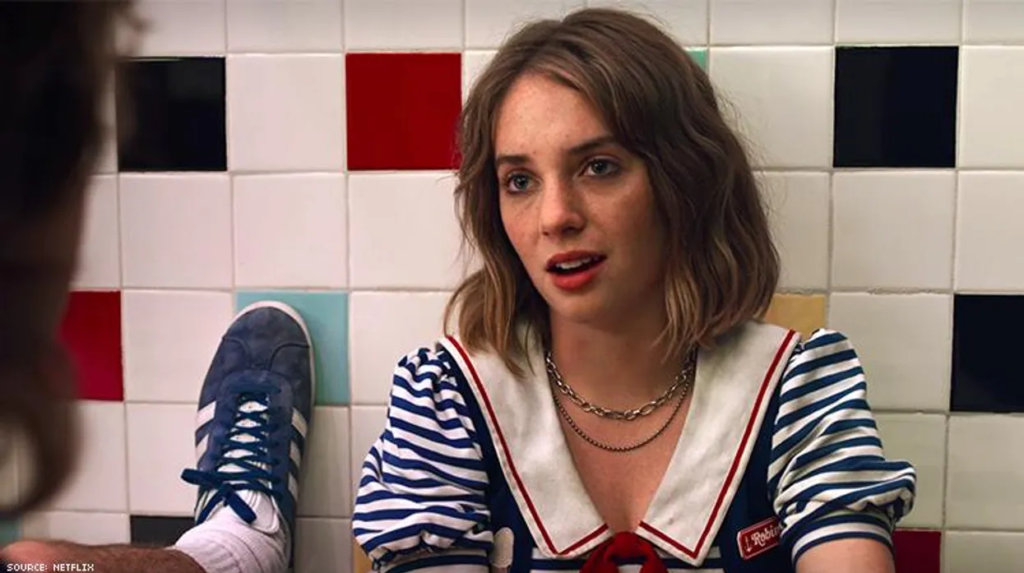
The bathroom scene where Robin comes out to Steve is one of the most important moments in Stranger Things history.
Steve’s Confession
Steve, still drugged and vulnerable, tells Robin he likes her. Romantically. Wants to date her.
For Steve, this is huge. Robin’s the first person since Nancy he’s developed genuine feelings for. She’s smart and funny and sees him clearly. He wants to pursue this.
Robin’s Response
Robin’s face goes through complex journey: surprise, realization, fear, resignation, then decision.
She tells Steve about Tammy Thompson. About being obsessed with her in high school. About the real reason she was paying attention to Steve—she was watching the girl Steve liked, not Steve himself.
Robin comes out to Steve. Not because she has to. Because she wants him to understand. Because she trusts him with this truth.
Steve’s Reaction
Steve’s reaction is perfect.
No awkwardness. No disappointment turning to homophobia. No “that’s okay, we can still be friends” pity.
Just immediate acceptance and teasing about Tammy Thompson’s terrible singing voice.
“She sounds like a Muppet.”
“She does not!”
“She sounds like a Muppet giving birth.”
Steve treats Robin’s coming out as just information about who she is. Then immediately transitions to familiar banter because their friendship doesn’t change based on this revelation.
This is revolutionary representation. Queer characters in 2019 (when Season 3 aired) rarely got coming out scenes met with immediate, uncomplicated acceptance. Usually there’s drama, rejection, or “I need time to process.”
Steve just… accepts Robin. Completely. Instantly. And their friendship strengthens because of the honesty.
Why This Scene Matters
This bathroom conversation established several crucial things:
Robin’s queerness isn’t tragic. She’s not tortured or ashamed. She’s just gay and navigating that reality in 1980s Indiana where it’s dangerous to be out.
Platonic soulmates are real. Steve and Robin’s friendship is as important as any romantic relationship in the show. Maybe more important.
Men and women can be close friends. Without sexual tension. Without “will they/won’t they.” Just genuine platonic love.
Coming out can be safe. Not always. Not everywhere. But with the right person, it can be met with immediate acceptance and love.
For queer viewers in 2019, that representation was powerful. For straight viewers, it modeled what acceptance should look like.
Fighting Monsters and Finding Purpose (Season 4)
Season 4 has Robin fully integrated into the Hawkins monster-fighting crew. She’s not new girl anymore—she’s essential.
The Video Store Job
Robin and Steve work together at Family Video now. Still bickering. Still best friends. Still completely platonic despite customers assuming they’re dating.
That assumption—that close male-female friendship must be romantic—is constant source of frustration for Robin.
She can’t correct people without outing herself. Can’t explain that Steve’s her best friend and nothing more without risking her safety in 1980s small-town Indiana.
That tension—being unable to correct assumptions without danger—is realistic for queer people in hostile environments.
The Vickie Situation
Robin has a crush on Vickie—fellow band geek who works at Family Video.
Robin’s completely awkward about it. Rambling. Nervous. Reading way too much into every interaction trying to figure out if Vickie might be interested in girls.
This is adorable and painfully realistic. Queer people, especially teenagers, often have to decode potential interest while also assessing safety. Is this person gay? If they are, are they out? If I approach them, will they react with acceptance or hostility?
Robin’s crush on Vickie represents that navigation. The hope and fear mixed together.
Steve’s Wingman Failure
Steve tries to be supportive wingman for Robin’s Vickie crush. He’s terrible at it.
Not because he’s homophobic—just because Steve’s wingman skills are genuinely bad and also he doesn’t fully understand the specific challenges of queer flirting.
But his heart’s in the right place. He wants Robin to be happy. Wants her to find love. Supports her completely even when his help is counterproductive.
The Creel House Investigation
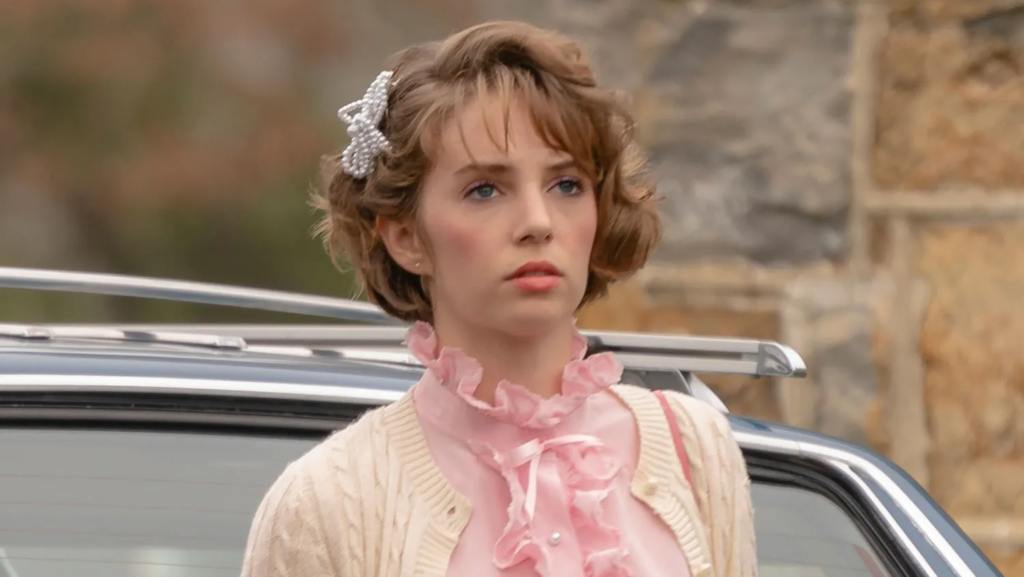
Robin investigates Victor Creel’s history at the library. Her research skills and ability to charm the librarian into granting access to restricted records prove essential.
Robin’s intelligence isn’t just languages. She’s good at research. Good at asking right questions. Good at connecting disparate information into coherent theory.
She’s the investigation brain the party desperately needs. Nancy’s the journalist, but Robin’s the researcher. Different but complementary skills.
Trapped in the Upside Down
When the group gets trapped in the Upside Down, Robin faces genuine horror with Steve and Nancy.
She’s terrified. She’s not a natural fighter like Steve or Nancy. But she doesn’t freeze. Doesn’t abandon her friends.
Robin’s bravery isn’t fearlessness. It’s acting despite fear because people she loves need her.
The Nancy-Steve-Robin Dynamic
There’s interesting tension with Robin, Steve, and Nancy all together. Nancy and Steve’s romantic history. Steve’s lingering feelings. Nancy’s complicated response.
Robin’s not jealous. She doesn’t want Steve romantically. But she’s protective of him. Doesn’t want to see him hurt by Nancy again.
That protectiveness—best friend watching out for best friend’s heart—is touching. Robin’s invested in Steve’s emotional wellbeing because she genuinely loves him (platonically).
Watergate Infiltration
Robin helps infiltrate the “Watergate” entrance to the Upside Down through Lover’s Lake. She’s essential to planning and execution despite being scared out of her mind.
This showcases Robin’s growth: Season 3 Robin was cynical civilian. Season 4 Robin’s active participant in monster fighting because her people need her.
The Vecna Battle
Robin’s part of the team shooting Vecna with Nancy and Steve. She’s wielding a rifle. Fighting interdimensional evil.
Band geek Robin Buckley went from scooping ice cream to shooting monsters in one year. That’s character growth.
She survives. They wound Vecna but don’t kill him. And Robin proves she belongs in this fight as much as anyone.
Vickie and the Military Capture
The epilogue mentions Vickie being captured by military forces during the finale chaos. This happens off-screen, leaving Robin’s romantic storyline unresolved.
It’s frustrating for viewers who wanted Robin to get her happy romance. But it’s also realistic—during apocalyptic events, not everyone gets clean resolution.
Robin’s worried about Vickie. But she keeps moving forward because that’s what survivors do.
Finding Herself at Smith College (Season 5)
Season 5’s epilogue shows Robin’s ultimate path: thriving at Smith College.
Smith College Choice
Smith is historically women’s college in Massachusetts with strong LGBTQ+ community and reputation for progressive politics.
Robin choosing Smith is perfect. It’s safe space for queer women. It’s academically rigorous. It’s far from Hawkins and the small-town judgment she grew up with.
Smith represents freedom for Robin. Freedom to be openly gay. Freedom to exist without hiding. Freedom to find community of people like her.
Maintaining Friendships
Robin has monthly meetups with Steve, Nancy, and Jonathan despite geographic distance.
That consistency shows: the bonds formed through shared trauma last. Robin’s not leaving her people behind. She’s maintaining connections while also building new life.
The fact that Steve and Robin keep their friendship strong despite Robin being at college and Steve staying in Hawkins proves their platonic soulmate status is permanent.
Academic Success
Robin’s thriving academically at Smith. Her intelligence is finally in environment that values and challenges it.
High school Robin was smart kid in small-town school without many opportunities. College Robin is smart kid in elite academic environment where her talents are appreciated.
That validation matters. Being around people who value intelligence and curiosity helps you flourish.
The Life She Earned
Robin’s ending is about choosing herself and her future. No romantic resolution with Vickie shown. No dramatic relationship arc.
Just Robin being successful, happy, and free.
For queer character whose coming out was major plot point, ending focused on her education and friendships rather than romance is significant. It says: queer people’s lives aren’t just about who they date. They’re about education, career, friendship, purpose.
Robin’s life is full and meaningful with or without romantic partner.
Robin’s Relationships: The Bonds That Define Her
Robin and Steve: Platonic Soulmates
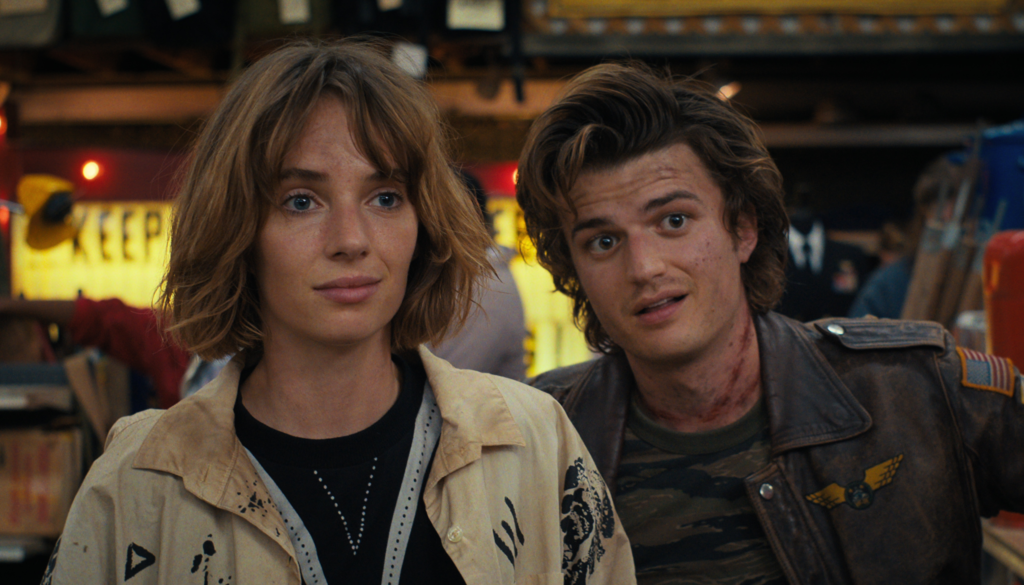
This is the relationship that defines Robin’s arc.
Steve’s her best friend. Her chosen family. The person who knows her completely and loves her exactly as she is.
Why their friendship matters:
It models healthy male-female friendship without sexual tension. It shows platonic love is as valid as romantic love. It demonstrates that acceptance of queer friends means treating their identity as just part of who they are, not their defining characteristic.
Steve and Robin’s dynamic—the banter, the support, the showing up for each other consistently—is relationship goal for any friendship, queer or straight.
Robin and Vickie: The Crush That Complicated Everything
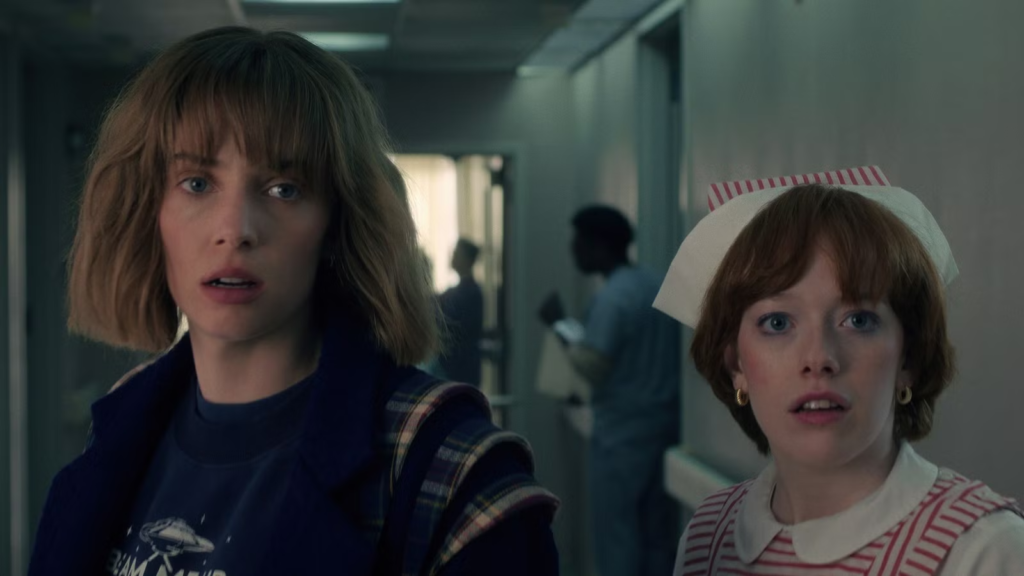
Robin’s crush on Vickie represents queer yearning and uncertainty.
She wants to know if Vickie’s interested. But asking risks rejection and potentially outing herself dangerously.
That navigation—wanting connection while fearing consequences—is specific to queer experience in hostile environments.
The fact that Robin’s romance doesn’t get neat resolution is frustrating but realistic. Not every crush works out. Not every storyline gets tied with bow.
Robin and Nancy: Complicated Respect
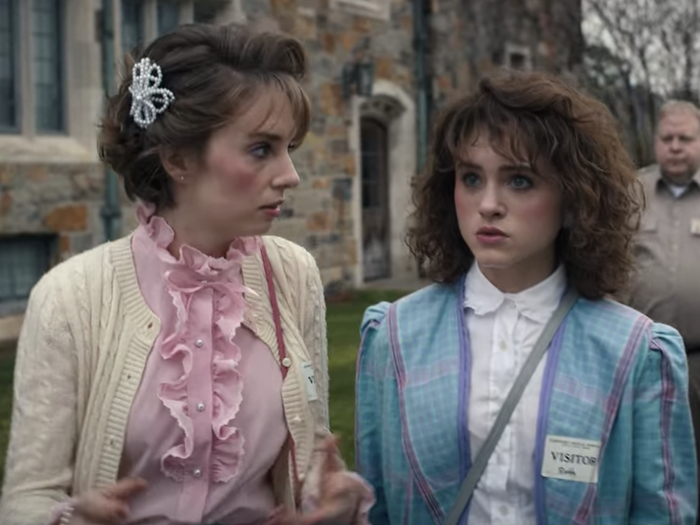
Robin and Nancy’s dynamic is interesting. They’re not close friends but they respect each other.
Robin’s protective of Steve, which creates tension with Nancy. But Robin also admires Nancy’s intelligence and bravery.
They’re similar in some ways—both smart, both capable, both refusing to be sidelined. That similarity creates both friction and mutual respect.
Robin and Dustin: The Codes and Camaraderie
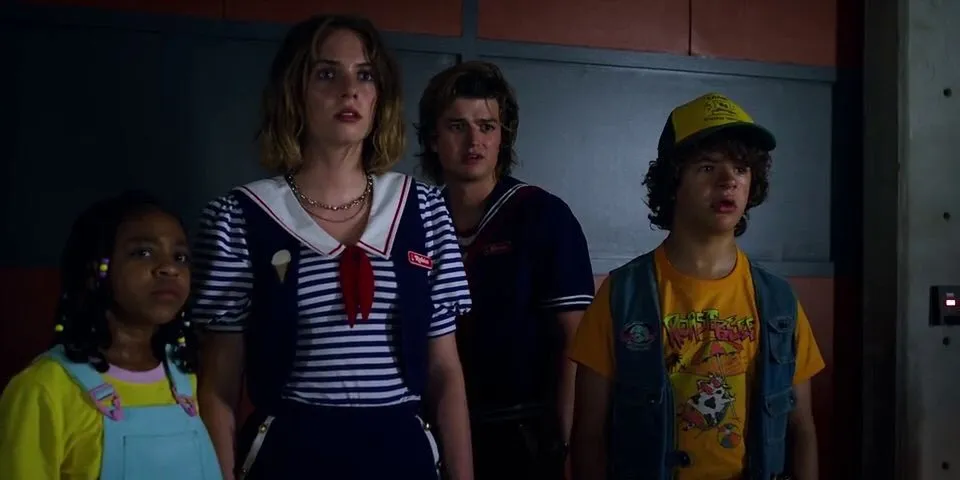
Robin and Dustin bond over intellectual puzzles. Cracking codes. Solving problems. Speaking nerd to each other.
Dustin treats Robin like cool older sister. Robin treats Dustin like brilliant kid who deserves to be taken seriously.
Their dynamic is sweet without being saccharine. Just mutual respect between two smart people who enjoy problem-solving together.
Robin and Her Parents: The Unspoken Reality
Robin’s parents are barely mentioned. We know almost nothing about her family.
That absence is telling. Either Robin’s not close with them, or they don’t know she’s gay, or the show just didn’t develop that relationship.
For many queer people, especially in 1980s, family relationships are complicated or nonexistent. Robin’s tight bonds with chosen family (Steve, the party) might partially compensate for lack of accepting biological family.
Maya Hawke’s Performance: Natural Charisma
Let’s talk about what Maya Hawke brought to Robin Buckley.
The Rambling Energy
Robin talks. A lot. Fast. Rambling tangents that circle back to the point eventually.
Hawke makes this endearing rather than annoying. The rambling reveals Robin’s anxiety and racing thoughts while also showcasing her intelligence—she’s making connections faster than she can articulate them.
That verbal energy is specific character choice that makes Robin feel real and distinct.
The Physical Comedy
Hawke’s physical comedy is excellent. Robin’s not graceful. She’s gangly. Awkward. Trips over things.
That physical presence communicates insecurity and nervousness without dialogue. Robin’s smart but not confident. Capable but not comfortable.
The Coming Out Scene
Hawke’s performance in the bathroom coming out scene is masterclass in vulnerability.
Watch her face journey from fear to resolution. The way her voice shifts when she tells Steve about Tammy. The relief when Steve responds with acceptance.
Hawke played that scene with such honesty that it became template for how coming out acceptance should look.
The Vickie Crush Awkwardness
Robin’s awkwardness around Vickie is painful and adorable. Hawke leans into the rambling, the nervous laughter, the overexplaining.
It’s realistic depiction of queer crush anxiety: wanting to be smooth, being disaster instead, hoping the other person finds disaster charming.
Chemistry With Joe Keery
Hawke and Keery’s chemistry is sibling-level natural. They bicker like people who genuinely love each other. The banter feels improvised even when scripted.
That chemistry is why Steve and Robin’s platonic relationship works so well. You believe they’re best friends because Hawke and Keery make you believe it.
Beyond Stranger Things
Hawke (daughter of Uma Thurman and Ethan Hawke) had acting pedigree but Robin was her breakout role. She’s since done films, released music, written poetry.
Robin remains her most beloved character—the band geek who was smarter than everyone, gayer than expected, and funnier than the show deserved.
Why Robin Buckley Matters
Robin represents several things desperately needed in media:
Joyful Queer Representation
Robin’s queerness isn’t tragic. She’s not punished for being gay. She’s not killed off for representation points.
She comes out and is immediately accepted. She goes to college that celebrates queer women. She gets happy ending.
That joyful representation—queer character whose story isn’t defined by suffering—matters enormously. Especially for young queer viewers who need to see that happiness is possible.
Platonic Soulmates Normalized
Robin and Steve’s friendship shows platonic soulmates are real and valid.
Men and women can be emotionally intimate friends without romance. Straight men can have queer women as best friends without it being complicated or weird.
That normalization helps break down assumptions that any close male-female friendship must be romantic.
Intelligence Without Stereotype
Robin’s smart but not stereotype “smart girl.” She’s not socially awkward genius. She’s not bookworm who can’t function in real world.
She’s linguistically gifted person who’s also funny, brave, and capable. Her intelligence is specific skill set, not personality replacement.
Band Geek Pride
Robin’s unapologetic about being band geek. She doesn’t try to be cool. Doesn’t hide her interests. Just exists as band geek who happens to be brilliant and gay and eventually fights monsters.
That validation—you can be nerdy and still be awesome—matters for every kid who felt invisible in high school social hierarchy.
Working-Class Representation
Robin works minimum wage jobs. Needs scholarship to afford Smith. Comes from working-class background.
Her intelligence doesn’t magically erase economic reality. She’s brilliant and still needs to work and worry about money.
That’s realistic representation of how class affects even exceptional people.
My Take After Five Years
I’ve watched Robin Buckley for only three seasons (she joined Season 3), but she became as essential as characters who’d been there from the beginning.
And here’s what strikes me most:
Robin’s importance isn’t about romantic relationships or dramatic trauma. It’s about being authentically herself and finding people who love her for it.
She didn’t need redemption arc. Didn’t need to overcome obvious character flaws. Didn’t need romantic resolution to be complete.
She just needed to be smart, funny, brave Robin who came out to her best friend and was immediately accepted. Who fought monsters despite being terrified. Who went to college that celebrated who she is.
Robin’s arc says: you don’t need to change to deserve love and acceptance. You just need to find your people. And when you do, protect those relationships fiercely because found family is real family.
After three seasons, Robin Buckley stands as proof that sometimes the best character introductions are the ones who don’t try to be anything except exactly who they are—rambling, brilliant, gay, anxious, loyal, and absolutely essential.
The show was good before Robin. It became better because of her.
That’s not just good writing. That’s Maya Hawke creating magic.
Robin Buckley: Complete Journey Explained
From sarcastic ice cream scooper to confident college student—Robin’s three-season arc proves that authentic self-expression, platonic soulmates, and joyful queer representation matter more than any romantic subplot.
The Actress Who Brought Robin to Life
[my_movie_db id=1903874 type=person]
About It’s Netflix Nerd
This deep character analysis was brought to you by It’s Netflix Nerd, where I’ve been obsessing over Stranger Things since Robin first started tallying Steve’s strikeouts. I break down every character arc, analyze every thematic choice, and help you understand why these stories matter beyond the monsters and special effects.
Want more Stranger Things character breakdowns? Check out It’s Netflix Nerd for complete analyses built on years of actually caring about these characters’ journeys.