
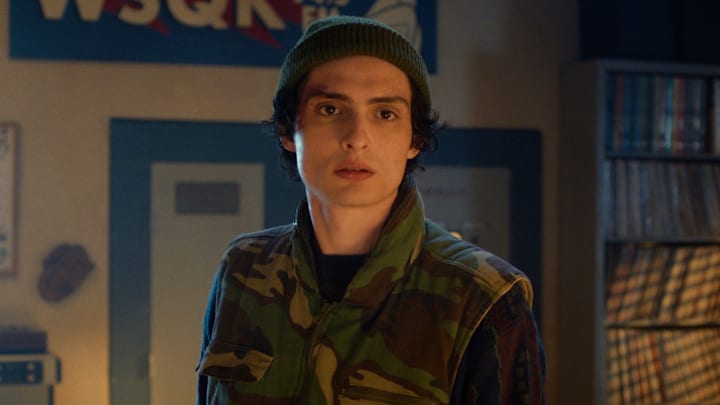
Character: Michael "Mike" Wheeler
Portrayed by: Finn Wolfhard
Seasons: 1-5 (Main Cast)
First Appearance: Season 1, Episode 1 ("The Vanishing of Will Byers")
Key Traits: Loyalty, Leadership, Emotional Intelligence, Strategic Thinking
Role in Party: Dungeon Master, Heart of the Group, Eleven's First Love
Mike Wheeler doesn’t get enough credit.
There, I said it. After covering Stranger Things for nine years, reading thousands of fan takes, and rewatching the entire series more times than I’ll admit—Mike is consistently undervalued as a character.
People remember Eleven’s powers. Dustin’s charm. Steve’s redemption. Lucas’s loyalty. Will’s trauma.
But Mike? Mike’s the one who held it all together. From that first campaign in his basement to the final D&D session where he passes the torch to Holly—Mike Wheeler was always the heart.
Not the strongest. Not the funniest. Not the most obviously heroic.
But the heart.
Let me explain why Mike’s journey from insecure middle schooler to confident narrator is one of Stranger Things’ most underrated character arcs.
The Kid Who Found a Girl in the Woods (Season 1)
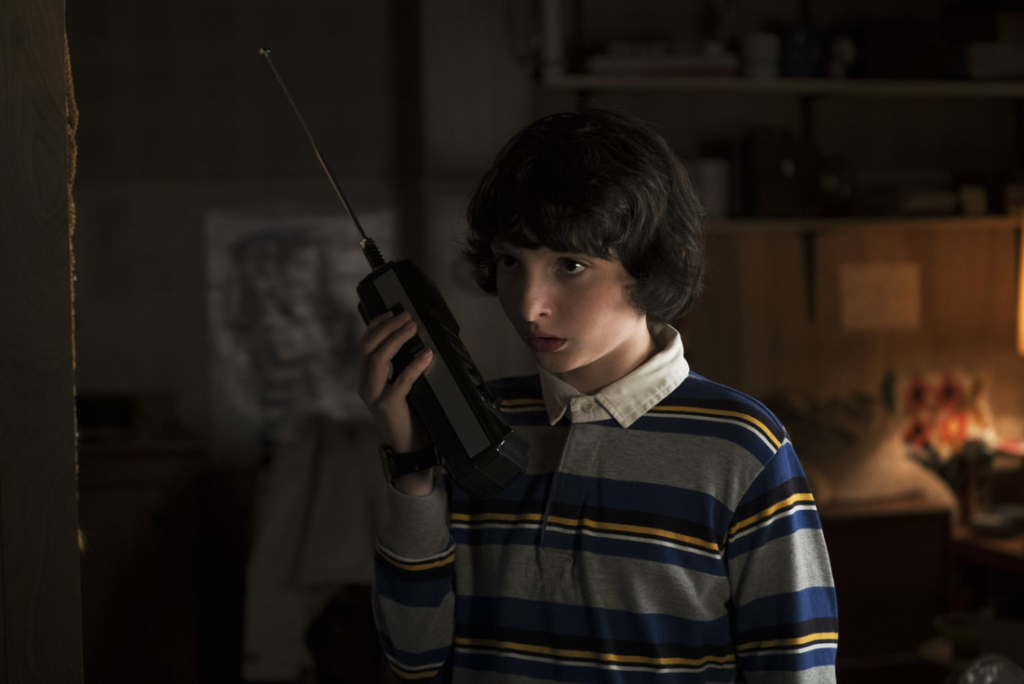
November 6th, 1983. Will Byers vanishes.
Mike Wheeler—twelve years old, Dungeon Master, leader of their friend group—refuses to accept that Will is just gone. While adults organize search parties and talk about dragging the quarry, Mike’s out in the rain on his bike looking for his best friend.
That’s when he finds Eleven instead.
The Leader Who Led with Heart
Here’s what’s brilliant about Mike in Season 1: he makes the emotional choice, not the logical one.
Logically? Finding a weird girl with a shaved head in the woods should send you straight to your parents. Get adults involved. Let the system handle it.
Mike brings her home. Hides her in his basement. Shares his toys. Teaches her words.
Why? Because she’s terrified and alone and Mike Wheeler’s first instinct is always compassion.
That defines his entire character. Mike leads with heart first, strategy second. It’s why the party follows him even when his plans seem crazy. They trust his instincts about people even when the logic doesn’t add up.
Mike Saw Eleven as Human First
Everyone else saw Eleven’s powers. Her usefulness. Her abilities.
Mike saw a scared kid who needed help.
When El uses her powers to flip a van saving them from bullies, Dustin and Lucas freak out about how “awesome” that was. Mike immediately asks if she’s okay. Checks if she’s hurt. Worried about her, not what she can do for them.
That’s the difference. Mike never needed Eleven to be powerful. He fell in love with the girl learning to understand friendship, not the weapon who could move things with her mind.
The famous “I’m the monster” scene where Mike tells El she saved him? That’s not just romantic dialogue. That’s Mike articulating what he’s been showing her all season: you are valuable because you exist, not because you’re useful.
For a kid who grew up in the Upside Down of Hawkins Lab where value = power, that’s revolutionary.
The Goodbye That Broke Him
Season 1 ends with Eleven sacrificing herself to kill the Demogorgon. Mike watches her disintegrate. Loses her right after finding her.
That trauma—losing someone you love right when you realized you loved them—shapes Mike for the entire series.
Every season after, Mike’s biggest fear is losing people he cares about. That’s his character wound. The thing that drives his overprotectiveness, his communication issues, his desperate need to keep everyone safe.
Dealing with Loss and Change (Season 2)
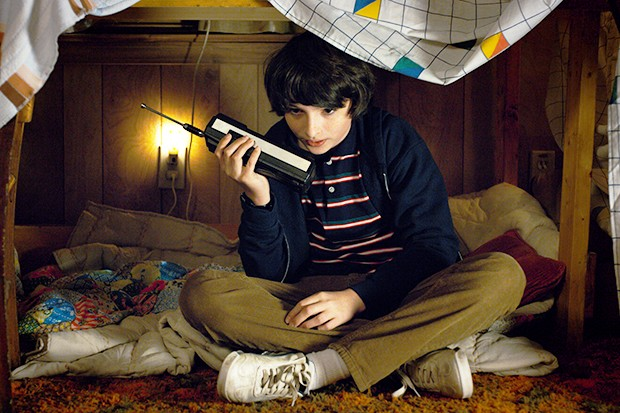
Season 2 Mike is different. Darker. Sadder.
He’s calling El on his supercom every night for 353 days. Talking to static. Hoping she’ll answer. Everyone else has moved on—new party dynamics, Max joining, life continuing—but Mike’s stuck.
When Your Heart is Missing
Watch Finn Wolfhard’s performance in Season 2. Mike goes through the motions. Plays D&D. Goes to school. Hangs with the party.
But he’s not really there. Part of him is still in that moment watching El disappear, convinced she’s gone forever.
That’s why he’s resistant to Max initially. Not because he’s a jerk (though he acts like one). Because accepting a new party member feels like moving on from El. And Mike Wheeler doesn’t know how to move on.
The Reunion That Changed Everything
When El shows up at the Byers house during the Mind Flayer crisis, Mike’s reaction is everything.
He doesn’t ask where she’s been. Doesn’t demand explanations. Just holds her and cries because she’s alive and that’s all that matters.
That hug—the one that lasts forever while everyone else awkwardly watches—is Mike’s entire character in one moment. Love before questions. Connection before logic.
Then Hopper’s territorial dad energy kicks in and Mike has to navigate: “Wait, Hopper adopted her? She’s been here this whole time? Why didn’t anyone tell me?”
Classic Mike—his feelings are huge and obvious and he doesn’t hide them well. It’s endearing and frustrating in equal measure.
The Snow Ball: Finally Getting His Moment
Season 2 ends with the Snow Ball dance. Mike waiting for El. Watching the door. Convinced she won’t come.
Then she walks in wearing that dress, hair styled, looking like any other middle school girl going to a dance—except she’s his girl going to their dance.
Mike’s face when he sees her? That’s Finn Wolfhard delivering a masterclass in young actor performance. Wonder. Joy. Relief. Love. All without dialogue.
They dance. Mike tells her she looks beautiful. For one perfect moment, they’re just normal kids at a school dance instead of warriors fighting interdimensional monsters.
That moment matters because it’s what Mike’s been fighting for all along: normalcy for the people he loves.
Boyfriend Era and Growing Pains (Season 3)

Season 3 Mike is… kind of annoying.
There, I said it. He’s clingy with El. Dismissive of his friends. So obsessed with his girlfriend that he neglects the party dynamics that defined him.
But here’s the thing: that’s realistic teenage behavior.
The “I Dump Your Ass” Era
Hopper gives Mike the overprotective dad talk (read: threatens him). Mike responds by lying to El about why he can’t see her. El, with Max’s coaching, dumps him.
“I dump your ass.”
Mike’s lost without her. Moping around. Max and El are having the summer of their lives doing mall activities and learning female friendship. Mike’s eating junk food with Lucas complaining about how girls are confusing.
It’s immature. It’s realistic. It’s exactly how a fourteen-year-old boy would handle his first real relationship + first real breakup + overprotective future father-in-law situation.
Learning He’s Not the Center of Everyone’s Universe
Max calls Mike out directly: “You’re ridiculous. El’s her own person. She doesn’t need you protecting her every second.”
That stings because it’s true.
Mike’s protectiveness comes from love, but it’s also controlling. He wants to keep El safe so badly that he doesn’t see how he’s suffocating her. How she needs space to discover who she is outside of “Mike’s girlfriend.”
Season 3 is Mike learning a hard lesson: loving someone doesn’t mean owning their time and choices. It means trusting them to take care of themselves while you’re there when they need you.
The “I Love You” He Couldn’t Say
Throughout Season 3, Mike tries to tell El he loves her. Can’t get the words out. Stumbles. Deflects. Makes it awkward.
When El loses her powers and the Byers family has to leave Hawkins, Mike finally manages: “I love you.”
But El can’t hear him. She’s too far away. Or maybe she heard and pretended not to because saying it back would make leaving even harder.
Either way, Mike’s left with unsaid words and a moving truck taking away the girl he loves. That’s teenage heartbreak in its purest form.
Long Distance and Finding His Voice (Season 4)
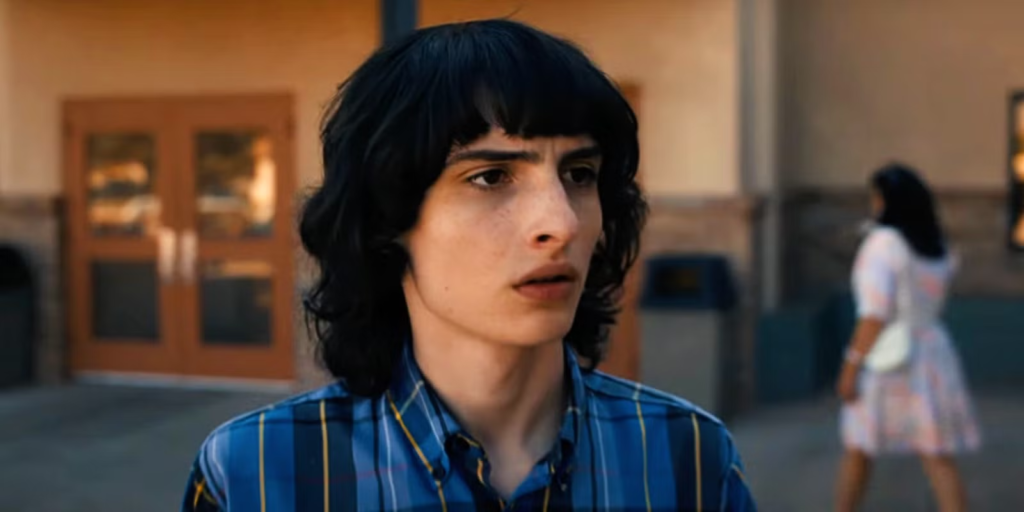
Season 4 Mike is dealing with long-distance relationship struggles while also confronting his deepest insecurity: Am I enough when I’m not useful?
California Doesn’t Go as Planned
Mike flies to California excited to see El. He’s written letters. Made plans. Ready for a perfect reunion.
Instead he finds: El lying about her life, struggling at school, dealing with bullying he knew nothing about, and emotionally distant in ways he doesn’t understand.
The miscommunication reaches peak disaster. El thinks Mike doesn’t love her because he can’t say the words. Mike thinks El doesn’t need him because she’s so strong.
Both are wrong. Both are also kind of right. It’s messy and uncomfortable and real.
The Insecurity That Defined Him
During the climax, Mike finally admits his truth: he’s terrified El will realize she doesn’t need him.
She’s extraordinary. Powerful. Capable of impossible things. And Mike? Mike’s just… Mike. Normal. No powers. No special abilities. Just a kid from Hawkins who plays D&D and cares too much about people.
Why would someone like El need someone like him?
That insecurity has been lurking under Mike’s character for four seasons. The leader who doesn’t feel like enough. The boyfriend who thinks his girlfriend is too good for him. The friend who worries his only value is organizing the group.
El’s Response Changed Everything
Eleven tells Mike the truth: she doesn’t need him. But she wants him. She chooses him. Every day. Not because he’s powerful or special or useful—because he’s Mike.
“You’re my superhero,” she says. Not because he has powers. Because he makes her feel like she matters for who she is, not what she can do.
That conversation is the emotional climax of Mike’s entire arc. The insecure kid finally understanding: being the heart is enough. Being loyal and loving and present is enough. You don’t have to be extraordinary to matter to extraordinary people.
The Narrator Who Completes His Journey (Season 5)

Season 5 Mike graduates Hawkins High and becomes what he was always meant to be: the storyteller.
From Player to Narrator
Throughout Stranger Things, Mike’s been the Dungeon Master. Running campaigns. Creating adventures. Guiding his friends through stories.
The Season 5 epilogue reveals Mike’s true calling: he’s become a writer. Chronicling their adventures. Turning their trauma into legend. Making sure future generations understand what happened in Hawkins.
That final D&D session where Mike narrates while Holly DMs for a new party? That’s Mike passing the torch. The leader who learned to step back. The storyteller who realized his role isn’t to be the hero—it’s to make sure people remember the heroes correctly.
Understanding El’s “Death”
Mike’s final narration includes a vision: Eleven alive and peaceful by a waterfall. No one else knows this. The world thinks she died.
But Mike—through some combination of hope, love, and maybe psychic connection developed over years—knows she’s okay. Hidden by Kali’s final illusion. Finally free to just be Jane without the world needing her to save it constantly.
That knowledge, that ability to let her go and be at peace with her choice to disappear, represents Mike’s ultimate growth. The clingy boyfriend of Season 3 would’ve needed to see her, to know where she is, to have access.
Season 5 Mike trusts her to make her own choice. Respects her right to privacy and peace. Loves her enough to let her be unknowable if that’s what she needs.
That’s maturity.
The Legacy of the Wheeler Basement
Mike’s journey ends where it began: in the Wheeler basement, running a campaign, surrounded by kids who believe in adventure and friendship and fighting darkness.
Except this time, he’s not the DM. He’s the narrator. The older voice providing wisdom and context. Guiding without controlling.
Holly’s the DM now. The next generation’s leader. Mike’s passing down what he learned: how to care about people, how to make them feel valued, how to turn fear into courage through storytelling.
That’s his legacy. Not the battles he fought. The way he made people feel like they mattered.
Mike’s Greatest Strength: Emotional Intelligence
Let’s talk about what made Mike special beyond his role as leader.
Mike Wheeler has the highest emotional intelligence in the party. Bar none.
He’s not the smartest (that’s Dustin). Not the strongest (Lucas). Not the most powerful (El, obviously). Not even the most strategically minded (Nancy got that gene).
But Mike feels things deeply and isn’t afraid to show it. He cries. He gets angry. He loves openly. He hurts visibly.
Reading People and Situations
Watch Mike across five seasons. He’s constantly reading the room. Understanding group dynamics. Knowing when someone’s lying or hiding something.
Season 1: He knows immediately that El is scared, not dangerous.
Season 2: He senses Max’s home life is troubled before anyone tells him.
Season 3: He recognizes Will’s trauma resurfacing when everyone else misses it.
Season 4: He sees through El’s lies about California because he knows her.
That emotional perception is a superpower in its own way. It’s why the party trusted him to lead. Not because he was bossy or controlling—because he understood what each person needed and tried to provide it.
The Friend Who Shows Up
Mike’s defining trait across all five seasons: he shows up.
Will’s missing? Mike’s out searching in the rain.
El’s scared? Mike brings her home and protects her.
Dustin needs help with Dart? Mike’s there despite their fight.
Lucas is struggling? Mike makes time.
Max needs the party’s help? Mike includes her (eventually).
Even when Mike’s being annoying or clingy or making mistakes, he’s present. That consistency—that refusal to abandon people he cares about—is his superpower.
Mike’s Relationship Dynamics
Mike and Eleven: First Love Done Right
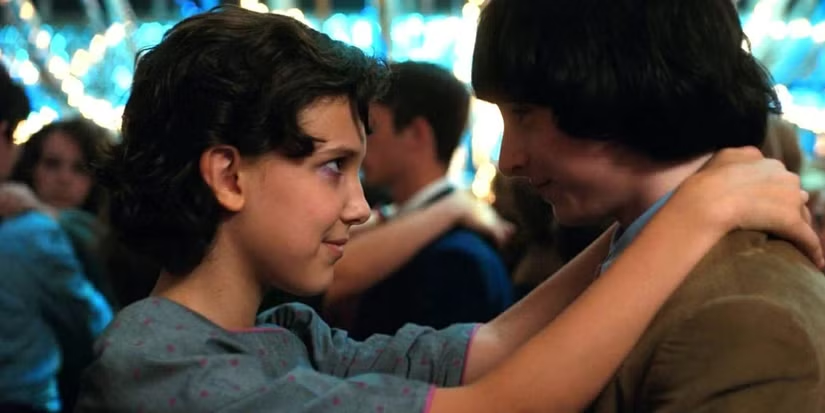
Their relationship gets criticized for being “too focused on” in later seasons, but here’s why it works:
Mike and El’s love story is about two people teaching each other humanity.
El teaches Mike that extraordinary people still need normal love and acceptance. Mike teaches El that she’s valuable beyond her abilities.
They’re not perfect. They miscommunicate. They have different needs. El needs independence; Mike needs connection. That tension is realistic for first loves learning to navigate intimacy.
But through all of it, they choose each other. That’s what matters. Not that it’s always easy, but that it’s always intentional.
Mike and Will: The Friendship That Defined Him
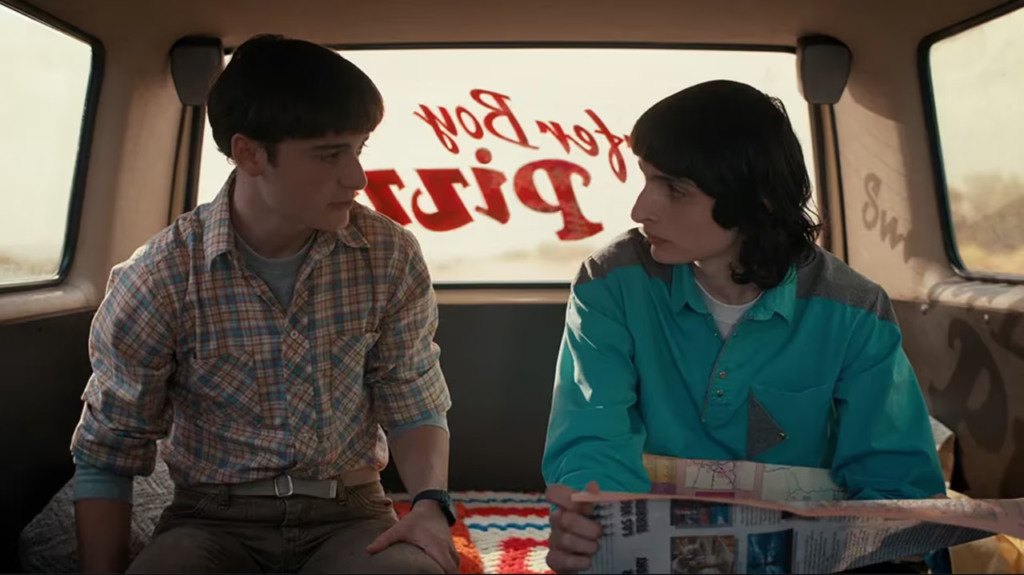
Mike’s friendship with Will is the series’ emotional backbone.
Season 1: Mike refuses to believe Will’s dead. Leads the search.
Season 2: Mike senses Will’s connection to the Mind Flayer before Will admits it.
Season 3: Mike’s the only one who believes Will about the Mind Flayer returning.
Season 4: Will’s painting and speech about Mike being the heart breaks through Mike’s insecurity.
Season 5: They fight Vecna together, Mike trusting Will’s psychic instincts completely.
Will knows Mike better than anyone except maybe El. He sees Mike’s worth when Mike can’t. Their friendship—built on years of D&D campaigns and shared trauma and understanding each other’s weirdness—grounds Mike when everything else feels chaotic.
Mike and Dustin: Brothers in Chaos
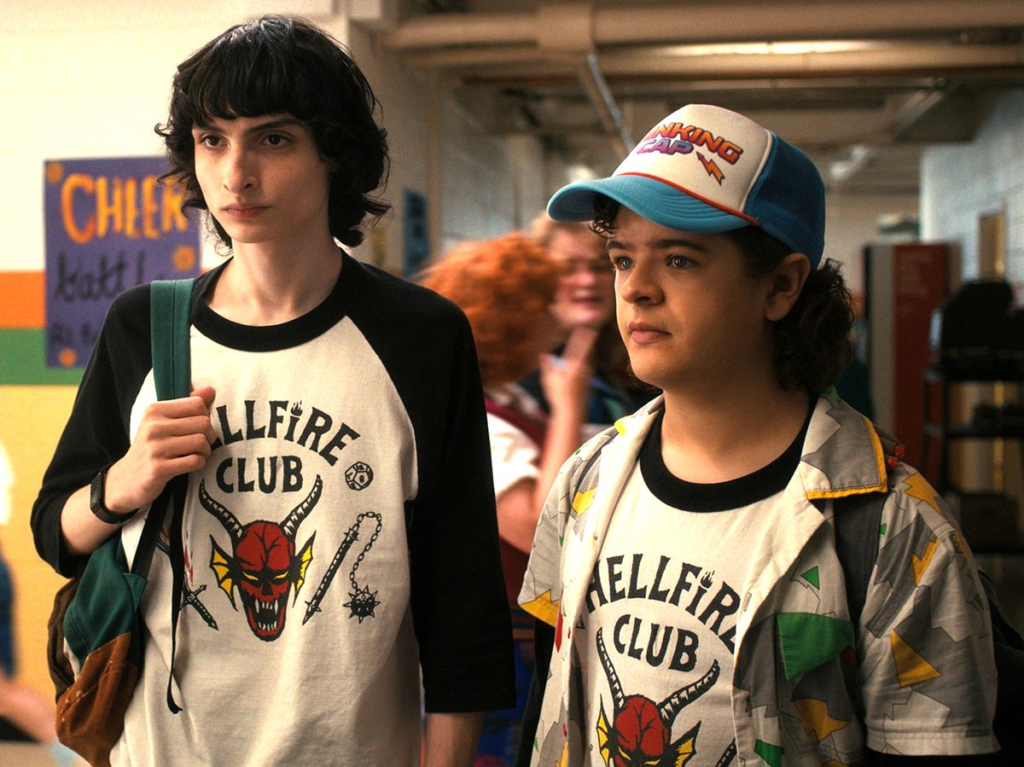
Dustin brings out Mike’s playful side. Their bickering is sibling energy—annoying each other because they care too much to pretend they don’t.
When they fight in Season 3 over Dustin’s Suzie “girlfriend” no one believes exists, it hurts both of them because they’re not used to being on opposite sides.
Their reunion and teamwork in later seasons shows: real friendships survive disagreements. You can be mad at someone and still show up when they need you.
Mike and Lucas: The Loyal Opposition
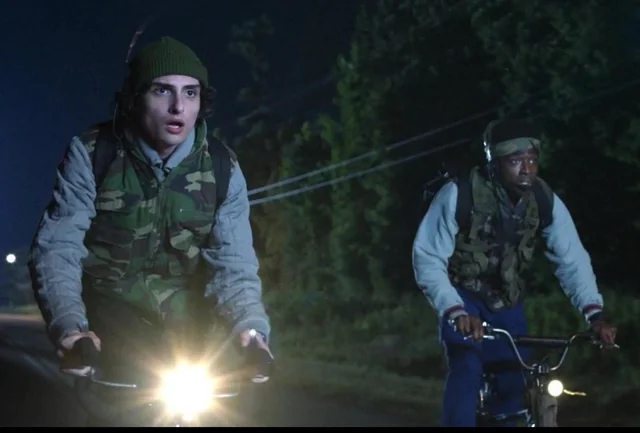
Lucas calls Mike out when he’s wrong. Challenges his decisions. Doesn’t just follow blindly.
That makes Lucas Mike’s most valuable friend in some ways. Leaders need people who’ll tell them hard truths. Lucas does that while still remaining loyal when it counts.
Their friendship models healthy conflict: you can disagree and argue and still fundamentally have each other’s backs.
Mike and Nancy: Sibling Complexity

Mike and Nancy’s sibling relationship is underexplored but important. Nancy’s journey as the older sister who’s protective but also has her own life. Mike learning that his sister is a badass monster hunter, not just the annoying teenager dating Steve.
By Season 5, there’s mutual respect. Nancy trusts Mike’s instincts. Mike respects Nancy’s capabilities. They grew from typical annoying siblings to people who genuinely value each other.
Finn Wolfhard’s Performance: The Heart Behind Mike
I need to acknowledge what Finn Wolfhard brought to this character.
Wolfhard was twelve when he auditioned for Stranger Things—a Canadian kid who loved music and acting but wasn’t a “child star” in the traditional sense. He brought naturalism to Mike that could’ve easily been overly dramatic or annoyingly whiny in less capable hands.
The Subtle Choices That Built a Character
Watch Wolfhard’s micro-expressions in key scenes:
- The way Mike looks at El in Season 1 before he understands what he’s feeling
- His face during the Snow Ball dance—pure joy mixed with relief
- The barely controlled panic when El loses her powers in Season 3
- The vulnerability when admitting his insecurities in Season 4
- The quiet confidence in his final narration in Season 5
Those aren’t script directions. Those are actor choices. Wolfhard understood Mike’s emotional landscape and played it honestly without making it maudlin or overdone.
Growing Up On Screen
Like Millie Bobby Brown, Wolfhard literally grew up playing Mike. Voice changed. Got taller. Developed from child actor to young adult actor with real range.
The Mike of Season 1—high-voiced, energetic, boyish—naturally evolved into the Mike of Season 5—deeper voice, more measured, young man instead of boy. That physical maturation matched the character’s emotional maturation perfectly.
Beyond Stranger Things
Wolfhard’s career success (It, Ghostbusters: Afterlife, his band The Aubreys) proves he’s talented beyond this role. But he’s consistently credited Stranger Things and Mike Wheeler as foundational to everything he’s accomplished.
In interviews, Wolfhard talks about learning what it means to be a leader through playing Mike. How the character’s loyalty and emotional openness influenced his own approach to friendships and relationships.
That’s the mark of an actor who truly embodied a role: it changed them as much as they shaped it.
Why Mike Wheeler Matters Beyond Hawkins
Mike’s character arc addresses something vital: you don’t need to be the strongest or smartest or most special to be essential.
In a show full of literal superpowers and genius-level intellects and exceptional fighters, Mike Wheeler is determinedly normal. And that’s his strength.
He represents the friend who makes everyone else better by believing in them. The leader who leads through care rather than charisma. The boyfriend who loves loudly and imperfectly but always genuinely.
The Heart of Every Group
Every friend group has a Mike Wheeler. The person who:
- Organizes activities even when everyone else flakes
- Remembers birthdays and important moments
- Checks in when someone’s acting weird
- Defends their friends even when it’s inconvenient
- Feels everything intensely and isn’t ashamed of it
Those people are easy to take for granted. Easy to dismiss as “too emotional” or “too invested.” But they’re the glue. The reason friend groups survive transition and distance and the chaos of growing up.
Mike’s journey validates that role. Says: being the heart is enough. Being the person who cares is valuable. You don’t need superpowers to be a hero.
Storytelling as Heroism
Mike becoming a writer/narrator in the epilogue is thematically perfect for another reason: storytelling is how we process trauma and pass down wisdom.
The party survived impossible things. Lost people. Faced literal monsters. How do you integrate that into a normal life?
You tell the story. You shape it into narrative. You make meaning from chaos.
Mike’s final act of heroism isn’t fighting Vecna (though he helps). It’s making sure their story gets told correctly. Making sure future generations of Hawkins kids understand: friendship matters, courage matters, caring about people matters.
That’s a different kind of saving the world. But it’s just as important.
My Take After Nine Years of Mike Wheeler
I’ve spent nearly a decade watching Mike Wheeler grow up. Analyzing his decisions. Defending him in internet arguments. Rewatching his scenes to understand his character motivations.
And here’s what I keep coming back to:
Mike Wheeler never stopped being exactly who he was.
He didn’t have a redemption arc like Steve. Didn’t discover hidden powers like Eleven. Didn’t overcome obvious character flaws through grand gestures.
Mike was the loyal, emotional, deeply caring kid in episode one. He’s the loyal, emotional, deeply caring young man in the finale.
His journey wasn’t about changing. It was about learning that who he already was—insecure, emotional, intensely loving—was exactly who his friends needed.
That’s a powerful message in a culture that constantly tells people (especially men) to be less emotional, more detached, cooler and more controlled.
Mike Wheeler rejected all that. He felt everything deeply and survived. He loved openly and it saved people. He led with heart and it worked.
After five seasons of monsters and alternate dimensions and supernatural horror, maybe that’s the real magic: being determinedly, vulnerably human in a world that keeps trying to make you harder.
Mike Wheeler chose softness. And it made him the strongest person in the room.
Mike Wheeler: Complete Journey Explained
From the basement DM who found a girl in the woods to the narrator who passed the story down—Mike Wheeler’s nine-year arc proves that leading with heart is the greatest superpower of all.
The Actor Who Brought Mike to Life
[my_movie_db id=1442069 type=person]
About It’s Netflix Nerd
This deep character analysis was brought to you by It’s Netflix Nerd, where I’ve been obsessing over Stranger Things since Mike first found El in the woods. I break down every character arc, analyze every thematic choice, and help you understand why these stories matter beyond the monsters and special effects.
Want more Stranger Things character breakdowns? Check out It’s Netflix Nerd for complete analyses built on years of actually caring about these characters’ journeys.