

Character: Dustin Henderson
Portrayed by: Gaten Matarazzo
Seasons: 1-5 (Main Cast)
First Appearance: Season 1, Episode 1 (“The Vanishing of Will Byers”)
Key Traits: Intelligence, Humor, Loyalty, Scientific Curiosity, Infectious Optimism
Role in Party: The Brain, Mediator, Comic Relief, Science Expert
Signature: Cleidocranial dysplasia (no collarbones), iconic baseball cap, “son of a bi**h!”
Dustin Henderson is the friend everyone wishes they had.
I’m just going to say that upfront. After nine years of watching Stranger Things, analyzing every character, breaking down every relationship—Dustin consistently emerges as the most universally lovable person in Hawkins.
Not because he’s the most powerful. Not because he has the most dramatic arc. But because Dustin Henderson represents something rare in television: genuine, uncomplicated goodness wrapped in nerd culture, scientific curiosity, and the best damn sense of humor in the entire series.
Gaten Matarazzo brought this character to life with so much charisma that Dustin transcended “comic relief” and became the emotional glue holding disparate storylines together. The bridge between groups. The friend who made everyone else better just by being around them.
Let me break down why Dustin Henderson’s journey from toothless middle schooler to valedictorian tribute-giver is one of Stranger Things’ most consistently excellent character arcs.
The Kid With No Front Teeth and All the Charm (Season 1)
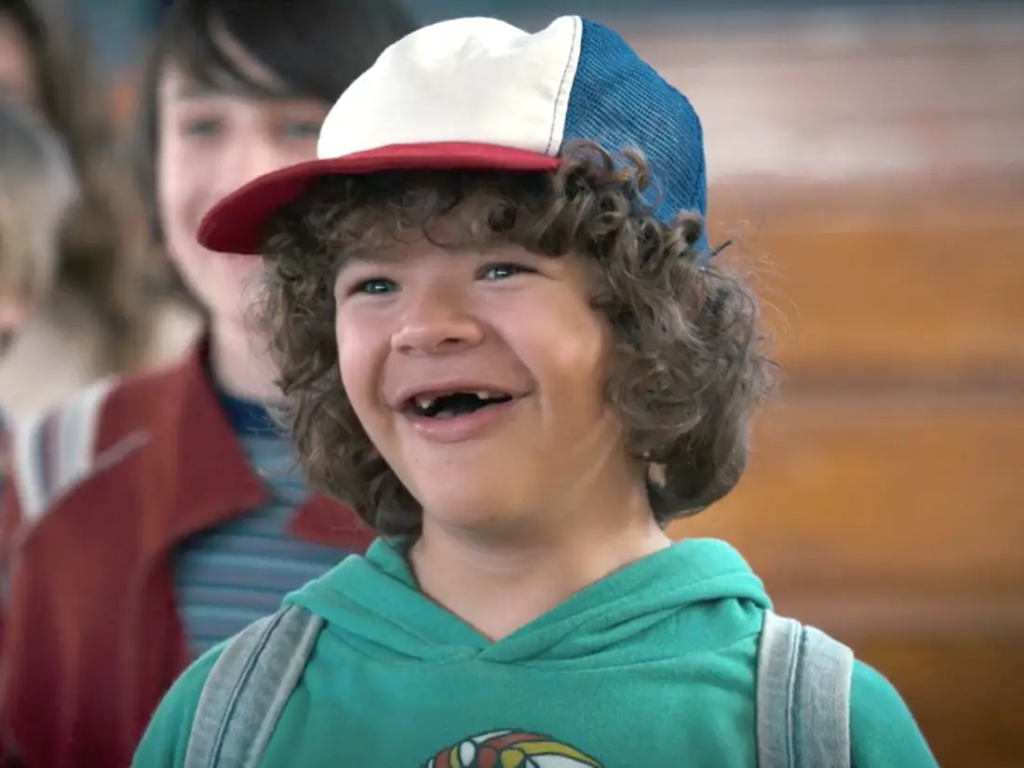
Dustin starts the series as the party’s lovable nerd with cleidocranial dysplasia—a real condition Gaten Matarazzo has that affects collarbone and teeth development. The show never made it a “very special episode” thing. It just was part of who Dustin is, which is perfect representation.
The Science Guy From Day One
When Will vanishes, Dustin’s immediately theorizing. Suggesting the Vale of Shadows from their D&D campaign might have real-world parallels. Pulling out his textbooks and connecting dots between fantasy and theoretical physics.
The other kids think he’s reaching. Turns out? Dustin’s scientific instincts were dead-on. There is another dimension. It does work similarly to their game lore. Dustin’s nerd knowledge saves them repeatedly because he never dismisses the impossible—he just tries to understand the rules.
That’s his superpower: intellectual curiosity combined with openness to weirdness. Dustin doesn’t reject strange explanations because they sound crazy. He investigates, theorizes, tests hypotheses.
The Mediator Who Kept the Party Together
Watch Dustin’s role in Season 1 conflicts. When Mike and Lucas fight over Eleven, Dustin’s stuck in the middle trying to keep everyone calm. When tensions rise, Dustin breaks the mood with humor. When the group splinters, Dustin’s the one advocating for unity.
He’s not the leader like Mike. Not the skeptic like Lucas. Not the traumatized one like Will. He’s the glue—the person who maintains group cohesion through positivity and humor even when everything’s falling apart.
That’s an undervalued role. Every friend group needs a Dustin. The person who defuses tension, reminds everyone why they’re friends, and refuses to let conflict destroy relationships he values.
“She’s Our Friend and She’s Crazy!”
Dustin’s acceptance of Eleven is immediate and enthusiastic. No questions, no suspicion—just “Cool, Mike found a girl with superpowers, let’s help her.”
That openness to new people becomes a pattern. Dustin’s always the first to welcome outsiders. First to see value in people others dismiss. First to extend friendship without requiring proof they deserve it.
It’s not naivety. It’s optimism backed by genuine belief that most people are good if you give them a chance. That worldview makes Dustin special in a show full of trauma and paranoia.
The Boy Who Adopted a Demogorgon (Season 2)
Season 2 gives Dustin his first real spotlight storyline: he finds a weird creature, names it D’Artagnan (Dart), and tries to hide it as a pet.
Turns out Dart is a baby Demogorgon. Oops.
When Scientific Curiosity Meets Terrible Decisions
Only Dustin Henderson would find an interdimensional monster slug and think “I should raise this in my room and feed it nougat.”
But that’s exactly what makes the Dart storyline brilliant character work. Dustin’s curiosity outweighs his common sense. He knows keeping Dart is risky, but he can’t resist studying something new and weird and scientifically fascinating.
It’s reckless. It’s dangerous. It’s also completely understandable for a thirteen-year-old science nerd who’s seen interdimensional monsters and wants to understand them instead of just fighting them constantly.
The Betrayal and Redemption
When Dart grows and eats Dustin’s cat Mews, reality hits hard. This isn’t a pet. It’s a predator. And Dustin’s attachment endangered his family.
Watching Dustin grapple with that guilt—knowing he put his mom at risk because he wanted to believe Dart could be different—is heavy stuff for a character usually providing comic relief.
But here’s the payoff: Dart remembers Dustin. At the tunnel climax, Dart recognizes Dustin’s voice, lets the party pass, even seems to show affection before staying behind to hold off the other Demodogs.
Dustin’s crazy optimism that monsters can be more than their nature? Partially validated. Not enough to make keeping Dart a good decision, but enough to show Dustin’s instinct to see individuals rather than threats isn’t entirely wrong.
The Snow Ball Rejection and Steve Harrington
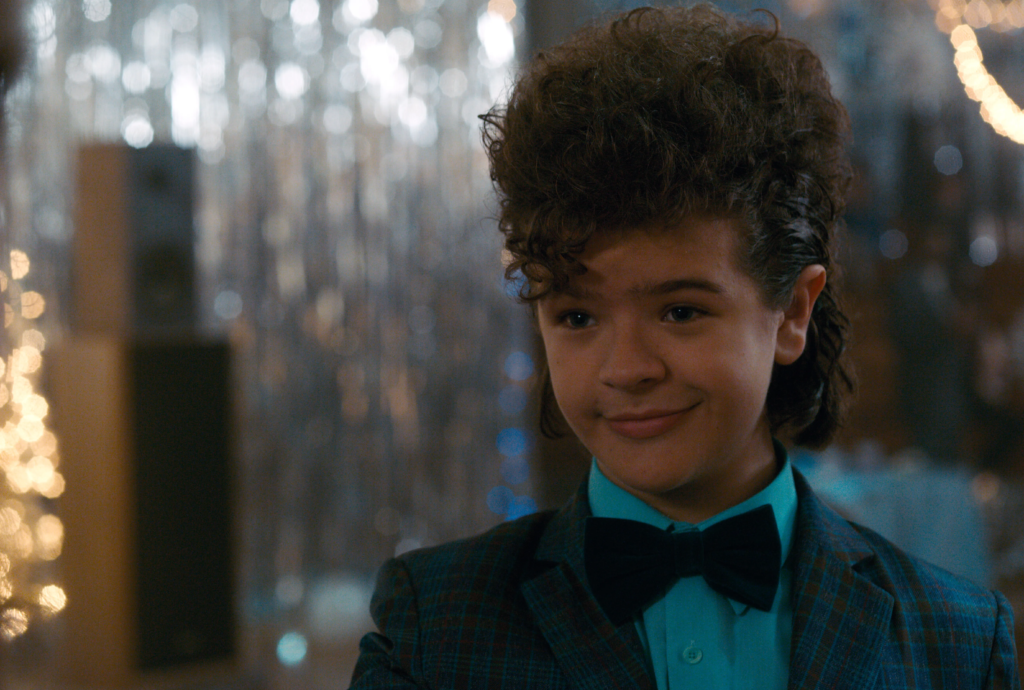
Season 2’s Snow Ball dance gives Dustin his most painful moment: getting rejected by every girl he asks to dance. Standing alone watching his friends enjoy themselves while he’s literally the odd one out.
Then Nancy Wheeler—queen of Hawkins High, Mike’s sister, the girl way out of his league—asks him to dance.
It’s a small gesture. But for Dustin, it’s everything. Someone seeing his value when he felt invisible. Someone choosing kindness over social hierarchy.
That moment of compassion teaches Dustin something important: being rejected doesn’t mean you’re not worthy of love. Sometimes you just need to find people who see what makes you special.
Also, Steve Harrington starts giving him hair advice. Which launches the greatest bromance in Stranger Things history.
The Compass, the Girlfriend, and Unlikely Friendship (Season 3)
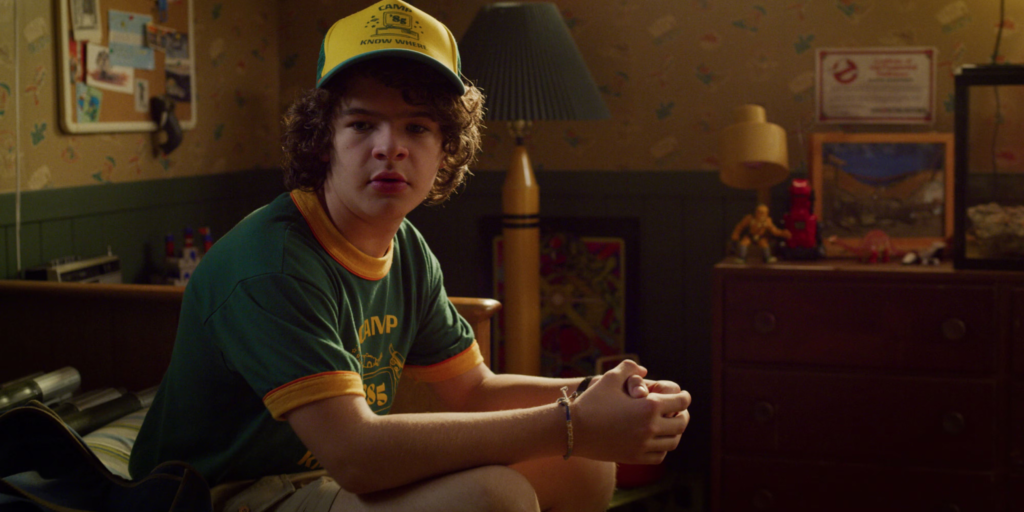
Season 3 is peak Dustin. He returns from science camp with:
- A girlfriend named Suzie no one believes exists
- Suspicions about Russian codes hidden in mall transmissions
- Steve Harrington as his unlikely best friend
“She’s Real! Suzie is Real!”
The running joke of Season 3: Dustin insisting his super smart, super pretty girlfriend from camp is totally real while everyone obviously thinks he made her up.
Even Steve—his supportive older brother figure—gently suggests maybe Suzie is more “pen pal fantasy” than actual girlfriend. The party’s skeptical. His mom’s concerned about his delusions.
Then the climax happens. Dustin needs Planck’s constant to save the world. Only one person he knows would have it memorized: Suzie.
He radios her. She answers. She’s real. And before she’ll give him the number, she makes him sing “The Neverending Story” theme as a duet while the fate of Hawkins hangs in the balance.
The Neverending Story Moment
This scene is either cringe or iconic depending on your tolerance for sincerity, but here’s why it works for Dustin’s character:
Dustin doesn’t care about looking cool. He cares about being authentic. If his real girlfriend wants him to sing a nerdy duet during an apocalypse, he’ll do it without hesitation because making her happy matters more than maintaining some facade of toughness.
That’s Dustin’s entire personality: genuine without self-consciousness. He likes what he likes. He loves who he loves. He doesn’t apologize for his enthusiasms or pretend to be someone he’s not.
In a show where so many characters struggle with identity and fitting in, Dustin’s comfortable in his own skin. That’s his quiet superpower.
Steve and Dustin: Friendship That Defied Logic
The Steve and Dustin bromance is Stranger Things’ most unexpected and beloved relationship.
Steve—former popular jerk turned good guy babysitter—and Dustin—nerdy freshman with boundary issues—somehow become inseparable friends across Seasons 2-5.
Why it works: They give each other what they need.
Dustin needed an older brother figure who thought he was cool and gave him confidence. Steve needed someone who looked up to him and reminded him that being kind and goofy is more valuable than being popular.
Their dynamic is pure joy. Dustin teaching Steve his “secret handshake.” Steve giving Dustin dating advice. Them working together at Scoops Ahoy investigating Russian conspiracies while wearing ridiculous sailor uniforms.
It’s the friendship neither expected but both desperately needed. And watching it evolve from Season 2’s awkward advice session to Season 5’s genuine brotherly love is one of the series’ most satisfying emotional arcs.
Cracking Russian Codes From a Mall Food Court
Dustin’s Season 3 subplot—intercepting Russian transmissions, translating codes, uncovering a secret base under Starcourt Mall—showcases his intelligence in action.
He doesn’t have Eleven’s powers. Can’t fight like Steve. Isn’t strategic like Mike. But give Dustin a puzzle and he will solve it through sheer nerdy persistence and scientific method.
The fact that a fourteen-year-old with a ham radio and too much curiosity exposes an international conspiracy? Very Dustin. Very on-brand. Very proof that underestimating the nerd is always a mistake.
Camp Know Where and Saying Goodbye (Season 4)
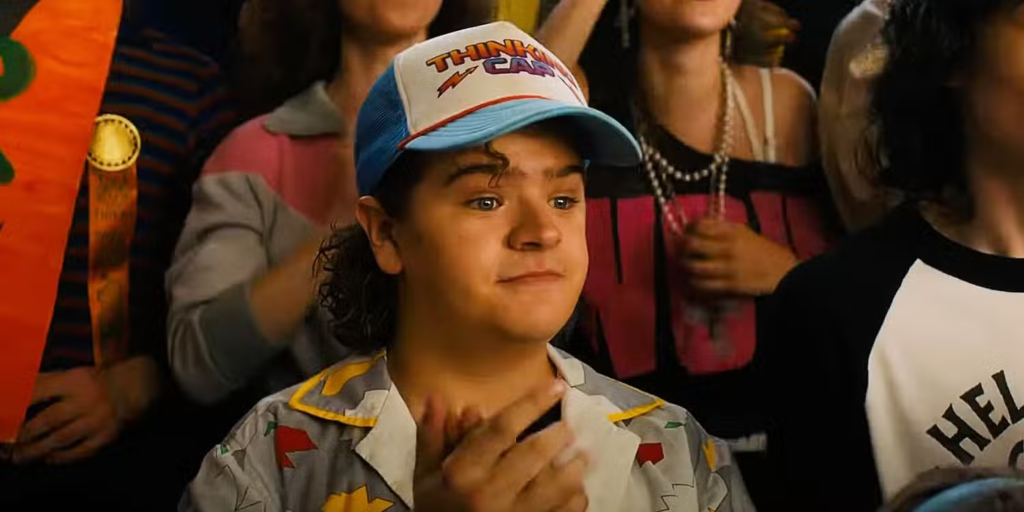
Season 4 splits the party geographically. Dustin’s stuck in Hawkins while his friends scatter. But that just means he gets to form new bonds—specifically with Eddie Munson.
Meeting Eddie: Nerd Recognizing Nerd
Eddie Munson—metalhead senior, Hellfire Club DM, certified freak in the eyes of Hawkins High—becomes Dustin’s new older brother figure during Season 4.
Dustin joins Hellfire. Plays D&D with the older kids. Finds acceptance in Eddie’s unapologetic weirdness and refusal to conform to Hawkins’ narrow definitions of normal.
Their friendship makes sense. Both are nerds. Both embrace outsider status. Both love D&D and fantasy and refusing to pretend they’re cooler than they are for social acceptance.
Eddie treats Dustin like an equal, not a kid. Respects his intelligence. Values his input. Makes him feel like he belongs in the older kids’ group.
The Hellfire Championship Campaign
The Season 4 opening D&D session—where Dustin and Mike’s campaign goes down to a final dice roll while a basketball game rages outside—is perfect Dustin characterization.
He’s invested. This game matters to him as much as Lucas’s championship game matters to Lucas. Maybe more, because this is where Dustin feels most himself. Most valued. Most seen.
The fact that society dismisses D&D as childish while celebrating basketball is something Dustin’s internalized. Eddie’s passionate defense of their game—calling them out for being afraid to take the final risky roll—pushes Dustin to be brave.
He rolls. Wins. The Hellfire Club erupts in celebration.
For Dustin, that moment equals any sports victory. Because it’s not about what others value—it’s about being excellent at something you care about with people who understand why it matters.
Losing Eddie: Grief Without Powers
Eddie dies heroically in the Upside Down. Dustin’s there. Watches it happen. Can’t stop it.
For the first time, Dustin experiences profound loss—not ambiguous like Will’s disappearance or temporary like thinking Steve might die. Final, permanent, unfair loss.
The scene where Dustin tells Eddie’s uncle what happened—lying about the circumstances but truthful about Eddie’s bravery—wrecks me every time.
Dustin’s voice breaking. Insisting Eddie died a hero. Needing Eddie’s uncle to know his nephew wasn’t the freak Hawkins thought he was.
That’s Dustin honoring his friend the only way he can: by telling the truth about who Eddie really was to the one person whose opinion Eddie cared about.
The Physical Cost
Dustin also sustains a serious leg injury during the Season 4 finale. It’s not just emotional trauma—it’s physical disability that affects his mobility going forward.
The show doesn’t magically heal him. Season 5 shows Dustin still dealing with that injury. Still limping. Still managing pain.
That’s important because it makes consequences real. The battles aren’t cost-free. Heroism sometimes means permanent damage. Dustin’s injury is a constant reminder of what fighting these fights actually takes from you.
The Valedictorian Speech That Honored a Fallen King (Season 5)
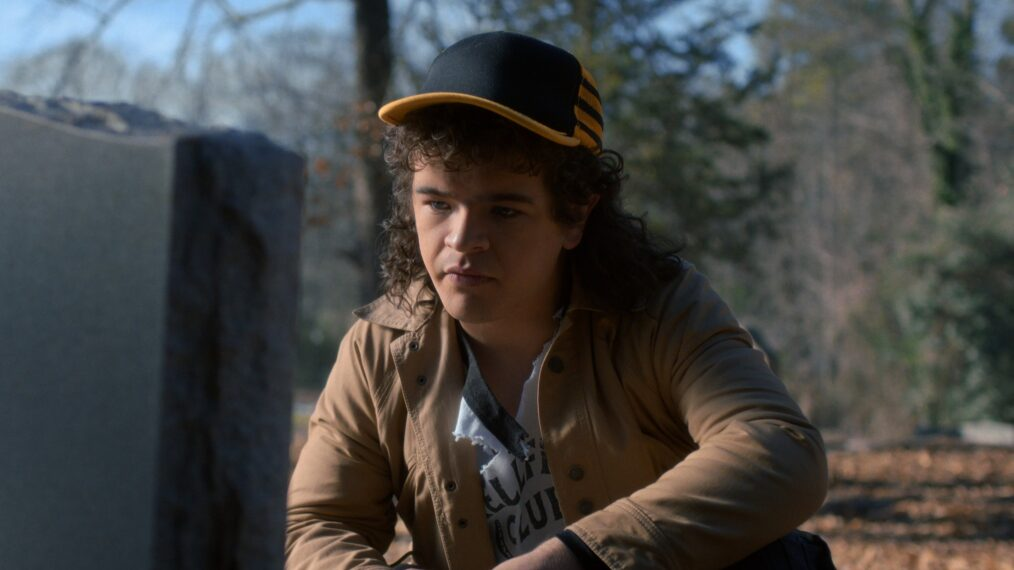
Season 5’s epilogue gives Dustin a perfect character moment: his valedictorian speech.
Smartest Kid in Hawkins (Officially)
Dustin Henderson—nerd, outsider, kid who got rejected at the Snow Ball—is literally the smartest student in his graduating class.
That’s validation for every kid who chose science camp over basketball camp. Every teenager who got mocked for caring about grades. Every young person who embraced intelligence even when it wasn’t socially rewarded.
Dustin’s academic excellence isn’t a surprise to the audience—we’ve watched him solve impossible problems for five seasons. But it’s satisfying that Hawkins High officially recognized: the nerd won.
The Eddie Munson Tribute
Instead of a traditional speech about futures and potential, Dustin uses his valedictorian platform to honor Eddie Munson and the Hellfire Club.
Confetti explodes. The Hellfire members cheer from the audience. Teachers look scandalized. Parents are confused.
Dustin doesn’t care. He’s using his moment of institutional validation to honor someone the institution rejected. Saying loudly: Eddie Munson mattered. Freaks and outcasts and D&D nerds matter. Being different isn’t something to apologize for.
That speech is Dustin’s entire character distilled. Smart enough to achieve traditional success. Rebellious enough to use that success to challenge traditional values. Loyal enough to honor his friend even when it’s awkward and unconventional.
Staying Close to Steve
The epilogue reveals Dustin attends a nearby college—close enough to maintain his friendship with Steve, who’s now coaching at Hawkins High.
Their adventures didn’t end with high school. The brotherhood continues. Dustin didn’t let academic achievement or new opportunities separate him from people he loves.
Because that’s what Dustin does: he maintains connections. Keeps friendships alive. Shows up for people even when life pulls them in different directions.
College-age Dustin still hanging with Steve, still being the friend who makes everyone’s life better just by being present? That’s the perfect ending for his character.
Dustin’s Intelligence: More Than Comic Relief
Let’s break down exactly how smart Dustin Henderson is, because the show sometimes obscures this with humor:
Scientific Knowledge
- Physics: Understands dimensional theory, electromagnetic fields, radiation
- Biology: Identifies creatures, understands ecosystems, tracks behavioral patterns
- Chemistry: Mixes compounds, understands molecular structures
- Engineering: Builds communication devices, understands mechanical systems
- Mathematics: Calculates trajectories, solves complex equations under pressure
Practical Problem-Solving
- Cracks Russian codes using translation and pattern recognition
- Builds Cerebro (high-powered radio tower) from scratch
- Figures out Demo-dog behavior through observation
- Navigates tunnel systems using compass and spatial reasoning
- Reverse-engineers technology he’s never seen before
Social Intelligence
- Reads group dynamics and defuses conflicts
- Bridges social gaps between different friend groups
- Negotiates between strong personalities (Mike, Lucas, Steve, Eddie)
- Understands when to use humor and when to be serious
- Makes people feel valued and included naturally
Dustin’s not just “the smart one.” He’s multiple types of smart simultaneously, which makes him invaluable to every group he’s part of.
Dustin’s Relationships: The Universal Connector
Dustin and Steve: The Brotherhood
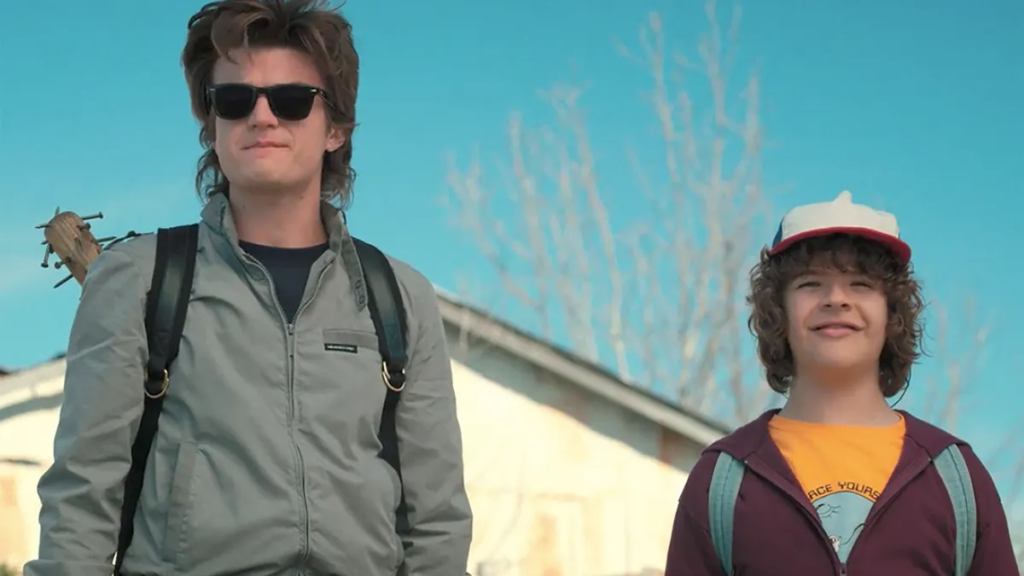
I could write an entire essay on this relationship alone. Steve and Dustin’s unlikely friendship is the show’s most pure and joyful dynamic.
What makes it work:
Steve sees Dustin as the little brother he never had. Someone to mentor and protect and be proud of. Dustin brings out Steve’s best qualities—his patience, kindness, and protective instincts.
Dustin sees Steve as the cool older brother who actually thinks he’s cool too. Someone who believes in him and boosts his confidence. Steve makes Dustin feel like his nerdiness is an asset, not a liability.
They’re complete opposites—jock and nerd, popular and outcast, cool and dorky. But they get each other in ways that matter more than surface differences.
Their friendship says: found family transcends social categories. The person who becomes your brother might be someone you’d never expect.
Dustin and Suzie: Long-Distance Nerdy Love
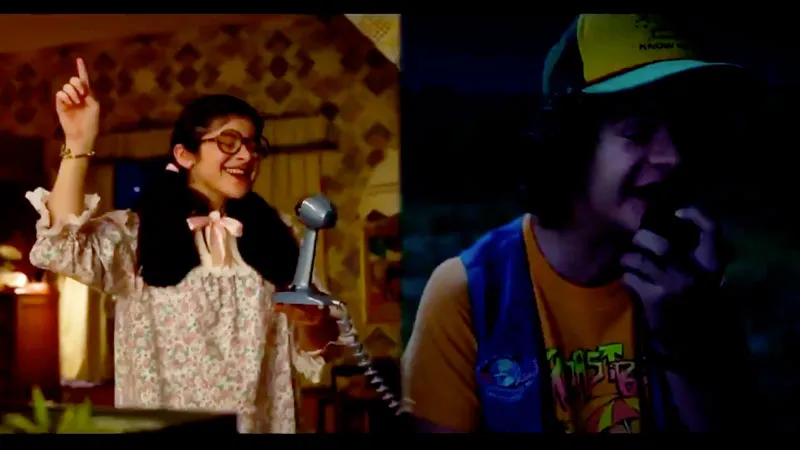
Dustin and Suzie’s relationship is adorable because it’s built on shared interests and genuine affection without trying to be cool.
They bond over science. Quiz each other on constants. Sing nerdy theme songs. Communicate through ham radio with zero self-consciousness about how dorky that is.
It’s not a dramatic romance. It’s two smart kids who found each other and decided being unabashedly themselves together is better than being alone.
That’s realistic relationship goals for nerdy teenagers: finding someone who celebrates your weirdness instead of requiring you to hide it.
Dustin and the Party: The Loyal Friend
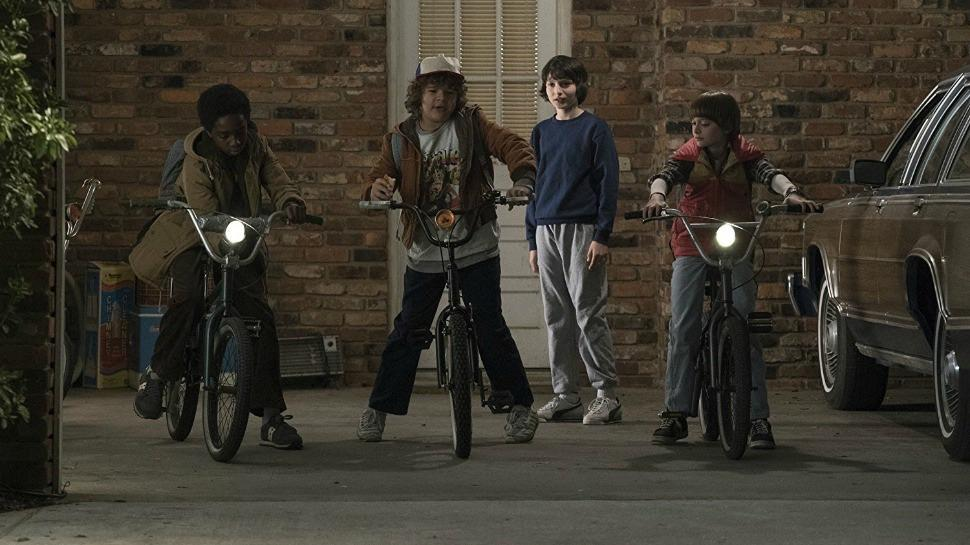
Dustin’s friendships with Mike, Lucas, Will, and Eleven are consistently loyal even through conflicts:
Mike: They fight occasionally but always reconcile. Dustin respects Mike’s leadership even when disagreeing with decisions.
Lucas: Best friends who bicker like brothers but have unshakeable trust. Lucas knows Dustin’s always got his back.
Will: Dustin’s the most perceptive about Will’s struggles. Listens when Will tries to communicate about the Upside Down.
Eleven: Immediate acceptance and friendship. Dustin never treats her as other or scary—just as part of the party.
Dustin’s role in the party is emotional maintenance. He keeps relationships healthy through humor, honesty, and refusing to let grudges fester.
Dustin and Eddie: Mentor and Student
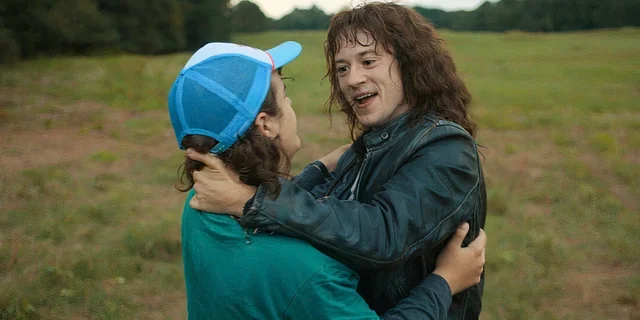
Eddie saw something in Dustin that others missed: leadership potential. Eddie pushed Dustin to take risks, be bold, trust his instincts.
Their friendship was cut short by Eddie’s death, but it fundamentally shaped Dustin’s Season 5 character. The valedictorian speech honoring Eddie shows how deeply that mentorship mattered.
Dustin carried Eddie’s lessons forward: don’t apologize for who you are, protect the people who need it, and go out fighting when there’s something worth fighting for.
Dustin and His Mom: Pure Sweetness
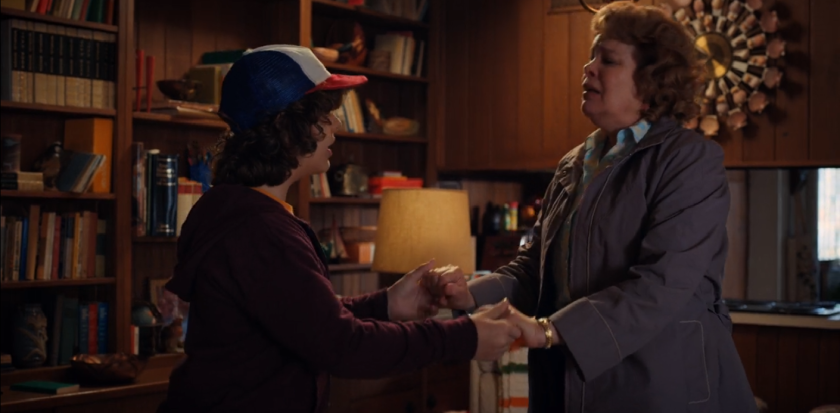
Claudia Henderson is the best TV mom outside of Joyce Byers, and Dustin’s relationship with her is genuinely heartwarming.
He’s not embarrassed by her affection. Doesn’t pull away when she babies him. Lets her call him “Dusty-bun” even though his friends tease him mercilessly.
That secure attachment—knowing your parent loves you unconditionally and not feeling the need to reject that for peer approval—makes Dustin emotionally healthier than most teenagers.
His mom’s support gave him the confidence to be himself unapologetically. That’s powerful parenting and beautiful character development.
Gaten Matarazzo’s Performance: Authentic Representation
I need to talk about what Gaten Matarazzo brought to Dustin Henderson beyond acting ability.
Living With CCD On Screen
Matarazzo has cleidocranial dysplasia, the same condition as Dustin. The show incorporated it naturally—Dustin’s lisp from missing teeth, his dental appliances, the physical traits associated with CCD.
But it’s never a plot point. Never a “very special episode.” Never treated as tragedy or inspiration porn.
It’s just part of who Dustin is. The show normalized disability representation by making it unremarkable. Dustin’s value comes from his intelligence, humor, and loyalty—not from “overcoming” his condition.
Matarazzo has spoken about how meaningful that representation was. Kids with CCD saw themselves reflected positively in a major character. That matters more than most people realize.
Natural Charisma and Comic Timing
Matarazzo’s comedy timing is genuinely impressive. The way he delivers Dustin’s lines—the enthusiasm, the perfect pauses, the physical comedy—elevates material that could fall flat in less capable hands.
Watch his facial expressions during group scenes. He’s constantly reacting, processing, communicating through micro-expressions even when he doesn’t have dialogue.
That’s skilled ensemble acting. Making your character present and engaged even when you’re not the focus of the scene.
Growing Up With Grace
Like the other young actors, Matarazzo grew from child to adult on screen. His voice deepened. His face matured. But the core of Dustin—the enthusiasm and joy—remained consistent.
That continuity of character despite physical changes shows understanding of who Dustin fundamentally is beyond surface traits.
Beyond Stranger Things
Matarazzo’s used his platform to advocate for CCD awareness, support medical research, and champion disability representation in media. He’s been open about his multiple surgeries and medical challenges while maintaining positivity and humor.
That real-life courage and advocacy mirrors Dustin’s fictional optimism. The character and actor share an essential quality: refusing to let circumstances dictate your joy.
Why Dustin Henderson Matters
Dustin represents something crucial: intelligence and kindness aren’t mutually exclusive.
Too often media presents smart characters as socially inept, arrogant, or emotionally cold. The “genius jerk” trope dominates television.
Dustin subverts that completely. He’s brilliant and empathetic. Scientifically minded and emotionally intelligent. Nerdy and socially adept.
The Friend Who Makes Everyone Better
Every character who becomes close to Dustin improves because of their friendship:
- Steve discovers that being kind and nurturing matters more than being cool
- Eddie finds someone who genuinely appreciates his outsider philosophy
- Suzie gets a partner who celebrates her intelligence instead of feeling threatened by it
- The Party has someone who keeps them united through humor and mediation
Dustin’s superpower is elevating the people around him. He makes others feel valued, capable, and understood.
That’s not dramatic. It won’t get you Emmy nominations or fan-favorite villain status. But it’s the quality that makes real friendships last.
Representation That Matters
Dustin’s character provides representation on multiple levels:
Disability representation: CCD portrayed as part of someone’s identity, not their entire story
Nerd representation: Intelligence and enthusiasm for “uncool” interests celebrated
Body diversity: Not a typical Hollywood body type, never commented on negatively
Emotional openness: Male character allowed to be vulnerable, affectionate, and openly loving
Kids who related to any of those aspects saw themselves in Dustin Henderson. Saw that you can be all those things and still be the hero, still be beloved, still be essential to your friend group.
The Value of Optimism
In a show about trauma, loss, and fighting literal monsters, Dustin’s consistent optimism could feel naive or unrealistic.
Instead, it feels necessary.
Dustin’s not oblivious to danger or pain. He experiences loss, grief, physical injury. But he chooses joy anyway. Chooses to believe in people. Chooses to see possibility instead of just threat.
That’s not naivety. That’s resilience. That’s choosing how you respond to a world that’s given you plenty of reasons to be cynical.
Dustin Henderson says: you can know the world is dark and still bring light. You can fight monsters and still crack jokes. You can be hurt and still be kind.
That’s the kind of hero we actually need.
My Take After Nine Years
I’ve spent nearly a decade watching Dustin Henderson be the best friend anyone could ask for. The smartest person in the room who makes everyone else feel smart too. The guy who shows up, solves problems, and keeps spirits high even when everything’s falling apart.
And here’s what strikes me most about his character:
Dustin never had a “becoming cool” arc.
He didn’t transform from nerd to jock. Didn’t shed his enthusiasm or interests or essential personality to gain acceptance. Didn’t have a makeover montage where he learned to hide his authentic self.
He stayed exactly who he was—enthusiastic, nerdy, openly loving, scientifically curious, unabashedly himself—and the world came around to appreciating him.
Steve Harrington, coolest guy in Hawkins, became his best friend. Suzie, super genius, became his girlfriend. Eddie Munson, rebel outcast, became his mentor. His entire graduating class watched him become valedictorian.
Dustin didn’t change for them. They learned to value what made him different.
That’s the most powerful message Stranger Things could send: you don’t need to change to be worthy of love. You need to find people who appreciate exactly who you are.
After nine years, Dustin Henderson remains the friend I wish everyone had. The person who makes life better just by being in it. The guy who proves that intelligence, kindness, and terrible puns can coexist in one person.
And honestly? That’s more heroic than any superpower.
Dustin Henderson: Complete Journey Explained
From toothless middle schooler to valedictorian honoring fallen friends—Dustin Henderson’s nine-year arc proves that being authentically yourself is the greatest rebellion of all.
The Actor Who Brought Dustin to Life
[my_movie_db id=1653291 type=person]
About It’s Netflix Nerd
This deep character analysis was brought to you by It’s Netflix Nerd, where I’ve been obsessing over Stranger Things since Dustin first found that weird slug in his trash can. I break down every character arc, analyze every thematic choice, and help you understand why these stories matter beyond the monsters and special effects.
Want more Stranger Things character breakdowns? Check out It’s Netflix Nerd for complete analyses built on years of actually caring about these characters’ journeys.