
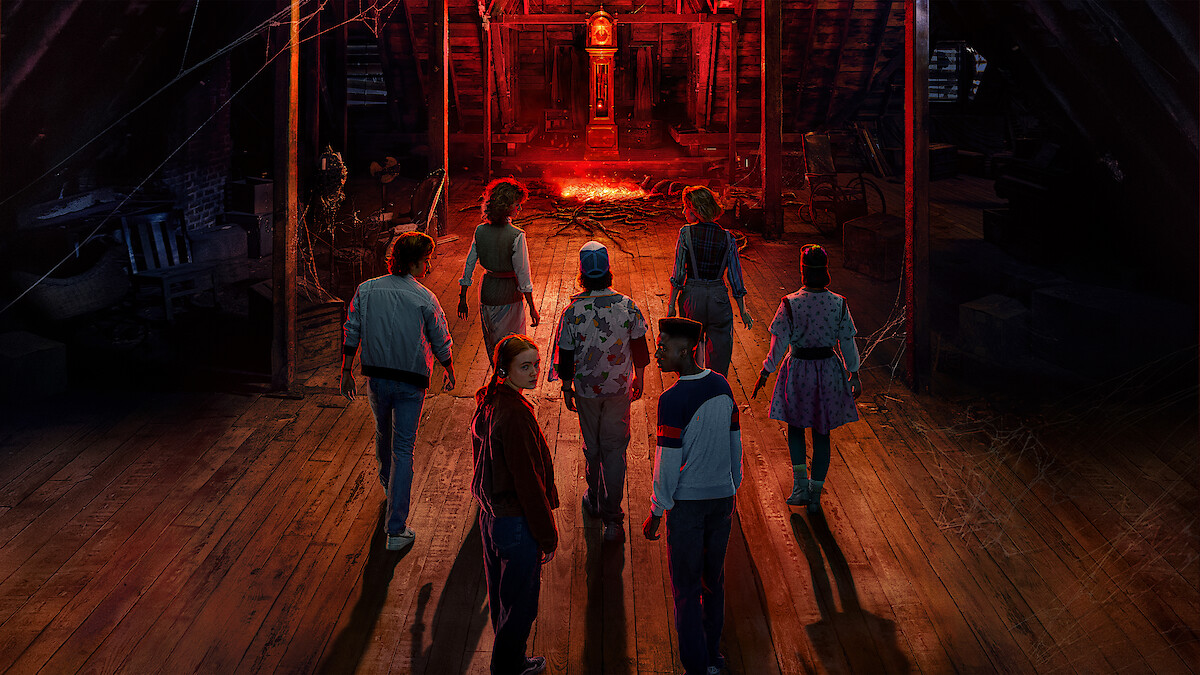
I have followed Stranger Things since Hawkins was just a dot on the map. Back when the Upside Down felt less like a franchise mechanic and more like a secret the show trusted us to slowly uncover. So when I hear talk about the Upside Down potentially opening in places like Tokyo, Mumbai, or Madrid, I don’t get excited right away. I get cautious.
Because this isn’t just about scale. It’s about identity.
With the Duffer Brothers confirming a spinoff set in a “new town, new world, new mythology,” outside Hawkins and outside the 1980s, the idea of international Upside Down stories is no longer speculation. It’s a direction. And once a story chooses direction, it can’t pretend it didn’t.
I keep asking myself one question. Does taking Stranger Things global deepen the mythology, or does it finally detach the series from the very thing that made it work?
Netflix Already Tested the Idea. Just Not Narratively.
Let’s be honest. Netflix has already gone global with Stranger Things. Just not in-story.
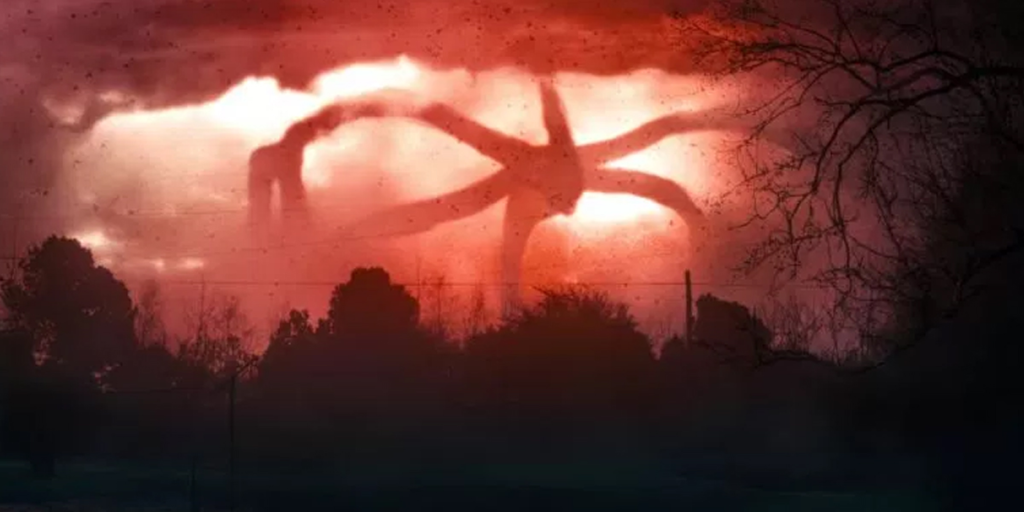
During the Season 4 marketing campaign, the company projected “rifts to the Upside Down” onto landmarks across the world. New York. Mumbai. Kuala Lumpur. Tokyo. Madrid. Visually, it worked. Instantly shareable. Instantly viral. It sent a clear message: Stranger Things belongs everywhere.
As marketing, that move was smart. As storytelling groundwork, it proves almost nothing.
A spectacle is easy. A mythology is fragile.
What unsettles me is how quickly fans assumed those visuals were proof the Upside Down should exist everywhere. That leap ignores why Hawkins mattered in the first place.
Stranger Things Already Has an Identity Problem
Before we even talk about international expansion, we need to admit something uncomfortable. Stranger Things has been struggling with its identity for years.
Season 1 was restrained. Grounded. It felt like a Stephen King paperback come to life. The horror was intimate. The mystery felt personal. Ordinary people faced something they couldn’t explain, and that tension carried the story.
By Season 2 and beyond, the show shifted. Bigger monsters. Bigger lore. Louder nostalgia. The story slowly moved from “what is happening here?” to “how do we stop the apocalypse?”
That evolution didn’t ruin the show, but it changed it. The emotional core became harder to maintain as the stakes grew cosmic. Hawkins stopped feeling like a place and started feeling like a stage.
That matters because if the series already struggles to hold its tone within one town, expanding it across countries multiplies the risk.
Why International Stories Could Work
To be fair, I understand the argument for expansion. And I don’t dismiss it outright.
The Duffer Brothers have been clear that the spinoff is not “Stranger Things but somewhere else.” They’ve emphasized new characters, a new mythology, and a fresh framework. That’s the right instinct.
If international stories explore different kinds of supernatural phenomena tied to local history, political trauma, or cultural belief systems, the universe could expand horizontally instead of repeating itself vertically.
Cold War paranoia wasn’t exclusive to the United States. Government secrecy wasn’t either. Neither was human experimentation, fear of the unknown, or belief in unseen worlds. If handled with depth, those parallels could enrich the franchise rather than dilute it.
But that’s a very narrow path to walk. And franchises rarely walk narrow paths for long.
Why This Expansion Is Extremely Risky
Here’s where my skepticism takes over.
The Upside Down works because it is specific. It exists because of Hawkins Lab. Because of Eleven. Because of a precise chain of cause and effect. If every country ends up with its own dimensional breach, psychic child, and shadow government, the Upside Down stops being terrifying.
It becomes infrastructure.
There’s also the cultural risk. Supernatural folklore isn’t interchangeable decoration. A Japanese story that casually borrows yokai imagery without understanding its spiritual context isn’t expansion. It’s aesthetic theft. An Indian story that uses mythology as visual flavor instead of narrative foundation would feel hollow instantly.
Stranger Things earned trust because it understood the culture it referenced. Lose that respect, and the audience will feel it even if they can’t articulate why.
My Verdict: Expansion With a High Chance of Losing the Soul
After watching countless franchises grow bigger and weaker at the same time, I’m cautiously skeptical about international Upside Down stories.
The fact that the spinoff moves away from Hawkins and the 1980s tells me the Duffers know replication won’t work. But it also tells me they’re willing to risk creating something that shares the name Stranger Things without sharing its emotional DNA.
And once that happens, there’s no going back.
Stranger Things was never meant to be everywhere. It was meant to feel like something that should never have happened. In one town. To a few kids. At the wrong moment in history.
If the Upside Down becomes global, it might still be entertaining. It might even be impressive. But it won’t be special in the same way.
And for a story built on secrets, that loss matters more than scale ever could.
Check out It’s Netflix Nerd for our latest reviews, ending explanations, and recommendations.