

I’ve spent years analyzing Stranger Things not just as a fan, but as someone who pays attention to how stories age, expand, and sometimes collapse under franchise pressure. So when I see fans pitching a “next generation” spinoff focused on the children of Mike, Eleven, Dustin, and the rest, my reaction isn’t curiosity. It’s concern.
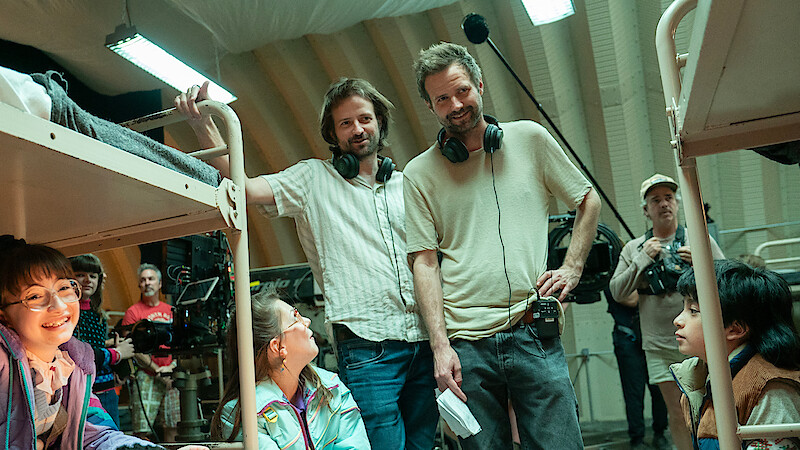
And based on recent comments from the Duffer Brothers, I’m relieved they seem to agree. Matt Duffer openly called the idea of continuing the story through the original characters or their children a “gross cash grab.” That isn’t hyperbole. It’s an accurate diagnosis of what that concept represents creatively.
The Story Already Ended, on Purpose
The most important thing people ignore when proposing a next-generation Hawkins series is intent. The Duffers have been explicit for years that Stranger Things is a coming-of-age story. Not an endless saga. Not a generational epic. A story with a beginning, a middle, and an end.
Once that arc is complete, extending it through the characters’ children doesn’t deepen the narrative. It reverses it.
From a storytelling standpoint, coming-of-age narratives have hard endpoints. When the characters grow up, the story is over. Passing the supernatural trauma down to their kids doesn’t feel organic. It feels like refusal to let go. We already watched these characters survive the worst possible version of adolescence. Asking us to watch their children repeat that journey adds nothing new.
It just proves the bottle is empty.
The Franchise Machine Has Already Done Damage
This isn’t theoretical. We’ve already seen what franchise pressure did to Stranger Things itself.
What began as a tightly written, eight-episode story slowly expanded into longer seasons, bloated runtimes, and increasingly repetitive structures. Episodes stretched. Dialogue explained instead of revealed. Stakes escalated because escalation was expected, not because it served the story.
That’s what happens when a story stops being a story and becomes a content engine.
A next-generation spinoff would accelerate that problem. It would exist not because there’s something urgent to say, but because the brand is valuable and recognizable. Once a series reaches that stage, it’s no longer rewarded for creativity. It’s rewarded for familiarity.
And familiarity is poison to horror.
The Repetition Would Be Impossible to Ignore
Let’s be honest about what a “next generation” Hawkins show would look like.
New kids. Same town. Same mystery cycle. Separation, investigation, supernatural threat, reunion, finale. We’ve already watched this structure repeat across multiple seasons. Doing it again with different character names doesn’t make it fresh. It makes it transparent.
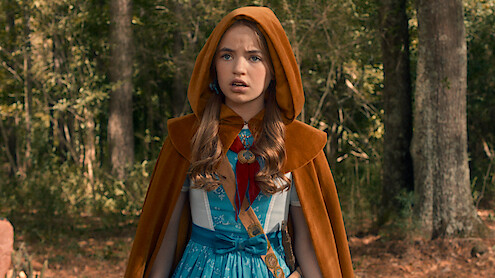
The idea of Holly Wheeler or Erica Sinclair stepping into the same narrative role their predecessors already fulfilled isn’t clever. It’s circular. It turns Stranger Things into a loop rather than a story with progression.
At that point, the Upside Down isn’t frightening. It’s routine.
It Undermines the Original Characters’ Sacrifice
One of the quiet achievements of Stranger Things is that the characters earned their peace. They suffered. They lost people. They carried trauma most adults couldn’t survive. And by the end, they were finally allowed to move forward.
Dragging their children into new supernatural conflicts retroactively cheapens that victory. It suggests nothing was ever truly resolved. That Hawkins is eternally cursed. That trauma is inherited, not overcome.
That isn’t bittersweet storytelling. It’s nihilism.
Why the Duffers’ Actual Plan Makes Sense
This is why the confirmed spinoff direction is the smarter choice. New characters. New setting. New mythology. No Hawkins crew. No Eleven. No Steve. No attempt to recreate dynamics that already ran their course.
By stepping away from Hawkins entirely, the Duffers preserve the integrity of the original series. They’re expanding the universe without cannibalizing its emotional core. That’s restraint. And restraint is rare in modern franchises.
Why I Hope They Never Look Back
A next-generation Hawkins spinoff wouldn’t honor Stranger Things. It would expose it. It would confirm that the story ended not because it should have, but because the creators were forced to stop.
The best thing the Duffers can do for the legacy is exactly what they’re doing now. Let the story end. Let the characters rest. Let the world grow somewhere else.
Not everything needs an heir.
Sometimes the most respectful choice is knowing when not to return.
Check out It’s Netflix Nerd for our latest reviews, ending explanations, and recommendations.