
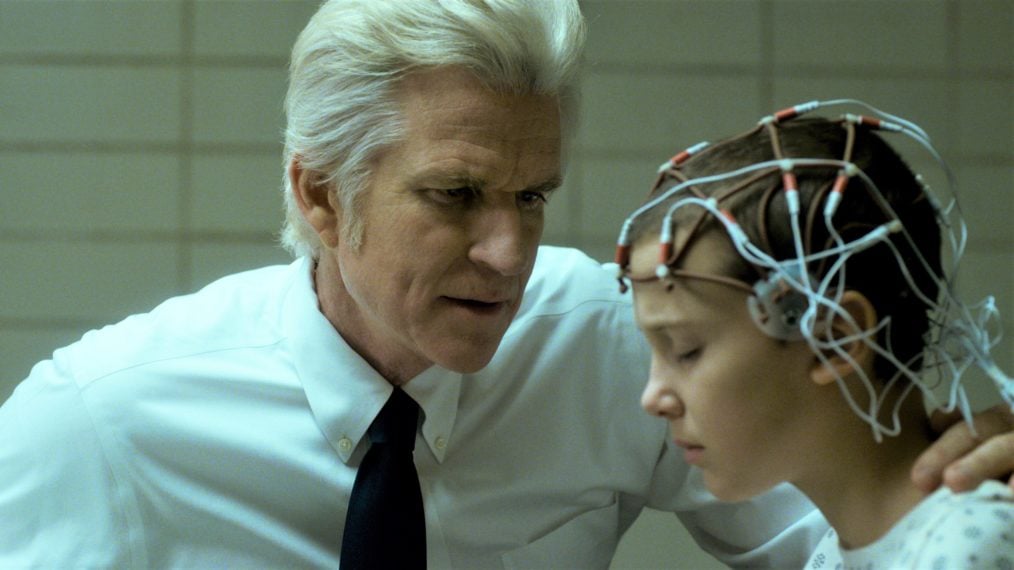
Dr. Martin Brenner remains one of the most polarizing figures in Stranger Things—a man who calls himself “Papa” while committing unspeakable acts against children. Played with chilling precision by Matthew Modine, Brenner exists in the uncomfortable space between protector and predator, scientist and torturer, father figure and abuser. As we approach Season 5, the question haunts fans: was Brenner a villain driven purely by ambition, or an anti-hero making impossible choices for the greater good? The answer reveals uncomfortable truths about how we rationalize cruelty in the name of protection.
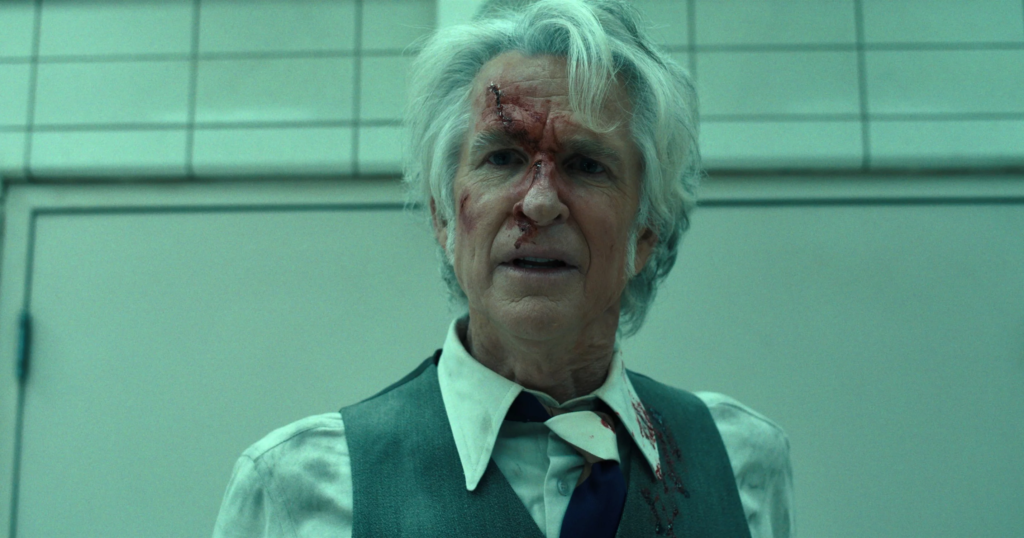
The Case for Villain: Crimes Against Childhood
Let’s start with the undeniable: Dr. Brenner committed horrific crimes against children for decades.
He abducted Terry Ives’s newborn daughter and subjected the infant to experimental testing designed to weaponize her dormant psychokinetic abilities. When Terry attempted to retrieve her child, Brenner ordered electroshock therapy that permanently destroyed her mental state, leaving her catatonic. Terry spent the rest of her life trapped in a mental loop, reliving the moment her daughter was stolen—a fate arguably worse than death.
Inside Hawkins Lab, Brenner raised numbered children in clinical isolation, subjecting them to various kinds of experiments that pushed their abilities to dangerous limits. His “care” came with brutal conditions: solitary confinement for disobedience, psychological torture for failure, and affection weaponized as reward. Eleven and the other children weren’t students—they were prisoners.
The cat experiment from Season 1 crystallizes Brenner’s methodology. He ordered Eleven to kill a cat using her powers, testing whether compassion would override obedience. When she refused, he punished her with isolation. Yet after she killed two agents during her escape, he praised her as “incredible.” The message was clear: violence in service of his goals deserved reward; mercy earned punishment.
Brenner’s manipulation extended beyond physical control into psychological warfare. He positioned himself as the only father Eleven would ever know, creating dependency while systematically destroying her sense of self. Even his kindness carried an unstated threat in every tender word. That’s not love—that’s grooming.
The Actor’s Defense: Love Through a Twisted Lens
Matthew Modine and Millie Bobby Brown have both suggested that Brenner genuinely loved Eleven in his own deeply damaged way. They’ve argued that Brenner saw himself as Eleven’s “real father” and that his experiments were meant to help her reach her full potential, not harm her.
This interpretation is dangerous because it mirrors the logic abusers use to justify their actions: “I hurt you because I love you,” “I’m doing this for your own good,” “You’ll understand when you’re older.” Brenner likely believed his own narrative—that raising Eleven in isolation, forcing her through traumatic experiments, and destroying her mother’s mind were necessary sacrifices for national security or scientific progress.
The show’s creators deliberately complicate this reading in Season 4. When Brenner returns to help Eleven restore her powers through the Nina Project, he appears almost sympathetic. He works alongside Dr. Owens, ostensibly serving Eleven’s needs. He protects her from military forces. He shields her body with his own when soldiers open fire.
But notice what Brenner does the moment Eleven regains her powers: he refuses to let her leave. Despite knowing her friends are dying in Hawkins, despite her desperate pleas, Brenner sedates her and places a power-inhibiting collar around her neck. He wasn’t helping Eleven for her sake—he was helping himself to more time with his greatest creation.
The Uncomfortable Truth: Brilliant Monsters Exist
Here’s what makes Brenner so unsettling: he’s not a cackling supervillain. He’s a brilliant, methodical scientist who genuinely believes his work justifies any cost. His ambition to “achieve great things” overrides ethical considerations like consent, childhood, or basic human dignity.
Brenner represents a specific type of evil: institutional, bureaucratic, wrapped in professionalism and national security clearances. He didn’t torture children in a dungeon—he did it in a government laboratory with funding, oversight, and plausible deniability. That’s what makes him terrifying. Brenner is the villain who sleeps soundly because he’s convinced himself his cruelty serves a higher purpose.
His treatment of Henry Creel (Number One) proves this pattern. Brenner discovered a child with extraordinary abilities and instead of helping him, turned him into the template for all the other children. When Henry eventually massacred the lab, Brenner’s response wasn’t grief over lost children—it was relief that Eleven survived as his “success story.”
The Deathbed Confession: Denied Absolution
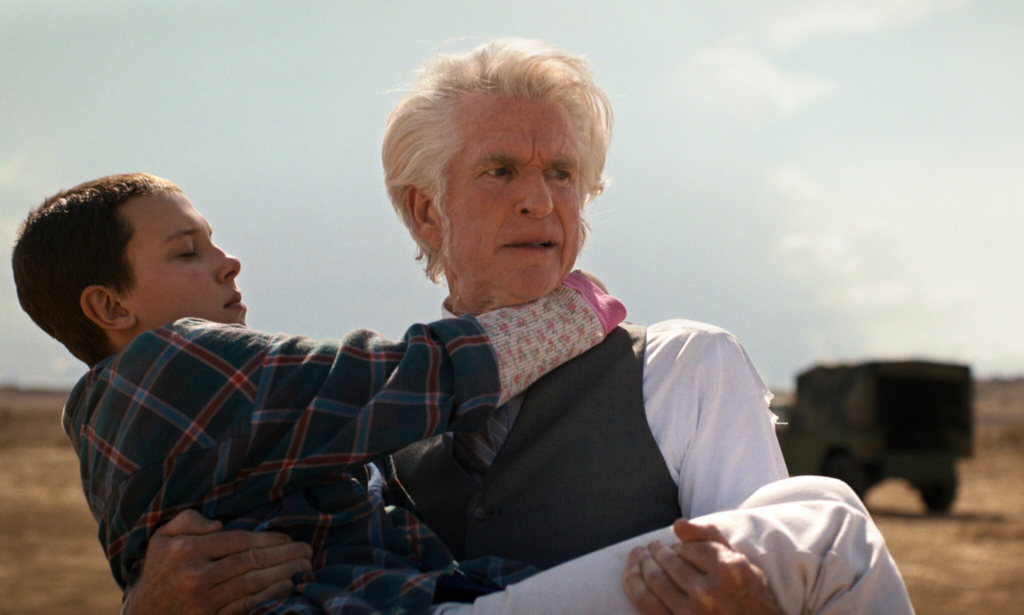
Brenner’s final moments in Season 4, Episode 8 crystallize his character perfectly. Shot by military forces while helping Eleven escape, he dies in the desert sand, begging Eleven to tell him she understands he loved her.
She refuses.
Eleven looks at the man who stole her childhood, destroyed her mother, and called it love—and denies him the forgiveness he desperately craves. “Goodbye, Papa,” she says, but she won’t call it love. That denial is crucial. It’s Eleven reclaiming her narrative, refusing to participate in Brenner’s self-mythology.
The Duffer Brothers confirmed Brenner’s death is permanent: “Yes, for real this time… he’s toast,” they stated definitively. No miraculous survival, no redemption arc in Season 5. Brenner died as he lived—believing himself misunderstood rather than monstrous.
Anti-Hero or Villain? The Verdict
An anti-hero makes morally questionable choices but ultimately serves a greater good. Think Hopper drinking too much and bending rules, or Steve starting as a jerk before becoming the group’s protector. These characters grow, change, and prioritize others over themselves when it matters most.
Brenner never does that. Every “sacrifice” he makes serves his need to continue his work. Every “protection” he offers comes with strings attached. He exploits people he claims to love because he’s good at telling himself that he’s doing what he does for their well-being, and not to satisfy his own scientific curiosity.
The show itself provides the answer. While actors may interpret Brenner sympathetically, Stranger Things consistently frames him as an antagonist. His morally ambiguous role in the fourth season doesn’t erase decades of child abuse. It just shows that even villains can believe they’re heroes.
That’s not an anti-hero. That’s just a villain who convinced himself otherwise.
Check out It’s Netflix Nerd for our latest reviews, updates, release news, and information about Netflix movies and series.