

Character: Eleven / Jane Hopper
Portrayed by: Millie Bobby Brown
Seasons: 1-5 (Main Cast)
First Appearance: Season 1, Episode 1 ("The Vanishing of Will Byers")
Key Abilities: Telekinesis, Remote Viewing, Psychic Combat, Dimensional Manipulation
Defining Traits: Self-Sacrifice, Fierce Loyalty, Quiet Strength, Learning Humanity
I’ve been watching Eleven since 2016.
That shaved-head kid in the hospital gown who could barely speak, who bled from her nose every time she used her powers, who didn’t understand what friendship meant—she became the emotional center of Stranger Things across nine years.
Millie Bobby Brown was twelve when she first played Eleven. Now she’s in her twenties. And watching El’s journey from dehumanized experiment to a girl who finally gets to just be? That’s not just good television. That’s watching someone grow up and choose who they want to become.
Brown’s performance across five seasons is remarkable—she started as a child actress with minimal dialogue conveying complex trauma through facial expressions alone, and evolved into delivering nuanced emotional depth as the character (and actress) matured.
Let me break down Eleven’s complete character arc. Not just the powers and the monster fights—though we’ll cover those. But the emotional journey of a girl learning what it means to be human, brought to life by an actress who literally grew up playing her.
The Lab Rat Who Didn’t Know She Had a Name (Season 1)
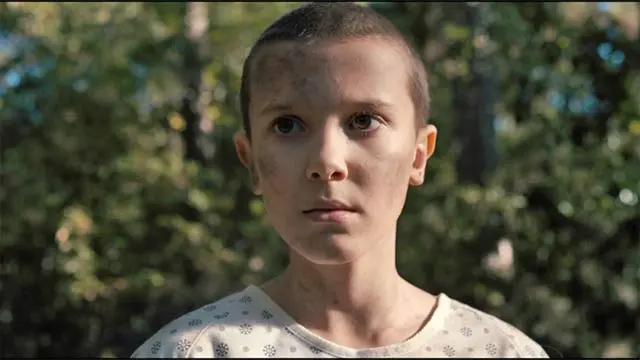
Eleven doesn’t start as “Jane” or even “El.” She starts as a number. A designation. A weapon with a shaved head and hospital gown.
When we first meet her, she’s escaping Hawkins National Laboratory after accidentally opening a gate to another dimension. She’s bleeding. Terrified. Hunted.
She can’t really speak. She knows maybe a hundred words total. Her entire vocabulary consists of commands Brenner gave her and things she overheard in the lab.
What Brenner Did to Her
Let’s be clear about what Dr. Martin Brenner was: an abuser masquerading as a father figure.
He called himself “Papa.” Made Eleven perform psychic experiments. Pushed her powers until she bled. Isolated her from any human connection that wasn’t transactional.
The shaved head wasn’t a style choice. It was dehumanization. Making her look like a patient, a subject, a thing to be studied rather than a child to be loved.
When Eleven kills the Demogorgon at the end of Season 1, she’s not just saving her friends. She’s using the powers Brenner gave her to destroy the monster her powers created.
That’s heavy for a twelve-year-old.
Mike Wheeler Sees Her as Human First
Here’s what changes everything for El: Mike doesn’t see a weapon. He sees a scared kid who needs help.
He gives her a blanket. Lets her stay in his basement. Teaches her words. Shows her his toys. Introduces her to his friends.
Mike treats her like a person before she even understands what that means.
That’s why their relationship becomes the emotional core of the series. Mike didn’t fall in love with Eleven’s powers. He fell in love with the girl learning to be herself despite everything trying to stop her.
The famous “Mike, I’m the monster” / “No, El, you’re not the monster. You saved me” exchange? That’s Eleven beginning to understand she’s more than what Brenner made her.
The Sacrifice That Defined Her Pattern
When Eleven kills the Demogorgon and vanishes into the Upside Down, she establishes a pattern that repeats for five seasons:
Eleven sacrifices herself to save others.
Every single season, El puts herself in mortal danger to protect the people she loves. She doesn’t hesitate. Doesn’t question whether she should. Just acts.
That’s both heroic and tragic. Because it suggests Eleven still sees herself as the weapon—just pointed in a better direction now.
Finding Family and Losing Everything (Season 2)
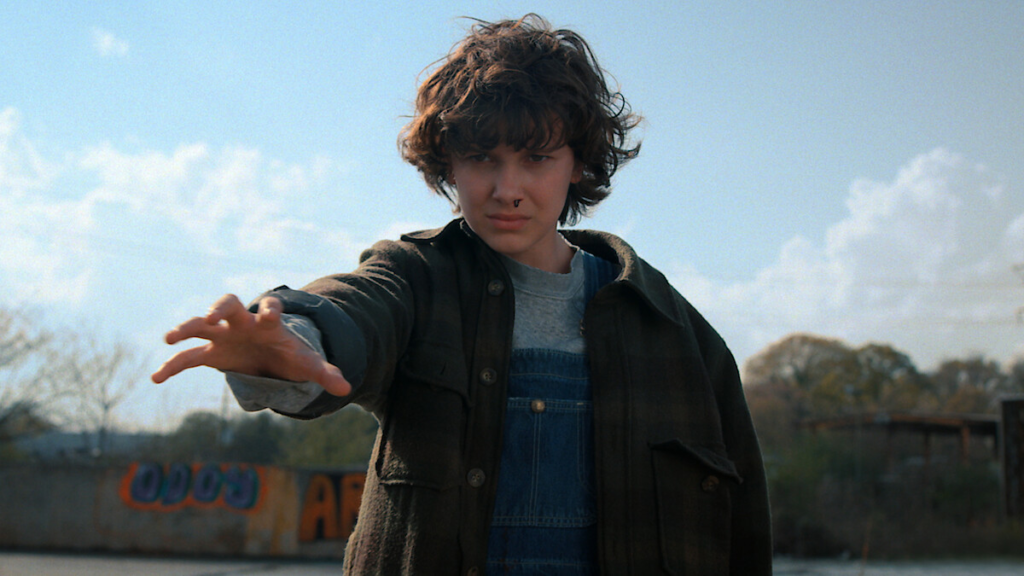
Season 2 is where Eleven starts building identity outside of “the girl with powers who saves people.”
She’s living with Hopper in a cabin. Hiding from the world because if the government finds her, it’s back to the lab. Or worse.
Hopper becomes her father figure. Teaches her rules (which she constantly breaks because she’s a teenager trapped indoors). Tries to give her normalcy despite impossible circumstances.
But El’s restless. She wants to go to school. Have friends. See Mike.
She wants to be normal.
The Kali Detour (Episode 7)
Season 2’s seventh episode—”The Lost Sister”—is the most divisive episode of Stranger Things. A lot of fans hate it because it breaks from Hawkins’ story to follow Eleven meeting Kali (Eight), another lab subject.
But here’s why it matters for El’s character:
Kali represents the path Eleven could take. Using powers for revenge. Surrounding yourself with people who only value you for what you can do. Embracing anger over connection.
El almost goes down that path. She’s angry at Brenner. At being trapped. At missing out on life.
But she leaves Kali because she realizes: her real family is in Hawkins. Not the people who want to use her powers. The people who love her despite them.
That’s massive character growth. Choosing connection over power.
Closing the Gate (Again)
The Season 2 finale has Eleven closing the Upside Down gate with raw telekinetic force while Hopper anchors her emotionally.
This time she doesn’t vanish. This time she comes home.
And for the first time, Eleven gets to attend the school dance. Wear a dress. Dance with Mike. Be a normal teenage girl for one perfect night.
That moment—El smiling in that dress, looking like any other kid at a school dance—hits so hard because we’ve watched her fight for that normalcy since episode one.
Losing Powers, Finding Identity (Season 3)
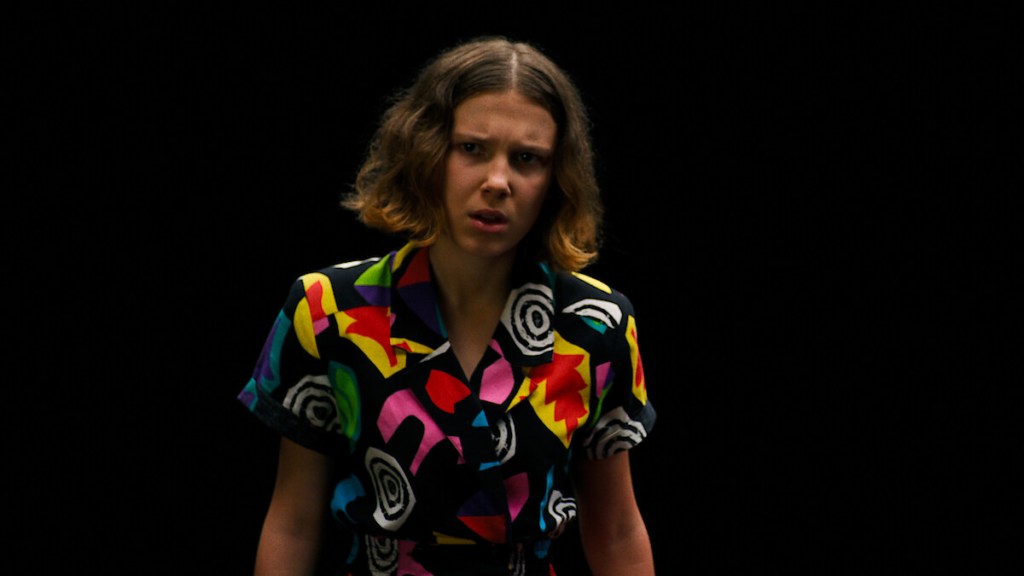
Season 3 does something risky: it takes away Eleven’s powers.
During the Battle of Starcourt Mall, the Mind Flayer’s piece gets inside El. When she rips it out, something breaks. Her connection to her abilities severs.
Suddenly Eleven is just… a girl. No powers. No special abilities. Just Jane Hopper trying to figure out who she is when she can’t move things with her mind.
What Happens When You’re Not Special Anymore?
This is where Millie Bobby Brown’s performance really shines. Watch El’s face when she tries to use her powers and nothing happens. There’s panic, sure. But also something else.
Relief?
Because maybe, just maybe, she gets to be normal now. No more saving the world. No more sacrificing herself. Just a teenage girl dealing with normal teenage problems.
Except the Byers family has to leave Hawkins. Joyce, Will, Jonathan, and El moving to California means leaving Mike and the party behind.
That goodbye scene between El and Mike? Brutal. “I love you” that goes unsaid. The promise to visit. Both knowing long-distance relationships are hard even without interdimensional trauma.
For the first time, Eleven faces a challenge her powers can’t fix: distance and change and growing up.
California Nightmare and Reclaiming Power (Season 4)

Season 4 is Eleven’s darkest season. And it’s not because of monsters.
She’s in California trying to be normal. Going to Lenora Hills High School. Making exactly zero friends because she’s awkward and doesn’t understand social cues and gets bullied relentlessly.
The roller rink scene where Angela humiliates El in front of everyone? Then El hits her with a skate? That’s not heroic. That’s a traumatized kid who doesn’t have healthy coping mechanisms finally snapping.
The NINA Project: Trauma Relived
Dr. Owens and Dr. Brenner (yeah, he’s alive, unfortunately) bring El to a secret facility to restore her powers using the NINA Project—basically reliving her worst childhood memories in sensory deprivation.
She has to remember the day she accidentally helped Henry Creel (One/Vecna) massacre the other lab children. The day Brenner made her believe she was the monster.
Turns out, she wasn’t. She stopped Henry. Banished him to the Upside Down. But the trauma of that day was so severe her mind hid it.
Recovering her powers means confronting her worst memories.
That’s the show acknowledging: you can’t heal by avoiding trauma. You have to face it, understand it, integrate it into who you are now.
When Eleven’s powers return, they’re stronger than ever. But this time, she’s not just using them because someone told her to. She’s choosing to fight because Max—her best friend—is dying and Vecna needs to be stopped.
El and Max’s Friendship
Can we talk about how important Max is to Eleven’s development?
In Season 3, Max teaches El about autonomy. About dumping Mike when he’s being a jerk. About having fun, being rebellious, being a teenager instead of just a hero.
Max shows El that you can be strong without powers. That friendship between girls matters. That sometimes the best thing you can do is go to the mall, steal some clothes, and just be kids together.
When Vecna puts Max in a coma at the end of Season 4, it’s personal for El in a way even Mike’s danger isn’t. Because Max saw her as Jane first, powers second.
The Final Sacrifice: Season 5’s Ambiguous Gift

Season 5 brings everything full circle.
Eleven faces Vecna in the psychic realm one final time. This isn’t a fight—it’s a war across consciousness itself. Will and Kali support her, but ultimately it’s El versus Henry. The first lab child versus the one who escaped.
She impales him with pure telekinetic force. Holds him in place while Joyce lands the killing axe blow (poetic justice for the mom who never gave up). The Upside Down begins collapsing.
Then the exotic matter bombs detonate.
Did Eleven Die?
The finale makes it look like Eleven died in the explosion. Self-sacrifice one last time. The hero who gave everything.
Except Mike’s closing D&D narration reveals something else: a vision of El alive, peaceful, by a secluded waterfall. No lab. No military. No obligations.
The implication? Kali’s final illusion hid El’s escape.
Kali—the sister El met briefly in Season 2, who returned to sacrifice herself in the finale—used her illusion powers one last time to fake El’s death so Jane Hopper could finally, finally just live.
Why This Ending Is Perfect
Some fans wanted El to get the happy ending with Mike. Wedding. Kids. Normal life.
But here’s why the waterfall ending works better:
Eleven spent her entire life being needed. Needed by Brenner for experiments. Needed by Hawkins to close gates. Needed by her friends to fight monsters.
She never got to just exist without purpose or obligation or destiny hanging over her.
The ambiguous ending where she’s alive but hidden? That’s El getting to be Jane. No powers defining her. No one needing her to be a hero.
Just a girl who saved the world and earned the right to disappear into peace.
Eleven’s Powers: What Could She Actually Do?
Let’s break down El’s abilities across the seasons because they evolved significantly:
Season 1:
- Telekinesis (moving objects)
- Remote viewing (the sensory deprivation tank)
- Psychic tracking
- Dimensional manipulation (opening/closing gates)
- Disintegration (the Demogorgon kill)
Seasons 2-3:
- Everything above but stronger
- Biological manipulation (pulling the Mind Flayer piece from her leg)
- Psychic communication
- Memory access
Season 4-5 (Post-NINA):
- All previous abilities amplified
- Dimensional awareness
- Psychic combat across consciousness
- Reality manipulation (implied in finale)
The nosebleeds were always the cost. El’s powers burn through her physically. Every major use leaves her weakened, bleeding, vulnerable.
That’s important because it means El’s heroism isn’t just “girl with infinite power saves day.” It’s “girl who knows using her powers hurts her does it anyway because people she loves need help.”
El’s Relationships: The Family She Built
Mike Wheeler: First Love, First Friend
Mike saw El as human before she saw herself that way. Their relationship isn’t perfect—they’re teenagers, they miscommunicate, they struggle with distance.
But Mike never needed El to be powerful. He fell in love with the girl who didn’t understand why people lie, who thought Eggos were the best food ever, who laughed at his jokes even when she didn’t fully get them.
When El says “I love you” at the end of Season 3, it’s not just romantic. It’s her understanding what love means after years of Brenner calling his abuse “care.”
Hopper: The Father She Deserved
Hopper lost his daughter Sara to cancer. El lost any chance at a normal childhood to Brenner’s experiments.
They found each other and built something real. Hopper teaching El about rules and trust. El teaching Hopper how to be soft again after years of grief-hardened isolation.
Their father-daughter relationship is the show’s secret weapon. When Hopper “dies” in Season 3, El’s grief is devastating because she finally had a dad who loved her without conditions—and lost him.
His return in Season 4 and their reunion? I’m not crying, you’re crying.
Joyce: The Mother Figure
Joyce might not have raised El, but she’s been maternal toward her since Season 2. Helping her get ready for the Snow Ball. Including her in family moments. Treating her like one of her kids.
Joyce landing the killing blow on Vecna to protect El feels right because Joyce has spent five seasons protecting all the kids. El’s just another child Joyce refuses to let monsters hurt.
Max: The Best Friend Who Got It
Max didn’t care about El’s powers. She cared about teaching El how to have fun, stand up for herself, and be a teenage girl instead of just a weapon.
Max and El’s Season 3 friendship—shopping, laughing, dumping boys who don’t respect them—gave El something she’d never had: a peer who treated her normally.
When El fights desperately to save Max in Season 4, it’s because Max gave her normalcy when everyone else gave her responsibility.
The Themes El Embodies
Identity Beyond Purpose
Eleven’s entire arc asks: Who are you when you’re not needed?
She was created to be useful. Brenner needed her for experiments. The government needed her for weapons research. Hawkins needed her to close gates.
But what does El need? What does Jane want?
The series answers by letting her disappear. By giving her the space to figure out who she is without anyone demanding she be something for them.
The Cost of Heroism
Every time El saves people, she loses something. Her freedom. Her childhood. Her powers. Nearly her life multiple times.
The show doesn’t glorify this. It shows heroism as sacrifice—necessary, maybe, but also tragic.
El deserved better than spending her childhood fighting monsters. The fact that she did it anyway doesn’t make the loss less real.
Chosen Family Over Blood
El’s biological mother Terry was broken by Brenner’s experiments. Her biological father is never mentioned. Kali is her blood sister but they barely know each other.
Her real family? Hopper. Joyce. Mike. Will. Max. Lucas. Dustin. The people who chose to love her.
That’s the message: family isn’t who you’re born to. It’s who shows up when you need them.
Millie Bobby Brown’s Performance: Growing Up On Screen
I’ve got to acknowledge what Millie Bobby Brown accomplished here.
She was twelve years old playing a character with minimal dialogue who had to convey complex trauma through facial expressions and body language.
Watch Season 1 El versus Season 5 El. The physicality changes. Season 1 El moves like a cornered animal. Season 5 El moves with confidence and weariness—someone who’s fought too many battles but knows exactly who she is now.
Brown grew up on this show. Her performance matured as the character did. That’s rare in television, especially in genre shows where young actors don’t always get material that lets them showcase range.
El’s journey from barely verbal lab subject to fully realized young woman is as much Brown’s accomplishment as the Duffers’ writing.
Why Eleven’s Story Matters Beyond Stranger Things
El’s arc resonates because it’s about more than superpowers and monsters.
It’s about:
- Escaping abuse and learning to trust again
- Finding identity when the world only sees you as useful
- Choosing connection over isolation despite trauma
- Understanding that love isn’t transactional
Those themes matter to anyone who’s ever felt like they had to be something for people to care about them. Anyone who’s struggled with self-worth beyond what they can do for others.
Eleven learned she was valuable just for existing. Not for her powers. Not for saving the world.
Just for being Jane.
My Take After Nine Years
I’ve spent nearly a decade watching Eleven’s journey. Analyzing every scene. Writing probably hundreds of thousands of words about this character.
And what strikes me most is this: the Duffers never forgot she was a kid.
Even when she was fighting interdimensional monsters and saving reality itself, the show never lost sight of the fact that El was a child who deserved childhood.
Her ending—ambiguous, peaceful, hidden from the world that needed her too much—is the show finally giving her what she earned.
Not a heroic death. Not a dramatic sacrifice that everyone remembers.
Just peace. Privacy. The chance to be Jane instead of Eleven.
After everything she survived, that’s not just a happy ending.
That’s justice.
About Millie Bobby Brown
Millie Bobby Brown was just twelve years old when she auditioned for Stranger Things and changed television forever. The British actress brought Eleven to life across five seasons, growing from a child star with minimal dialogue into an Emmy-nominated powerhouse delivering emotionally complex performances. Brown literally grew up on screen—starting at age 12 in Season 1 and finishing at 20 in Season 5—and her artistic maturation mirrors Eleven’s journey from frightened experiment to self-assured young woman. The role earned her two Emmy nominations, a SAG Award, and launched her into global stardom, though she credits Eleven as “a part of my soul” that defined her career.
About It’s Netflix Nerd
This deep character analysis was brought to you by It’s Netflix Nerd, where I’ve been obsessing over Stranger Things since Mike first found El in the woods. I break down every character arc, analyze every thematic choice, and help you understand why these stories matter beyond the monsters and special effects.
Want more Stranger Things character breakdowns? Check out It’s Netflix Nerd for complete analyses built on years of actually caring about these characters’ journeys.
1 thought on “Eleven Was Never the Monster: Full Character Analysis”