
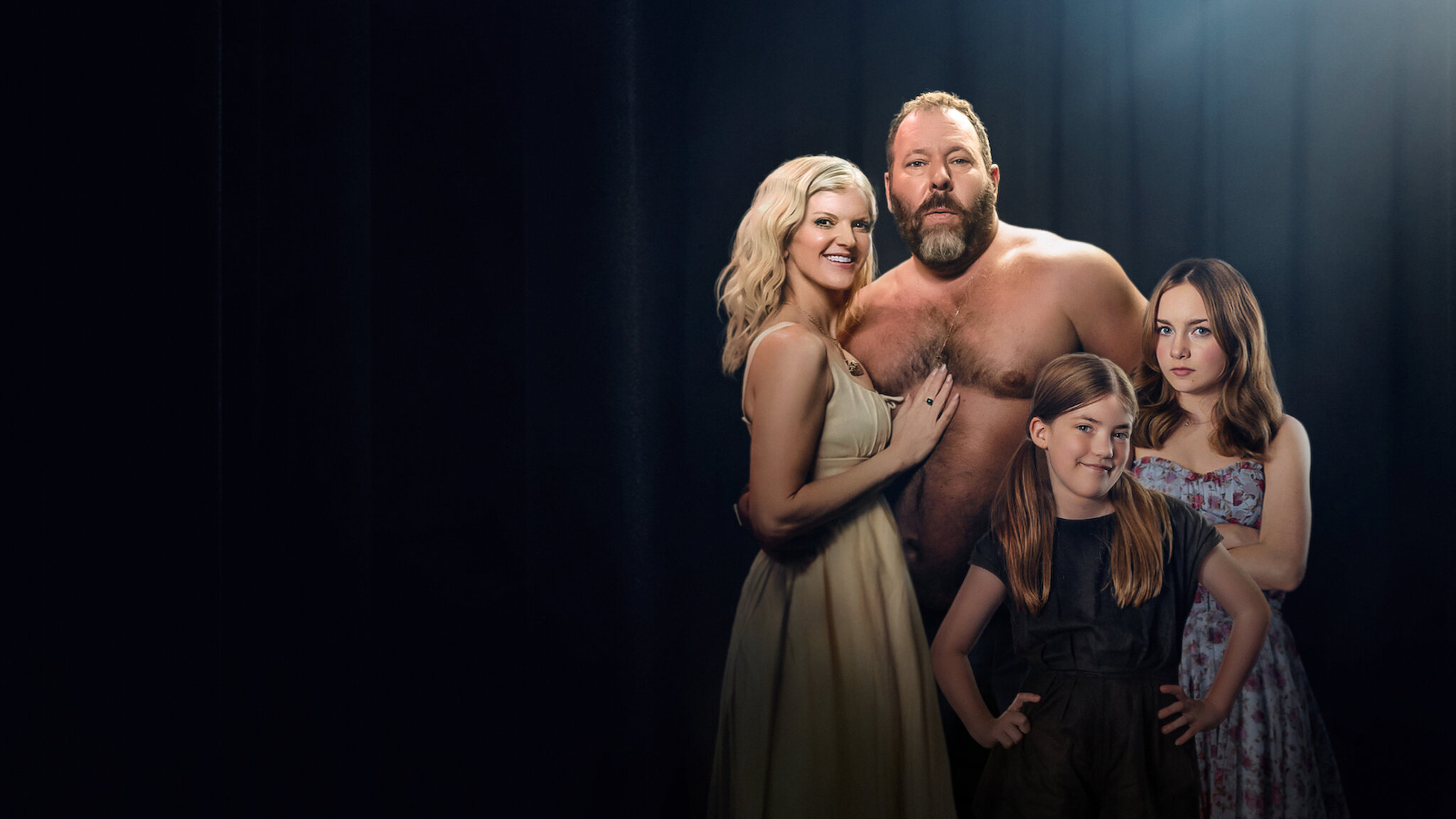
Free Bert premiered on Netflix on January 22, 2026, bringing comedian Bert Kreischer’s larger-than-life persona into scripted comedy territory. This six-episode series explores what happens when a shirtless party legend tries to navigate the pristine world of Beverly Hills private school culture. Co-created by Kreischer alongside Jarrad Paul and Andy Mogel, the show blends authentic family dynamics with the culture clash comedy that emerges when an unapologetically wild comedian attempts to “put on a shirt” and fit into polite society. With all episodes dropping simultaneously, the series invites viewers into a binge-worthy exploration of identity, fatherhood, and the question of how much we should change ourselves to belong.
The Story Behind Free Bert
At its core, Free Bert presents a fictionalized version of Bert Kreischer facing an existential challenge: his daughters Georgia and Ila have been accepted to an elite Beverly Hills private school, and his unbridled, shirtless antics are turning his family into social outcasts. Known for his party-loving persona, unpredictable behavior, and trademark shirtless stand-up performances, Bert represents everything the polished Beverly Hills parent community is not.
The series kicks off with an existential crisis at a celebrity soirée where Bert performs for Rob Lowe’s birthday party. Despite the lucrative gig, Bert realizes he’s missing the important moments in his daughters’ lives, particularly the orientation at their new school. His wife LeeAnn, who herself came from humble trailer park beginnings, understands the social dynamics at play and worries about making the right impression on the wealthy parents who populate their daughters’ new educational world.
When Bert decides to get more involved in Georgia and Ila’s lives, his good intentions consistently backfire in spectacular fashion. His attempt to help Georgia deal with cyberbullying by joining T-Pain’s livestream to promote his daughter takes an unexpected turn when former NFL player Pacman Jones makes an impromptu appearance. The resulting clips of Bert discussing certain topics related to his middle school-aged daughter catch the attention of the school’s most popular girl—but not in the way he hoped.
The situation escalates when that popular girl shares a video clip that leads Bert to invoke the school’s anti-bullying policy and report the incident. Unfortunately for the Kreischer family, the girl’s parents—Landon and Chanel Vanderthal—happen to be major benefactors of the institution. Bert’s subsequent decision to mock Landon during his stand-up routine that night only compounds the problem, creating complications for both him and LeeAnn as they try to navigate this unfamiliar social landscape.
Throughout the series, Bert wrestles with a fundamental question: should he suppress his authentic self to help his family fit in, or is there a way to remain true to who he is while still being the father his daughters need? This tension between authenticity and conformity drives the comedy while exploring genuine questions about identity, parenting, and the sacrifices we make for the people we love.
Complete Episode Breakdown
Free Bert delivers its complete story across six episodes, each running approximately 30 minutes, with all episodes released simultaneously on January 22, 2026. The compact season allows for tight storytelling that builds momentum toward its conclusion.
Episode 1: The Crowd Pleaser
The season opener establishes Bert’s world through a celebrity birthday party for Rob Lowe, where Bert performs his signature shirtless stand-up routine. However, the lucrative gig means missing his daughters’ private school orientation, setting up the central conflict between Bert’s career and family responsibilities. When Bert decides to get more involved by volunteering to drop Georgia and Ila at school, his well-meaning gesture immediately goes sideways. The episode introduces the key players in the Beverly Hills parent hierarchy and establishes the vast cultural gap between Bert’s unapologetic authenticity and the carefully curated personas of the private school community.
Episode 2: Untitled
The second episode deepens the exploration of Bert’s relationship with his daughters, particularly teenager Georgia, who feels mortified by her father’s antics. Meanwhile, younger sister Ila proves more perceptive, identifying that Georgia’s real issue stems from wanting attention. Bert’s misguided attempt to help by joining T-Pain’s livestream to promote Georgia backfires when Pacman Jones makes an unexpected appearance, creating social media content that will have lasting repercussions for the family’s standing at school.
Episode 3: Untitled
Mid-season complications arise as the video clips from Bert’s livestream catch the attention of the school’s most popular girl. What initially seems like positive attention quickly sours when the girl shares selective clips that paint Bert in an unflattering light. The episode explores the weaponization of social media in teenage hierarchies and how parents’ actions directly impact their children’s social standing. Bert’s decision to report the incident under the school’s anti-bullying policy seems justified until he learns about the girl’s parents’ influential position at the school.
Episode 4: Untitled
The Vanderthal family enters the picture as major antagonists when Bert discovers that Landon and Chanel are significant benefactors whose daughter has been bullying Georgia. The power dynamics become clear as Bert realizes he’s dealing with people who have both money and influence within the school system. His attempt to process the situation through his stand-up routine—where he mocks Landon—demonstrates both his inability to filter himself and his tendency to use comedy as a coping mechanism, even when it creates additional problems.
Episode 5: Untitled
As consequences from earlier episodes compound, Bert must confront how his actions have affected not just his own reputation but LeeAnn’s ability to navigate the social circles necessary for their daughters’ success. The episode likely explores LeeAnn’s perspective more deeply, showing how her trailer park background makes her particularly sensitive to the class dynamics at play and her frustration when Bert’s behavior threatens the opportunities she wants for Georgia and Ila.
Episode 6: Untitled
The season finale brings the various storylines to resolution while addressing the central question: can Bert change who he fundamentally is, and should he have to? The conclusion balances comedic payoff with genuine emotional stakes as the Kreischer family determines what fitting in truly costs and whether the price is worth paying. The episode sets up potential future storylines while providing satisfying closure to the season’s primary conflicts.
The Cast: Comedy Meets Heart
Free Bert assembles a talented ensemble to bring this Beverly Hills culture clash to life, blending comedy veterans with fresh faces to create the series’ unique dynamic.
Main Cast
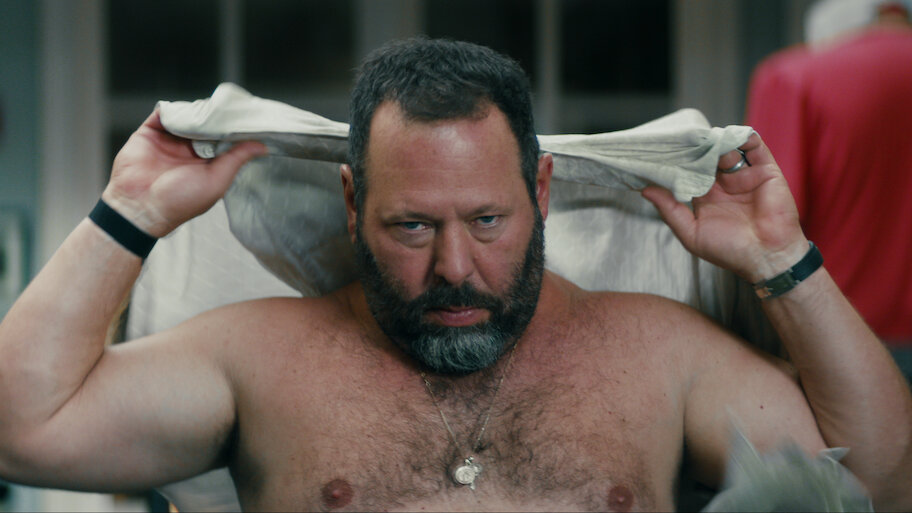
Bert Kreischer stars as a fictionalized version of himself, bringing his established comedic persona to scripted television. Known for his shirtless stand-up specials, party-loving reputation, and genuine warmth, Kreischer translates his real-life experience as a father into this heightened comedy version. His willingness to examine his own excesses and shortcomings provides the emotional foundation for the series’ humor.
Arden Myrin portrays LeeAnn Kreischer, Bert’s wife and the mother of their two daughters. Myrin, known for her work on “The Marvelous Mrs. Maisel” and “Insatiable,” brings depth to a character who could easily be reduced to the “long-suffering wife” trope. Instead, LeeAnn emerges as a fully realized character with her own background, motivations, and fears. Her trailer park origins give her particular insight into class dynamics, making her keenly aware of what’s at stake when Bert’s behavior threatens their daughters’ opportunities.
Ava Ryan plays Georgia, the Kreischers’ eldest daughter navigating the treacherous waters of adolescence while dealing with cyberbullying and a father whose idea of helping often makes things worse. Ryan, previously seen in “Keeping Up With the Joneses,” captures the teenage mortification of having an embarrassing parent while also showing moments of genuine connection with her father.
Lilou Lang appears as Ila, the younger Kreischer daughter whose perceptiveness often cuts through the family’s drama to identify the real issues at play. As a newcomer, Lang brings fresh energy to the role of the astute younger sibling who sees more than the adults give her credit for.
Chris Witaske and Mandell Maughan portray Landon and Chanel Vanderthal, the wealthy benefactors whose daughter’s conflict with Georgia escalates into a broader family feud. These characters represent the Beverly Hills establishment that views the Kreischers as unwelcome intruders into their carefully maintained social ecosystem.
Supporting Cast
Christine Horn, Rashal James as Carl, Sophia Reid-Gantzert, Robert Jon Mello, Braxton Alexander, Matthew Del Negro, and Noshir Dalal round out the ensemble, playing various Beverly Hills parents, school administrators, and community members who populate the world Bert struggles to navigate.
The chemistry between cast members, particularly the family dynamic between Kreischer, Myrin, Ryan, and Lang, grounds the comedy in recognizable relationships even as the situations become increasingly absurd.

Timeline and Setting
Free Bert takes place in contemporary Beverly Hills, showcasing the stark contrast between Bert’s working-class comedy roots and the ultra-wealthy enclave where his daughters now attend school. The series unfolds during a single school year, with the six episodes compressing key moments from the family’s adjustment to private school culture.
The timeline moves quickly, with consequences from early episodes cascading through subsequent installments. Bert’s celebrity birthday party performance occurs simultaneously with the school orientation he misses, immediately establishing the work-life balance issues that plague the family. The livestream incident and its fallout happen in compressed time, showing how quickly social media can amplify situations and create lasting reputational damage.
Beverly Hills itself becomes a character in the series—its pristine streets, exclusive boutiques, and carefully manicured lawns representing a world that values appearance and conformity over authenticity. The contrast between this environment and Bert’s naturally chaotic energy creates constant friction that drives both the comedy and the character development.
The Soundtrack and Score
Music plays an important supporting role in Free Bert, enhancing both comedic moments and the emotional beats underlying the family drama. The series features a mix of contemporary tracks and an original score composed by Jeff Cardoni, who brings extensive comedy scoring experience from shows like “Silicon Valley,” “The Kominsky Method,” “Ghosts,” and “The Franchise.”
Cardoni previously collaborated with creators Jarrad Paul and Andy Mogel on “The Grinder” and “Huge in France,” establishing a working relationship that informs Free Bert’s musical identity. His score underscores the fish-out-of-water comedy while also highlighting the genuine emotional stakes as the Kreischer family navigates their new reality.
The soundtrack selections reflect both Bert’s party-loving persona and the more polished aesthetic of Beverly Hills culture. Music cues emphasize the cultural collision at the series’ heart—the difference between Bert’s world of comedy clubs, podcasts, and unpretentious entertainment and the Beverly Hills preference for refined, curated experiences.
While specific song-by-song breakdowns are still being compiled by fans following the January 22, 2026 premiere, the musical choices throughout the series support the tonal balance between broad comedy and authentic family emotion that defines the show’s approach.
Behind the Scenes: From Concept to Series
Free Bert represents Bert Kreischer’s transition from stand-up specials and reality formats into scripted comedy. Co-created with Jarrad Paul and Andy Mogel, the series draws on Kreischer’s real experiences as a father while heightening situations for comedic effect. The decision to use Kreischer’s actual wife’s name (LeeAnn) for the fictional character creates an interesting meta-layer while still maintaining that this is a scripted, fictionalized version of events rather than documentary.
Paul and Mogel bring comedy writing credentials including their work on “The Grinder,” helping structure Kreischer’s comedic instincts into episodic storytelling that builds across the six-episode season. The relatively short episode order allows for focused storytelling without the padding that sometimes plagues longer comedy seasons.
The series was developed as Netflix’s answer to fish-out-of-water family comedies, but with the added dimension of examining celebrity culture, class anxiety, and authentic parenting struggles. By making Bert a fictionalized version of himself rather than creating a completely different character, the show can draw on audience familiarity with Kreischer’s established persona while still surprising viewers with character growth and emotional depth.
Critical Reception and Audience Response
Free Bert premiered to mixed early responses, with critics and audiences still forming opinions in the days immediately following the January 22, 2026 release. The series’ six-episode format allows for easy binge-watching, and Kreischer’s built-in fanbase from his stand-up career provides a ready audience curious to see his scripted comedy debut.
Early discussions have focused on how well the series balances Bert’s comedic excesses with genuine family dynamics. The show’s willingness to examine class anxiety, parental inadequacy, and the tension between authenticity and conformity gives it thematic depth beyond simple culture clash comedy.
The portrayal of Beverly Hills culture and private school politics resonates as both satire and recognizable reality for viewers familiar with those environments. The Vanderthal family and other wealthy parents represent archetypal figures while still feeling grounded enough to support the story’s emotional stakes.
Kreischer’s performance in a scripted context represents new territory for the comedian, and audience reception will likely depend on how effectively the series uses his established persona while showing new dimensions of his abilities as an actor rather than just a performer of himself.
Latest Updates and Future Prospects
As of January 2026, Free Bert has just premiered with all six episodes available for streaming on Netflix. The series has not yet been renewed for a second season, with Netflix typically waiting to assess viewership data, critical reception, and audience engagement before making renewal decisions.
The six-episode season tells a complete story arc while leaving room for potential continuation. If renewed, future seasons could explore the Kreischer family’s continued navigation of Beverly Hills society, new conflicts arising from Bert’s inability to fully conform, and the evolution of Georgia and Ila as they grow within this environment.
The series arrives during a period when Netflix has shown increased interest in comedy series that blend family dynamics with cultural commentary. Free Bert’s unique angle—using a real comedian’s persona as the foundation for scripted storytelling—offers something distinctive in the streaming comedy landscape.
Kreischer’s other projects, including his stand-up specials and podcast work, continue alongside the series, potentially providing cross-promotional opportunities if Netflix decides to continue Free Bert beyond its initial season.
Why Free Bert Resonates
Beyond the surface comedy of a shirtless comedian loose in Beverly Hills, Free Bert taps into universal anxieties about belonging, parenting, and authenticity. The question of how much we should change ourselves to fit in resonates across different contexts—new schools, new jobs, new social circles where our natural instincts clash with established norms.
Bert’s struggle represents a specific version of a common parental dilemma: balancing your own identity with being the parent your children need. His recognition that his behavior affects Georgia and Ila’s social standing forces him to consider whether his trademark authenticity is actually selfishness in disguise, or whether conforming to Beverly Hills standards would model the wrong values for his daughters.
LeeAnn’s character adds crucial depth by representing someone who understands both worlds. Her trailer park background gives her perspective on class mobility and the opportunities that come with wealth, making her more willing to adapt than Bert. The tension between their approaches reflects real conversations in families navigating social advancement.
The series also examines how social media amplifies every misstep, particularly for people in the public eye. Bert’s livestream disaster shows how quickly well-meaning actions can be recontextualized and weaponized, creating lasting consequences that extend far beyond the original moment.
Where to Watch
All six episodes of Free Bert are currently streaming exclusively on Netflix worldwide. The series carries a TV-MA rating, reflecting its adult language and themes, though the core family dynamics make it accessible to viewers who appreciate comedy grounded in recognizable relationships and situations.
For viewers new to Bert Kreischer’s work, Free Bert offers an introduction to his comedic persona through a scripted narrative structure. Fans of his stand-up specials will recognize his energy and storytelling approach adapted to episodic television format.
The series joins Netflix’s growing library of comedy series exploring family dynamics through culturally specific lenses, appealing to viewers who enjoyed shows that blend humor with genuine emotion while examining what happens when different worlds collide.
Free Bert ultimately asks whether fitting in requires losing yourself, or whether there’s a middle ground where authenticity and adaptation can coexist. Whether Bert finds that balance—and whether Netflix renews the series to continue exploring these questions—remains to be seen, but the first season offers a surprisingly heartfelt examination of fatherhood, identity, and the lengths we’ll go to protect our families, even from ourselves.
Check out It’s Netflix Nerd for our latest reviews, updates, release news, and information about Netflix movies and series.