

Character: Lucas Charles Sinclair
Portrayed by: Caleb McLaughlin
Seasons: 1-5 (Main Cast)
First Appearance: Season 1, Episode 1 (“The Vanishing of Will Byers”)
Key Traits: Skepticism, Loyalty, Protectiveness, Athletic Ability, Practical Thinking
Role in Party: The Skeptic, Voice of Reason, Protector, Ranger
Signature Weapons: Wrist rocket, binoculars, common sense
Lucas Sinclair doesn’t get nearly enough credit.
I’m saying this as someone who’s analyzed Stranger Things obsessively since 2016. Lucas is consistently the most underappreciated member of the party—both by the fandom and sometimes by the show itself.
But here’s the truth: Lucas Sinclair is the conscience of the group. The one asking hard questions everyone else ignores. The friend who tells you what you need to hear instead of what you want to hear. The guy who chooses loyalty over popularity even when it costs him everything.
Caleb McLaughlin brought depth and nuance to a character who could’ve been dismissed as “the skeptical one” or worse. Instead, Lucas became the emotional anchor—the person whose practicality balanced everyone else’s impulsiveness, whose love story with Max gave the show its most realistic romance, and whose journey from skeptic to believer mirrored what it means to trust your instincts even when they contradict what you’re seeing.
Let me break down why Lucas Sinclair’s arc—from the kid who didn’t trust Eleven to the man who chose Max over basketball stardom—is one of Stranger Things’ most quietly powerful character journeys.
The Skeptic Who Asked the Right Questions (Season 1)
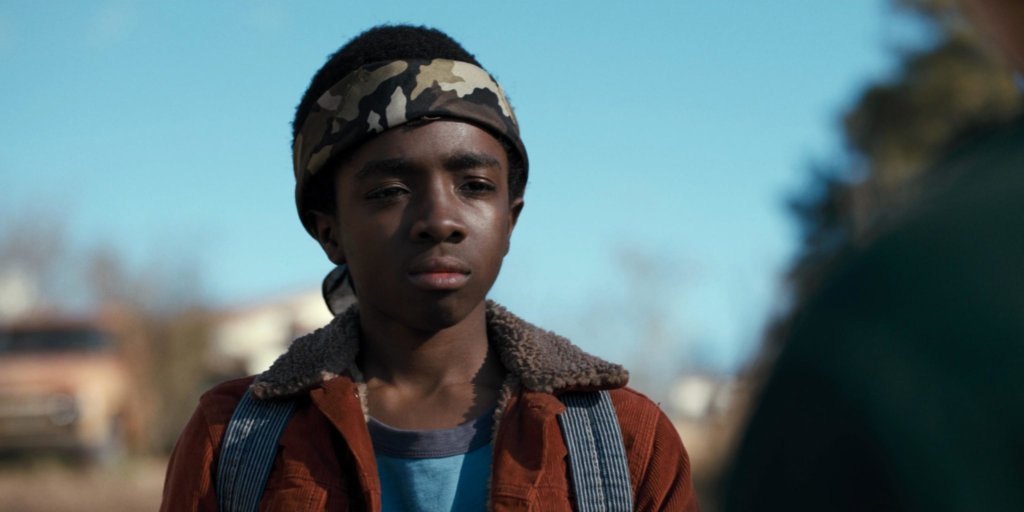
Lucas starts Season 1 as the party member who questions everything. And honestly? He’s usually right to be skeptical.
“I Don’t Trust Her”
When Mike brings Eleven to the party, everyone’s reaction reveals their character:
- Mike sees someone who needs help
- Dustin sees someone fascinating
- Lucas sees a potential threat
The fandom vilified Lucas for not immediately trusting El. But rewatch Season 1 with Lucas’s perspective in mind:
A strange girl with no explanation appears the same night Will disappears. She has weird powers. She’s connected to the lab doing shady experiments. She’s lying about what she knows.
Lucas isn’t being paranoid. He’s being cautious. And in a situation involving missing children and government conspiracies, caution is the rational response.
The problem isn’t Lucas’s skepticism—it’s that his skepticism isolates him from the group. Mike’s so committed to protecting El that he can’t hear Lucas’s valid concerns. The party fractures, and Lucas ends up alone pursuing his own investigation.
The Wrist Rocket Warrior
While Mike and Dustin search with El, Lucas grabs his binoculars and wrist rocket and tracks things himself. He stakes out the lab. Follows suspicious vehicles. Gathers intelligence.
Lucas’s practical, action-oriented approach to problems becomes his trademark. He doesn’t wait for answers—he investigates. He doesn’t hope for the best—he prepares for the worst.
That wrist rocket becomes his signature weapon. It’s not supernatural. Not particularly powerful. Just a practical tool used with precision and skill.
Lucas Sinclair doesn’t need superpowers. He has aim, determination, and the willingness to act when others hesitate.
The Apology That Mattered
When Lucas realizes Eleven’s genuinely trying to help find Will, he apologizes. Not a half-hearted “sorry I guess” but a real acknowledgment that his suspicion was unfair.
That’s character growth happening in real-time. Lucas doesn’t double down on being wrong. He adapts when evidence changes. He admits mistakes and moves forward.
Watching an eleven-year-old character demonstrate that kind of emotional maturity? That’s sophisticated writing and performance.
Saving Everyone With a Slingshot
The Season 1 climax has Lucas on the roof with his wrist rocket, providing cover fire against government agents trying to capture the kids. His well-aimed shots buy time for El to flip the van and save everyone.
Lucas Sinclair—no powers, no special abilities, just good aim and courage—holds off armed adults with a children’s toy turned weapon.
That’s the metaphor for his entire character: making the ordinary extraordinary through skill and bravery.
Finding Max and Losing Will (Season 2)
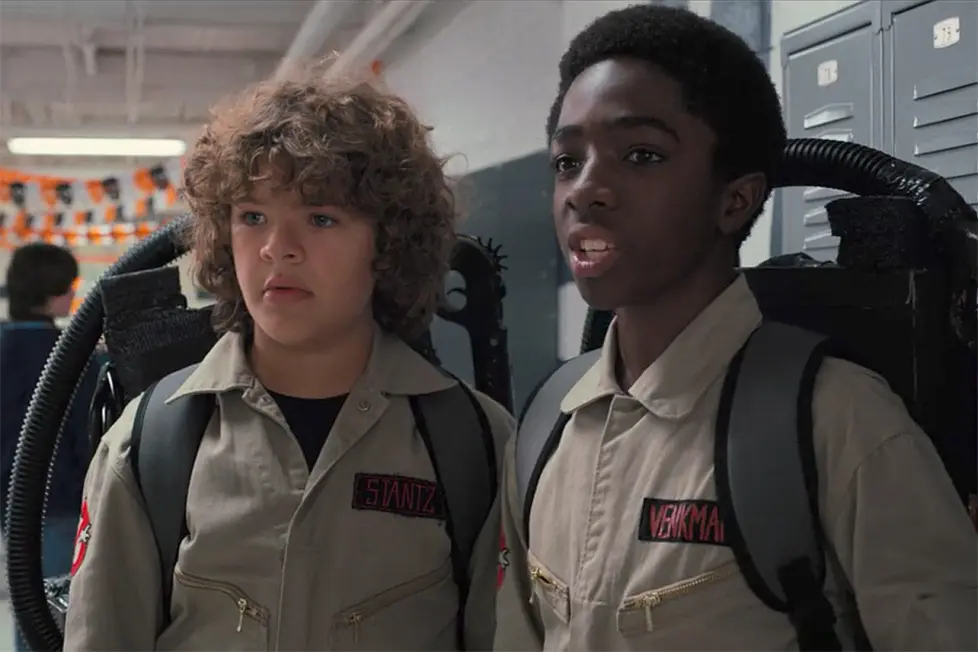
Season 2 introduces Max Mayfield—the new girl who skateboards, plays arcade games, and immediately catches Lucas’s attention.
Love at First Sight (Sort Of)
Lucas is immediately interested in Max. Like, not subtle at all about it. Trying to impress her. Competing with Dustin for her attention. Acting like a total dork because that’s what thirteen-year-olds do when they have crushes.
What’s great about Lucas’s pursuit of Max: he sees her as a person, not a prize.
Yes, he’s competing with Dustin initially. But Lucas actually talks to Max. Asks about her interests. Listens to her answers. Shares real information about himself.
When Max wants to know the truth about Will and the Upside Down, Lucas tells her. Against the group’s agreement. Risking his friendships.
Why? Because Max deserves honesty. Because she asked and he respects her enough to give real answers instead of protective lies.
That’s Lucas’s character in action: choosing truth and respect over comfortable deception.
The Racist Stepbrother Problem
Max’s stepbrother Billy is a racist, abusive nightmare. The show doesn’t spell it out explicitly, but Billy’s aggression toward Lucas is clearly racially motivated.
Lucas faces this threat with remarkable courage. He doesn’t back down from Max despite Billy’s intimidation. Doesn’t let racist hostility stop him from pursuing a relationship with someone he cares about.
The Halloween confrontation where Billy threatens Lucas, then later attacks him, shows Lucas standing his ground against someone bigger, older, and violent. That takes serious bravery.
The show could’ve done more with this storyline—addressing the racial dynamics more explicitly. But Caleb McLaughlin’s performance conveys Lucas’s awareness that he’s dealing with something beyond typical sibling protectiveness.
The Snow Ball Triumph
Season 2 ends with Lucas and Max dancing at the Snow Ball. She chose him. They’re together. It’s sweet and awkward and perfectly teenage.
But more importantly: Lucas fought for this relationship. Told the truth when lying was easier. Stood up to racism and violence. Respected Max’s autonomy and intelligence.
He earned this moment not through grand gestures but through consistent integrity. That’s a powerful message about what healthy relationships require.
Choosing Between Worlds (Season 3)
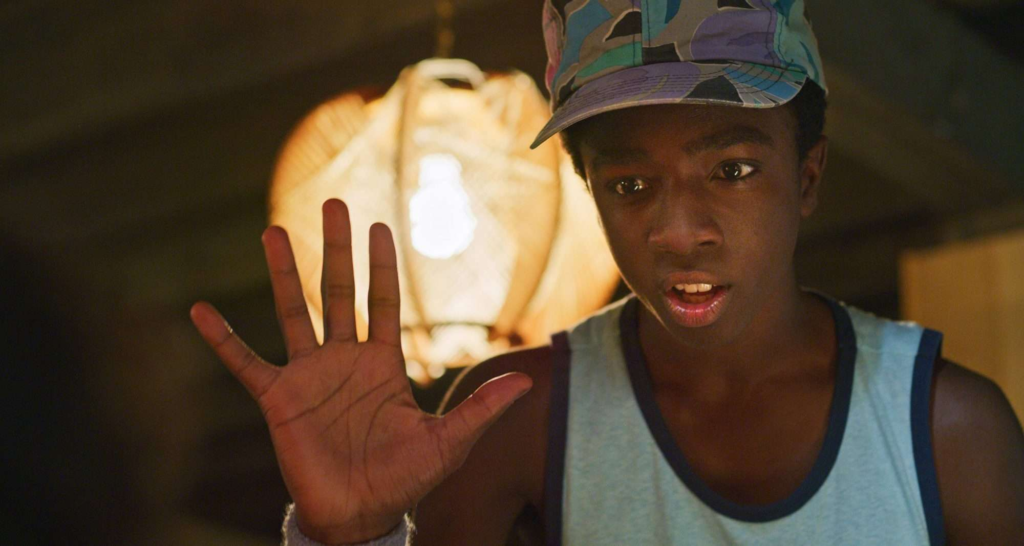
Season 3 puts Lucas in an interesting position: he’s got a girlfriend now, and that changes party dynamics.
The Couple Dynamic
Lucas and Max are that couple in the friend group. The ones who fight and make up constantly. Who are clearly crazy about each other but also learning how relationships work through trial and error.
Their bickering is realistic teenage couple behavior. Not abusive or toxic—just two people figuring out how to navigate individual needs within a relationship.
Lucas wants to do his own thing sometimes. Max wants couple time. Neither is wrong. They’re just learning to balance independence and togetherness, which is what healthy relationship development looks like.
The Mind Flayer Returns
When Will senses the Mind Flayer’s return, Mike believes him immediately. So does Lucas—because Lucas learned his lesson from Season 1.
This time, when weird things happen, Lucas doesn’t default to skepticism. He trusts his friends’ instincts. He’s learned that sometimes the impossible explanation is the correct one.
That’s growth. Not abandoning critical thinking, but knowing when to trust the people who’ve proven themselves.
Starcourt Battle
The Season 3 finale has Lucas fighting Mind Flayer monsters with fireworks alongside the party. His practical combat skills—developed over three seasons of actual monster fighting—make him effective even against impossible threats.
Lucas’s role in battles is consistent: protect the people who are more vulnerable. Use whatever weapons are available. Stay calm under pressure. Fight smart, not just hard.
He’s not the strongest or most powerful. But he’s reliable. When things go wrong, Lucas Sinclair will be there, wrist rocket loaded, ready to back up his people.
The Basketball Dilemma (Season 4)
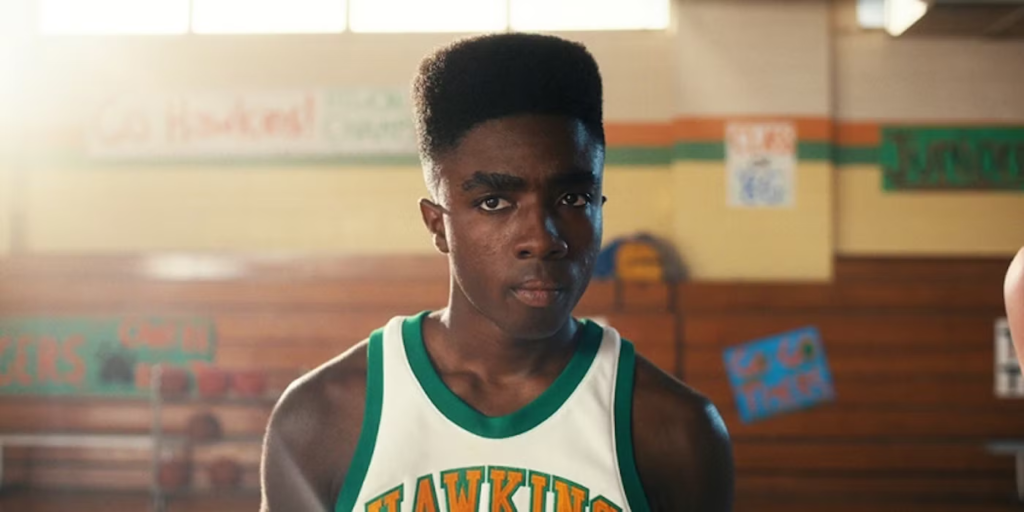
Season 4 gives Lucas his most complex arc: trying to fit in at high school while maintaining his friendships and relationship.
Joining the Basketball Team
Lucas makes the basketball team. Suddenly he’s got social capital. Popularity. A path to being more than “one of the freaks.”
The party—especially Mike and Dustin—feels betrayed. Lucas is choosing jocks over them. Choosing normalcy over loyalty.
But here’s the thing: Lucas isn’t wrong to want both.
He’s a Black teenager in 1980s Indiana trying to navigate high school. He’s good at basketball. He enjoys it. And having athletic success opens social doors that being “freak” nerd keeps closed.
Wanting acceptance isn’t betrayal. Wanting to be seen as more than just “Sinclair from the nerd table” is legitimate.
The Hellfire Championship Conflict
The D&D championship game falls on the same night as Lucas’s basketball championship. He has to choose.
Eddie Munson’s speech about “forced conformity” and staying true to yourself is directed partly at Lucas. The implication: choosing basketball over Hellfire is selling out.
But Lucas isn’t conforming. He’s integrating. He’s trying to be both the athlete and the nerd. Both the popular kid and the loyal friend.
The fact that the world makes him choose? That’s the problem, not Lucas’s desire to exist in both spaces.
Choosing Max Over Everything
When Vecna targets Max, Lucas abandons the championship game. Runs to her side. Stays with her through the possession and curse.
He doesn’t think twice. Basketball, popularity, social acceptance—none of it matters compared to Max’s life.
That’s Lucas’s core value system revealed: when push comes to shove, he chooses the people he loves over everything else.
The Most Horrific Experience
Lucas watches Max die. Sees her bones break. Her eyes bleed. Her body contort under Vecna’s curse.
El brings her back, but Max is comatose. Blind. Broken.
Lucas sits by her hospital bed reading to her. Talking to her. Refusing to give up hope even when doctors say she’ll never wake up.
That vigil—Lucas showing up day after day for someone who can’t respond, who might never respond—is love in its purest, most painful form.
The Jason Carver Confrontation
Jason Carver—Max’s ex-boyfriend, basketball team captain, Lucas’s teammate—becomes convinced Eddie and Lucas are involved in a satanic cult killing people.
The climactic confrontation has Jason holding Lucas at gunpoint while Lucas tries to save Max from Vecna. Lucas has to fight his own teammate to protect the girl they both care about.
It’s tragic because Jason’s not entirely wrong to be suspicious. People are dying mysteriously. His girlfriend was targeted. From his perspective, Lucas’s behavior looks suspicious.
But Jason’s so locked into his worldview that he can’t see the truth. And Lucas, trying desperately to save Max while fighting off someone who should be his ally, embodies the season’s theme: sometimes the people who should trust you are the ones who hurt you most.
The Vigil and Recovery (Season 5)
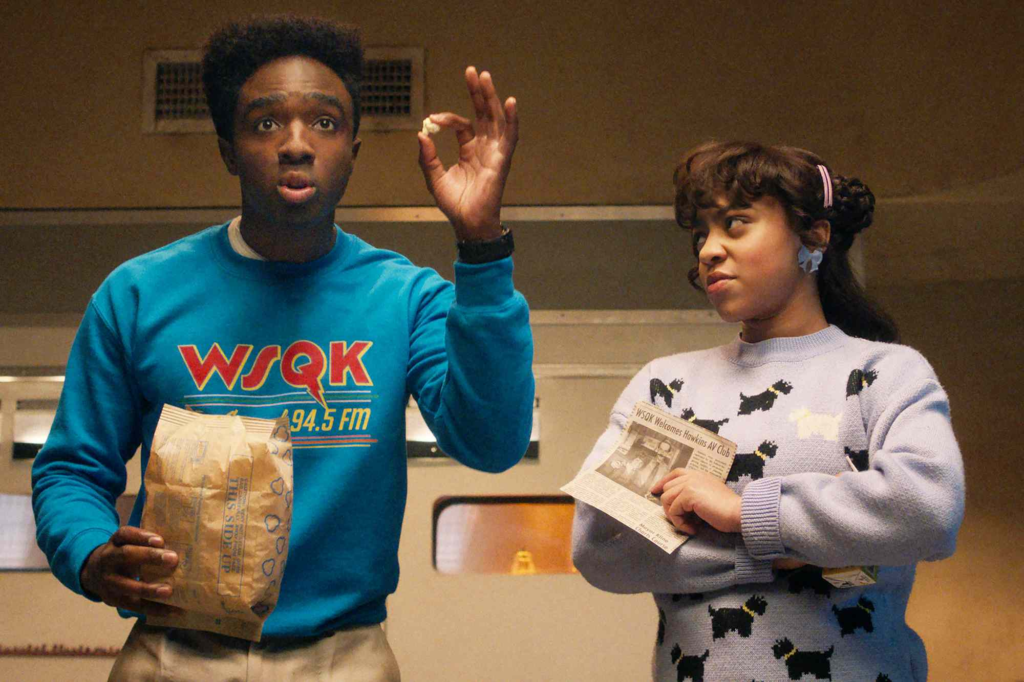
Season 5’s opening finds Lucas still maintaining his bedside vigil. Still reading to Max. Still hoping.
When She Wakes Up
Max wakes up. Recovers. The curse breaks.
For Lucas, this isn’t just relief—it’s validation. All those hours sitting beside her bed, talking to someone who couldn’t respond, believing she’d come back when everyone else implied he should move on.
He was right. His faith was rewarded. His love literally helped call her back.
Graduation and Small Town Life
The epilogue shows Lucas and Max graduated together, settled in a small town somewhere outside Hawkins. Not a dramatic ending with grand gestures—just two people who survived hell choosing a quiet life together.
Lucas could’ve gone to college on a basketball scholarship. Could’ve pursued athletic dreams. Could’ve built a life in the spotlight.
Instead, he chose Max. Chose a simple existence with the person he loves over external achievement or recognition.
That’s Lucas’s final character statement: loyalty and love matter more than success.
Lucas’s Role as the Party’s Conscience
Let’s examine what made Lucas essential beyond his combat skills:
The Voice of Caution
Every group needs someone asking “Wait, should we really do this?” Lucas filled that role consistently:
- Season 1: “Should we trust this weird girl?”
- Season 2: “Should we really let Max join?”
- Season 3: “Are we sure this is the Mind Flayer?”
- Season 4: “Do we have a plan beyond ‘fight Vecna’?”
He wasn’t being difficult. He was ensuring the group thought through consequences before acting impulsively.
The Practical Warrior
Lucas approached problems pragmatically:
- No powers? Learn to fight with conventional weapons.
- Need reconnaissance? Use binoculars and tracking skills.
- Facing armed adults? Aim for vulnerable points and create distractions.
- Fighting monsters? Fireworks work just fine.
His practical mindset balanced the group’s tendency toward magical thinking. Sometimes the solution isn’t supernatural—it’s just good strategy and execution.
The Loyal Opposition
Lucas challenged his friends when they were wrong, but never abandoned them. That’s sophisticated friendship:
- Argued with Mike’s decisions in Season 1—still fought beside him
- Disagreed with the group’s Max exclusion—still included himself
- Chose basketball over D&D—still dropped everything when they needed him
Real loyalty isn’t blind agreement. It’s staying committed to people even when you’re in conflict.
The Protector
Lucas’s first instinct in danger: protect the vulnerable.
Watch him in battle scenes. He’s always positioning between threats and weaker party members. Always looking for tactical advantages. Always trying to minimize harm to others even at risk to himself.
That protective instinct extends to his relationship with Max. He doesn’t try to “save” her in a condescending way. He supports her autonomy while being available when she needs help.
That’s the difference between protection and control. Lucas never tries to control Max—just ensures she knows he’s there if she needs him.
Lucas and Max: The Most Realistic Romance
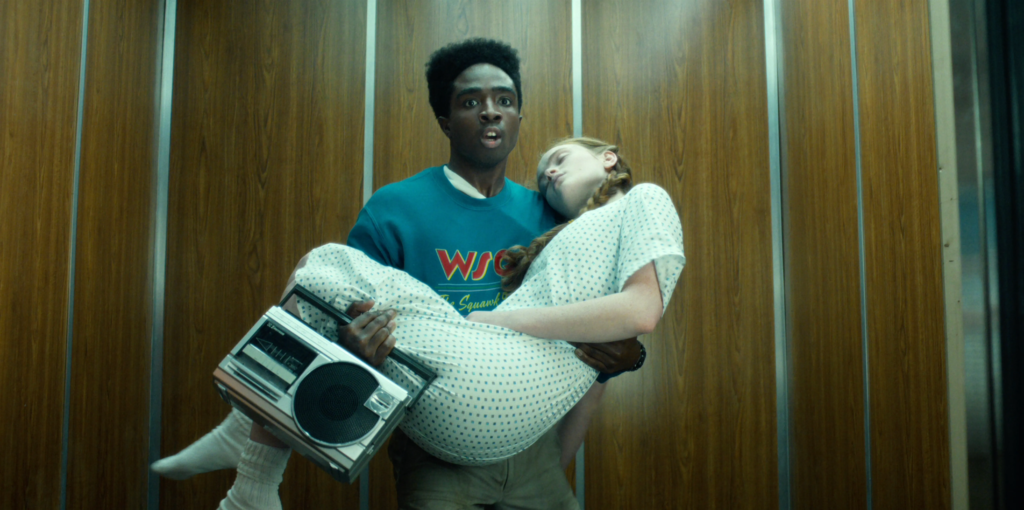
Mike and El get more screentime. Steve’s love life gets more comedy. But Lucas and Max’s relationship is the show’s most realistic romance.
Why They Work
Mutual Respect: They challenge each other. Neither dominates. Both maintain individual identities.
Honest Communication: They fight, but they talk through problems. No toxic silent treatments or manipulation.
Shared Trauma: They’ve both faced real darkness (Billy’s abuse, Upside Down horrors) and understand each other’s damage.
Genuine Fun: Watch them together when they’re not saving the world. They actually enjoy each other’s company.
Earned Trust: Max learned Lucas would choose her over everything. Lucas learned Max’s strength matched his own.
The Coma Vigil
Lucas sitting by Max’s hospital bed reading to her for months is the show’s most powerful romantic gesture.
Not a grand declaration. Not a dramatic rescue. Just showing up. Day after day. Reading books she loved. Talking about his day. Refusing to abandon her even when there was no guarantee she’d ever wake up.
That’s what real love looks like. Not the exciting beginning—the unglamorous middle where you show up even when it’s hard.
The Small Town Ending
Their epilogue—settled in a small town, just the two of them building a quiet life—is perfect because it’s ordinary.
They don’t need grand adventures anymore. They lived through enough horror for multiple lifetimes. Now they want peace. Normalcy. The simple joy of being together without apocalyptic stakes.
Lucas and Max choosing that simple life together is the most mature ending any Stranger Things couple received. It recognizes that after trauma, sometimes the greatest victory is just being okay.
The Racial Dynamics the Show Didn’t Fully Address
I need to talk about something the show danced around but never fully confronted: Lucas’s experience as a Black kid in 1980s Indiana.
The Billy Situation
Billy’s racism toward Lucas was evident but never explicitly named. The show treated it as generic “overprotective stepbrother” energy when it was clearly more than that.
The 1980s Indiana setting makes this more complex. Caleb McLaughlin’s talked in interviews about facing real-world racism from parts of the Stranger Things fanbase who didn’t like Lucas dating Max.
The show could’ve addressed this more directly. Could’ve given Lucas storylines that explicitly dealt with racism instead of just implying it.
The Basketball Storyline
Season 4’s basketball plot touches on code-switching and integration without fully exploring it. Lucas navigating between the “freak” friend group and the popular jock crowd has racial dimensions the show leaves mostly subtext.
Would Lucas face the same pressures if he were white? Probably not to the same degree. The need to prove himself, to be more than one thing, to transcend stereotypes—that’s a specific experience the show could’ve centered more.
What Caleb McLaughlin Brought
Despite the show not always giving him material that explored these dynamics, McLaughlin’s performance captured Lucas’s lived experience. The way he carried himself around Billy. His reaction to certain social situations. The pride and defiance in his bearing.
McLaughlin made Lucas a fully realized Black character even when the writing sometimes treated race as invisible.
Caleb McLaughlin’s Performance: Undervalued Excellence
Let’s talk about the actor who brought Lucas to life with depth and nuance that deserves way more recognition.
Starting Young, Growing Strong
McLaughlin was thirteen when Stranger Things began—already a trained performer with Broadway experience (The Lion King). That professional foundation shows in his work.
Watch his performance across seasons. The physicality changes as he grows, but Lucas’s essential character remains consistent. That’s skilled acting: maintaining core traits while naturally maturing.
The Emotional Range
McLaughlin handled Lucas’s emotional spectrum beautifully:
- The hurt when his friends shut him out (Season 1)
- The vulnerability when pursuing Max (Season 2)
- The determination during battles (all seasons)
- The devastation watching Max’s possession (Season 4)
- The quiet hope during her coma (Season 5)
Those aren’t one-note performances. McLaughlin found layers in every scene, making Lucas’s interior life rich even when the script focused elsewhere.
The Action Star
McLaughlin also became the party’s best action performer. His physicality in fight scenes, his comfort with weapons, his believability as someone who’d trained himself to be useful in combat—that’s actor preparation.
Lucas’s wrist rocket scenes required precision and coordination. McLaughlin made it look natural, like Lucas genuinely was a skilled marksman rather than an actor hitting marks.
Speaking Out
McLaughlin’s been admirably honest about the racism he faced from parts of the fanbase. Certain fans harassed him online because Lucas was in a relationship with Max—a white character.
He spoke publicly about how that felt. How disappointing it was to face real-world racism while playing a character navigating 1980s racial dynamics.
That courage to address uncomfortable truths rather than stay silent deserves recognition. McLaughlin used his platform to call out racism, even when it would’ve been easier to ignore it.
Why Lucas Sinclair Matters
Lucas represents qualities that don’t get celebrated enough in fiction:
Practical wisdom over impulsive heroism
Loyalty that includes healthy disagreement
Love expressed through consistent presence rather than grand gestures
The courage to want both acceptance and authenticity
The Friend Who Tells Hard Truths
Every friend group needs a Lucas. The person who’ll say “I love you, but you’re wrong about this” and stick around to help fix the problem anyway.
That’s more valuable than unconditional agreement. Real friends challenge you to be better while supporting you through the process.
The Boyfriend Who Shows Up
Lucas’s relationship with Max models what healthy young love should look like. Not perfect, not without conflict, but built on mutual respect and consistent showing up for each other.
Teenage boys watching Lucas learn: real love isn’t about controlling your partner or being the hero. It’s about respecting their autonomy and being there when they need you.
The Black Character Who Deserved More
Lucas deserved storylines that centered his specific experiences as a Black kid in 1980s Indiana. He deserved the fandom appreciation that other characters received more readily.
The fact that he didn’t always get those things doesn’t diminish what the character represents. If anything, it makes Lucas’s journey more important—a reminder that undervalued doesn’t mean without value.
My Take After Nine Years
I’ve spent nearly a decade watching Lucas Sinclair be the party’s conscience, Max’s steadfast partner, and the friend who asked hard questions everyone else avoided.
And here’s what stands out most about his character arc:
Lucas never got a flashy redemption arc or obvious character transformation. He was solid from the start. Skeptical but loyal. Practical but brave. Independent but committed.
His journey wasn’t about changing. It was about the world learning to appreciate what he’d always been.
Season 1 painted his skepticism as a flaw to overcome. By Season 5, we understand it was always wisdom—just wisdom the group wasn’t ready to hear yet.
Lucas’s choice to pursue basketball in Season 4 was initially framed as potential betrayal. But he proved you can be multiple things. You can want acceptance and maintain integrity. You can integrate without assimilating.
His vigil by Max’s bedside—the months of showing up with no guarantee of reward—embodies Lucas’s entire character philosophy: you do the right thing because it’s right, not because you’re guaranteed a happy ending.
After nine years, Lucas Sinclair stands as proof that you don’t need the flashiest powers or most dramatic storyline to be essential. Sometimes the greatest heroism is asking the hard questions, protecting the vulnerable, and choosing love over glory every single time.
That’s the friend everyone needs. That’s the partner everyone deserves. That’s Lucas Sinclair.
Lucas Sinclair: Complete Journey Explained
From skeptical kid with a wrist rocket to the man who chose love over stardom—Lucas Sinclair’s nine-year arc proves that loyalty, practical wisdom, and showing up matter more than grand heroic gestures.
The Actor Who Brought Lucas to Life
About It’s Netflix Nerd
This deep character analysis was brought to you by It’s Netflix Nerd, where I’ve been obsessing over Stranger Things since Lucas first questioned whether trusting Eleven was a good idea (and honestly, he had a point). I break down every character arc, analyze every thematic choice, and help you understand why these stories matter beyond the monsters and special effects.
Want more Stranger Things character breakdowns? Check out It’s Netflix Nerd for complete analyses built on years of actually caring about these characters’ journeys.