

Character: Nancy Wheeler
Portrayed by: Natalie Dyer
Seasons: 1-5 (Main Cast)
First Appearance: Season 1, Episode 1 (“The Vanishing of Will Byers”)
Key Traits: Intelligence, Determination, Guilt-Driven Ambition, Protective Instincts, Moral Courage
Role: The Investigator, Monster Hunter, Truth-Seeker, Big Sister
Signature: Shotgun proficiency, investigative skills, refusing to accept easy answers
Nancy Wheeler doesn’t get to be soft.
That’s what strikes me most after nine years of watching her character. While other characters get redemption arcs or coming-of-age stories or journeys of self-discovery, Nancy gets burden after burden after burden.
She carries guilt for Barb’s death. Responsibility for fighting monsters. The weight of secrets she can never fully share. The pressure of being the smart girl who’s supposed to have all the answers.
Natalie Dyer brought Nancy to life as something rare in teen dramas: a young woman who refuses to be protected, who picks up guns instead of waiting for rescue, who demands the truth even when lies would be easier. Nancy Wheeler transformed from “Mike’s pretty older sister dating the popular guy” into the person you want leading the charge when reality itself is collapsing.
I’ve covered Stranger Things since 2016, and Nancy’s arc is the most underappreciated in the series. Not because it’s subtle—Nancy literally shoots monsters and exposes government conspiracies. But because the show sometimes treats her emotional journey as secondary to the action, forgetting that Nancy’s heroism costs her more than almost anyone else.
Let me break down why Nancy Wheeler’s evolution from perfect suburban daughter to journalist choosing truth over comfort is one of the series’ most complex and costly transformations.
The Perfect Daughter Facade (Season 1)
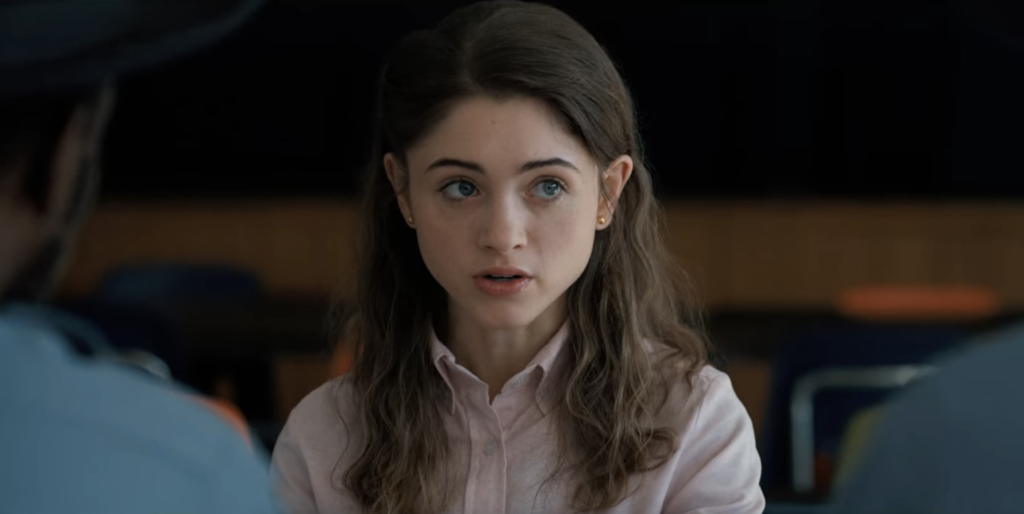
Nancy starts as exactly what 1980s suburban America expects: pretty, smart, dating the popular boy, following the rules enough to avoid trouble while maintaining plausible deniability about the rules she breaks.
Dating Steve Harrington
Nancy and Steve’s early relationship is performance as much as genuine connection. Steve’s the guy you’re supposed to date—popular, good-looking, comes from the right family. Nancy’s the smart girl who landed the catch.
But watch Natalie Dyer’s face in early scenes. Nancy’s uncomfortable with the attention. Uncomfortable with Steve’s friends. Uncomfortable with who she has to be to fit into his world.
She’s not in love with Steve so much as in love with the idea of Steve—the normalcy he represents, the future he promises, the safety of following the expected path.
Barb Holland: The Friend She Abandoned
Barb is Nancy’s best friend. The one who knows her before the Steve relationship. The one who sees through Nancy’s performance to the person underneath.
When Nancy goes to Steve’s party, Barb comes along reluctantly. She’s uncomfortable. Out of place. Worried about Nancy making choices she’ll regret.
Nancy tells Barb to leave. Go home. She’s fine.
Barb dies that night. Taken by the demogorgon while Nancy’s upstairs losing her virginity to Steve, unaware her best friend is being dragged into another dimension.
That guilt—the knowledge that Barb died alone while Nancy was distracted—defines Nancy’s entire arc across five seasons. Every choice Nancy makes afterward is filtered through the question: Am I being selfish again? Am I abandoning someone who needs me?
The Investigation Begins
When Barb disappears, Nancy refuses to accept the easy explanations. Ran away. Had an accident. Typical teenage drama.
Nancy knows something’s wrong. She investigates. Finds the blood by Steve’s pool. Discovers the dimensional tear in the woods. Starts piecing together the truth while adults lie to her face.
This is Nancy’s core trait emerging: she will not accept comfortable lies when uncomfortable truths exist.
Even when it’s dangerous. Even when it isolates her. Even when everyone tells her to let it go.
Nancy Wheeler doesn’t let things go.
Meeting Jonathan Byers
Nancy and Jonathan bond over grief and investigation. Both lost someone. Both refuse to believe official stories. Both are willing to risk everything to find the truth.
Their partnership works because they see each other clearly. Jonathan doesn’t want Nancy to be perfect suburban girlfriend material. Nancy doesn’t need Jonathan to be socially acceptable. They just need each other to be present and honest.
That connection—built on shared trauma and mutual respect—becomes the foundation for everything that follows.
The Monster in the Wheeler House
The Season 1 climax has Nancy and Jonathan luring the demogorgon to the Byers house with a trap built from Christmas lights, gasoline, and sheer desperate planning.
Nancy’s holding a gun. Not hiding behind the boys. Not waiting for rescue. Just loading shells and preparing to shoot a monster from another dimension.
This is the moment Nancy becomes a fighter. Not because she wants to be. Because someone has to be, and Nancy’s never been good at letting other people handle things she can handle herself.
The trap partially works. Steve shows up and helps. They wound the demogorgon but don’t kill it.
Nancy survives. But she’s changed fundamentally. You can’t face down interdimensional horror and go back to worrying about prom dresses and college essays.
Guilt, Justice, and Choosing Jonathan (Season 2)
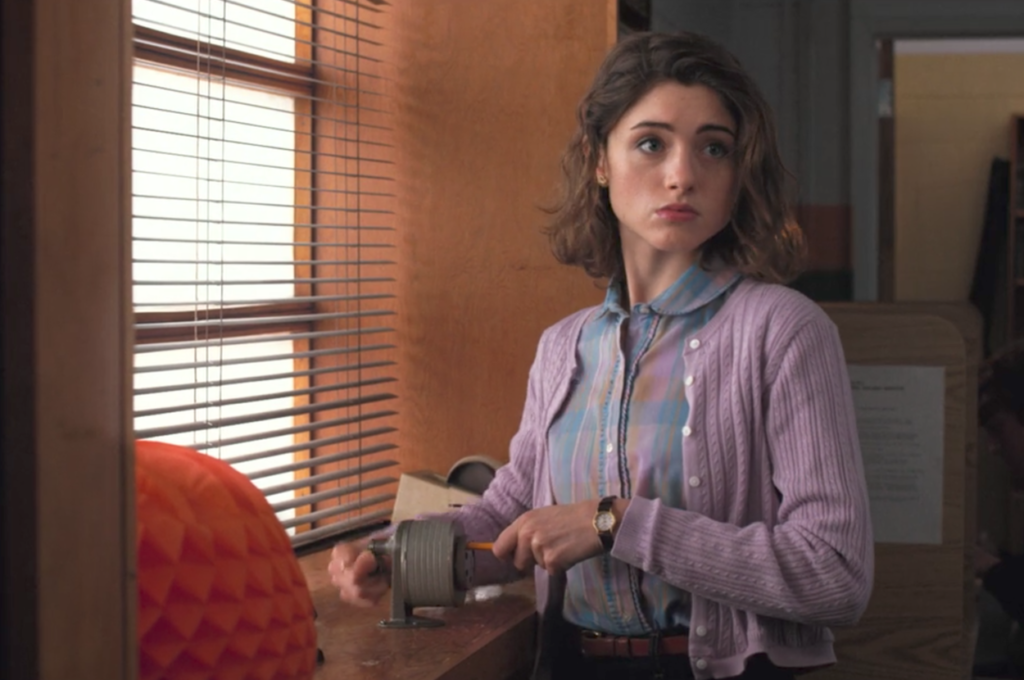
Season 2 Nancy is drowning in guilt. Barb’s parents don’t know she’s dead. The government covered it up. Nancy has to pretend everything’s fine while carrying the secret that her best friend died and nobody’s acknowledging it.
The Barb Conspiracy
Nancy can’t move on. Can’t pretend. Can’t play happy girlfriend to Steve when Barb’s parents are putting up missing person flyers and spending their life savings on private investigators searching for a girl who’s already dead.
Steve wants normalcy. Wants to go on college visits and plan their future and pretend Season 1 never happened.
Nancy can’t do that. The guilt won’t let her.
Halloween Party Breakdown
At a Halloween party, Nancy gets drunk and tells Steve their relationship is “bullshit.” That she doesn’t love him. That they’re just pretending everything’s fine when it’s not.
She’s cruel. Hurtful. Says things she might not entirely mean but definitely feels.
This is Nancy at her most honest and most unkind. She’s hurting, so she hurts Steve. She’s trapped in a relationship that feels like another lie she’s maintaining while Barb’s death goes unacknowledged.
Teaming Up With Jonathan
Nancy and Jonathan decide to expose Hawkins Lab. Record Dr. Owens admitting Barb died in their facility. Get justice for Barb even if it costs them everything.
This is Nancy choosing truth over safety. She’s risking government retaliation. Risking her family’s stability. Risking her entire future.
But Barb deserves justice. And Nancy can’t live with herself if she prioritizes comfort over doing what’s right.
This defines Nancy Wheeler: moral courage over self-preservation.
The Nancy Drew Joke
During their investigation, Jonathan calls Nancy “Nancy Drew.” She’s annoyed initially—it’s dismissive, reducing her investigation to children’s detective stories.
But then she owns it. Yeah, she’s Nancy Drew. She solves mysteries. She refuses to accept easy answers. She asks uncomfortable questions until she gets truth.
That nickname becomes her identity. Nancy Wheeler, investigator. The one who won’t let things go. The one who demands answers.
Ending Things With Steve
By Season 2’s end, Nancy and Steve are over. Not with dramatic confrontation—just quiet acknowledgment that they want different things.
Steve wants suburban normalcy. Nancy wants truth and justice and a life built on something more than maintaining appearances.
She chooses Jonathan. Chooses the person who sees her clearly and supports her need to fight for what’s right rather than asking her to be smaller and quieter and more convenient.
The Hawkins Post and Sexism (Season 3)

Season 3 has Nancy interning at the Hawkins Post alongside Jonathan. She’s excited about journalism. About investigating. About pursuing truth professionally.
Instead, she gets coffee, sexism, and dismissal.
Welcome to the Workplace, Nancy
Nancy’s bosses are openly sexist. They call her “Nancy Drew” mockingly. Dismiss her story ideas. Send her on fake assignments to get her out of the office. Treat her like a decorative secretary rather than a journalist.
When Nancy presents evidence of something wrong—diseased rats, chemicals, a genuine story—they laugh at her. Tell her she’s being hysterical. Pat her on the head metaphorically and tell her to make more coffee.
This is the 1980s. Women in professional spaces faced this constantly. Nancy’s just encountering it for the first time because she’s leaving the insulated world of high school where her intelligence was rewarded.
Jonathan’s Complicity
Here’s where Season 3 gets complicated: Jonathan tells Nancy to back off. To stop pushing. To not make waves.
He’s not being malicious. He’s scared of losing the job his family desperately needs. He’s practical in ways Nancy—from a financially comfortable family—doesn’t have to be.
But from Nancy’s perspective, her boyfriend is siding with sexist bosses over her. Choosing economic safety over supporting her pursuit of truth.
Their conflict is class tension as much as gender tension. Jonathan can’t afford to lose this job. Nancy can’t afford (psychologically, morally) to stop investigating.
Burning Down the Post
The investigation into diseased rats leads to the Mind Flayer. To possessed humans. To Billy Hargrove as the monster’s host.
Nancy fights. Shoots Mind Flayer creatures. Burns down the Hawkins Post building during the battle.
She’s literally destroyed the workplace that refused to take her seriously. There’s metaphorical satisfaction in that even if it’s unintentional.
The Cost of Being Right
Nancy was right about the rats. Right that something was wrong. Right to investigate despite dismissal.
But being right doesn’t get her the apology she deserves. Doesn’t change the sexism. Doesn’t earn her respect from bosses who died thinking she was hysterical.
Nancy learns a hard lesson: being right isn’t always enough. Sometimes you’re right and nobody acknowledges it. Sometimes justice doesn’t arrive.
That bitterness—that understanding that the world won’t always reward truth-seeking—hardens Nancy. Makes her more cynical. More willing to break rules because following them doesn’t guarantee fairness.
California, Distance, and Choosing Herself (Season 4)

Season 4 splits Nancy from Jonathan. He’s in California with the Byers family. She’s in Hawkins investigating a new series of murders.
Long Distance Isn’t Working
Nancy and Jonathan’s relationship is struggling. He’s distant. Not communicating. Missing their planned visit.
Nancy’s hurt. Confused. Wondering if they’re over but not wanting to face that reality.
The distance reveals what was always somewhat true: Nancy and Jonathan work well as investigative partners. As romantic partners navigating normal relationship stuff? They struggle.
Steve Harrington Redux
Steve’s still in Hawkins. Still single. Still nursing feelings for Nancy.
He admits he still thinks about their future. Still imagines the life they could’ve had—six kids, road trips, growing old together.
Nancy’s tempted. Steve represents safety, stability, the normal life part of her still wants. He’s here and present and available in ways Jonathan isn’t.
But Nancy can’t go backward. Can’t become the person who dates Steve Harrington and fits into that comfortable suburban mold she’s spent years escaping.
The Vecna Investigation
Nancy investigates Victor Creel and the murders from the 1950s. She digs through archives. Interviews sources. Pieces together the connection between past murders and current killings.
This is Nancy in her element: investigative work, truth-seeking, refusing to accept surface explanations.
She’s good at this. Genuinely skilled. Her journalism instincts lead to breakthroughs the party needs.
Vecna Takes Nancy
Henry Creel—Vecna—traps Nancy in a vision. Shows her apocalyptic futures. Hawkins destroyed. Her family dead. Everything she loves consumed.
The vision is designed to break her. To use her guilt (Barb) and her fears (failing to protect people) against her.
But Nancy doesn’t break. She processes the horror. Remembers the information Vecna reveals. Uses the vision as intelligence rather than just trauma.
That’s Nancy’s strength: she weaponizes her experiences. Even violation becomes data she can use.
The Upside Down Arsenal
When the party prepares for final battle, Nancy raids a gun store. Loads up on weapons. Becomes the group’s armorer.
Nancy Wheeler with a shotgun is iconic. She’s comfortable with weapons in ways that surprise people. She’s practical about violence—not seeking it, but not flinching from it when necessary.
Her willingness to shoot first and ask questions later (when facing literal monsters) makes her one of the most effective fighters despite having no superpowers or special training.
Shooting Vecna
The climactic battle has Nancy shooting Vecna with a shotgun. Unloading shells into him at point-blank range while Steve and Robin assist.
They don’t kill him—he’s too powerful. But they wound him. Drive him back. Buy time for Eleven to finish the job.
Nancy facing down the ultimate evil with conventional weapons and sheer determination epitomizes her entire arc: you don’t need powers to be a hero. You just need courage and good aim.
Choosing Journalism Over Romance (Season 5)
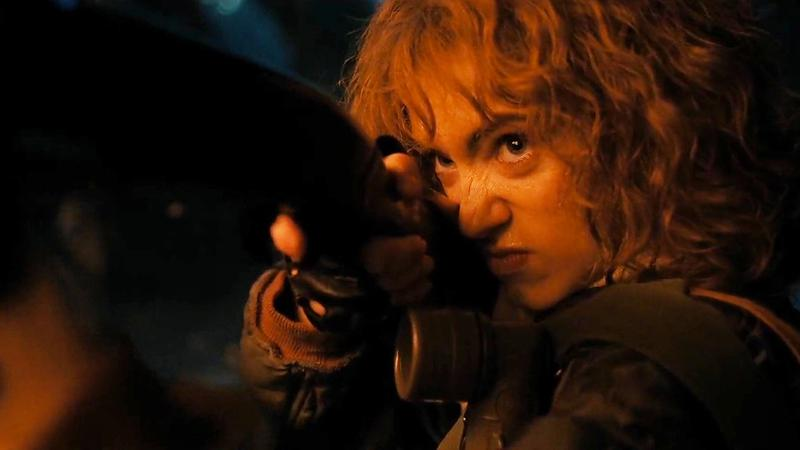
Season 5’s epilogue reveals Nancy’s ultimate choice: she left Emerson College’s predetermined path. She’s working at The Hawkins Herald as an investigative journalist.
Ditching the Plan
Nancy was supposed to go to Emerson. Become a journalist through proper channels. Follow the respectable path.
Instead, she’s reporting for a local newspaper. Chasing real stories. Doing actual journalism instead of theoretical journalism.
This is Nancy choosing authenticity over prestige. She could’ve had the fancy college degree. Chose practical experience and meaningful work instead.
The Truth-Teller Profession
Nancy became exactly what she was always meant to be: the person who asks uncomfortable questions and refuses to accept easy answers.
Journalism is perfect for her. It legitimizes her nosiness. Rewards her persistence. Gives her tools (press credentials, public records requests) to investigate without relying on breaking and entering.
She’s Nancy Drew, professional edition.
No Romantic Resolution
The epilogue doesn’t show Nancy with Steve or Jonathan or anyone else. Her ending is about her career choice, not her relationship status.
That’s significant. Nancy’s arc concludes with her choosing herself—her ambitions, her calling, her need to pursue truth—over romantic partnerships.
Not because romance doesn’t matter. But because Nancy learned her worth isn’t defined by who she’s dating. Her purpose is bigger than being someone’s girlfriend.
What She Lost
Nancy’s journey cost her:
- Her best friend (Barb, never forgotten)
- Her innocence (seeing horrors most people never acknowledge)
- Normal relationships (how do you date normally after fighting interdimensional monsters?)
- Career opportunities (the Emerson path she abandoned)
- Peace (constant vigilance, always expecting the next threat)
She gained purpose, skills, and self-knowledge. But the cost was higher than most characters paid.
Nancy’s Relationships: The Burden of Connection
Nancy and Barb: The Guilt That Never Fades
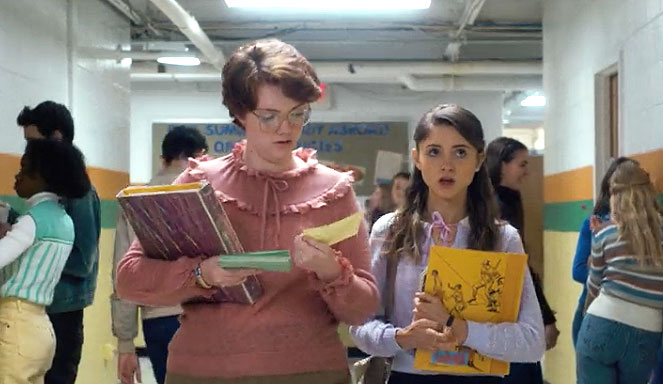
Barb’s death haunts Nancy across all five seasons. Every choice filters through: Am I being selfish again? Am I abandoning someone?
Nancy’s survivor’s guilt is profound and realistic. She doesn’t “get over” Barb. Doesn’t have one cathartic cry and move on. The guilt is permanent.
That’s honest trauma portrayal. Some losses don’t heal. Some guilt doesn’t resolve. You just learn to carry it and keep moving.
Nancy and Steve: The Safe Choice She Couldn’t Make

Steve represents the life Nancy’s parents want for her. Comfortable. Normal. Suburban.
Nancy cares about Steve genuinely. But she can’t be the person he needs her to be—the girlfriend satisfied with surface-level happiness, willing to pretend trauma never happened.
Their relationship failing isn’t anyone’s fault. They just want incompatible things. Steve wants normal. Nancy wants truth. Neither is wrong, but they’re wrong for each other.
Nancy and Jonathan: The Partnership That Struggled

Nancy and Jonathan work brilliantly as investigative partners. They communicate well about cases, support each other’s instincts, trust each other’s judgment.
But as romantic partners navigating everyday relationship stuff? They struggle.
Jonathan’s working-class background creates tensions Nancy doesn’t fully understand. Her privilege (financial security, family stability) means she can afford to take risks Jonathan can’t.
Their relationship taught Nancy that shared trauma bonds people, but it’s not always enough foundation for a romantic relationship. Sometimes you’re better as partners than lovers.
Nancy and Mike: Protective Older Sister
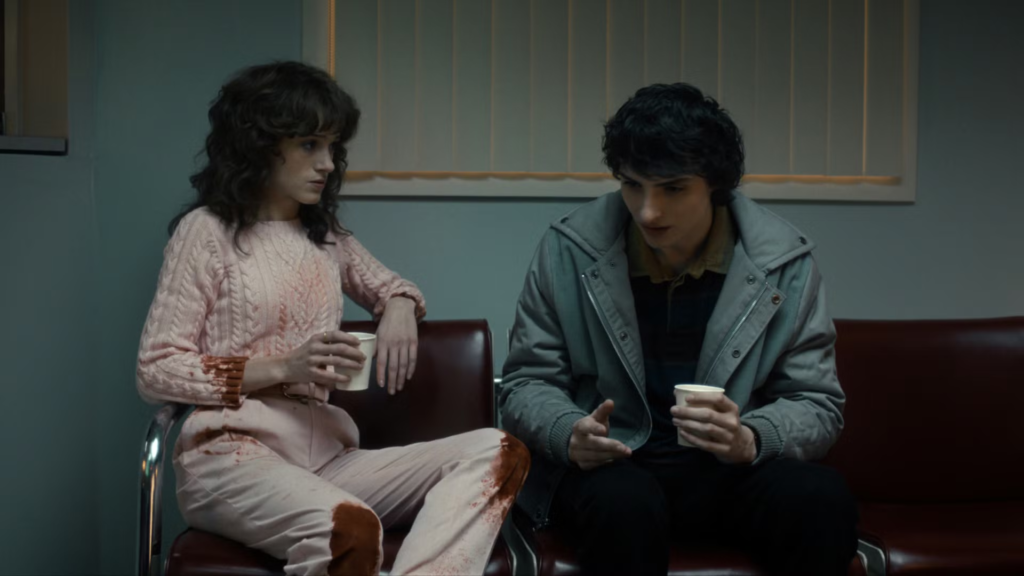
Nancy’s relationship with Mike is underexplored but important. She’s protective of him. Worried about him. Trying to be the responsible older sibling.
But Mike’s fighting monsters too. Mike’s trauma rivals Nancy’s. The protective older sister role doesn’t work when your little brother is facing the same horrors you are.
By Season 5, there’s mutual respect. Nancy acknowledges Mike’s capable. Mike respects Nancy’s experience. They’re not protector-protected anymore—they’re equals.
Nancy and Karen: Becoming Her Mother’s Opposite
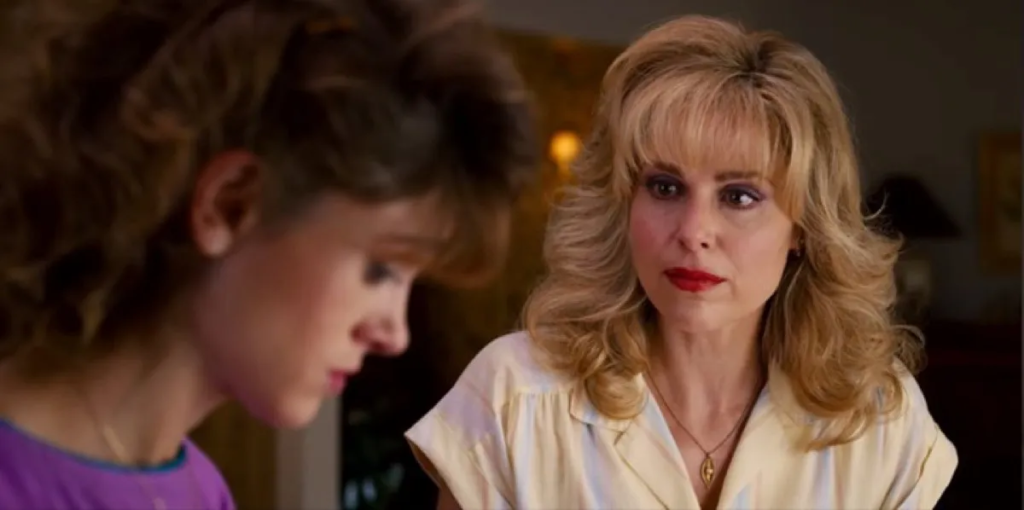
Karen Wheeler represents everything Nancy’s trying not to become: the suburban mom who settled, who chose comfort over ambition, who maintains appearances while swallowing dissatisfaction.
Nancy loves her mom. But she’s terrified of becoming her.
That fear drives Nancy’s choices. Every time she picks journalism over safety, truth over comfort, investigation over normalcy—she’s choosing to be her mother’s opposite.
Nancy and Holly: Passing the Torch

The epilogue’s final scene has Holly as the new Dungeon Master. Nancy’s little sister—barely present in most seasons—stepping into leadership.
That generational shift mirrors Nancy’s own evolution. The Wheeler sister who seemed decorative becoming central. Holly might follow a similar path.
Nancy probably sees that potential. Probably worries about Holly the way she wishes someone had worried about protecting her before she had to learn through trauma.
Nancy’s Arsenal: The Weapons She Mastered
Let’s catalog Nancy Wheeler’s impressive combat evolution:
Season 1: Learning to Shoot
Nancy starts with Steve’s dad’s revolver. She’s uncomfortable with it initially. Not trained. Just desperate.
By the Byers house showdown, she’s loading and firing with more confidence. The weapon’s necessity overrides her discomfort.
Season 2: Competence Develops
Nancy handles weapons more comfortably in Season 2. Not expert level, but capable. She knows how to load, aim, fire.
Her shooting during the Mind Flayer confrontations shows improved form. Better stance. Less hesitation.
Season 3: Practical Marksmanship
By Season 3, Nancy’s genuinely good with firearms. She shoots Mind Flayer creatures with accuracy. Reloads quickly. Handles recoil properly.
She’s become a practical marksman through necessity and practice.
Seasons 4-5: The Expert
Season 4’s gun store raid shows Nancy’s comfort with weapons. She knows what she needs. Loads efficiently. Handles multiple firearms confidently.
The Vecna confrontation—Nancy unloading a shotgun at point-blank range—showcases her mastery. She’s not flinching. Not hesitating. Just executing.
Nancy Wheeler became one of the party’s most effective combatants through training and willingness to do what’s necessary.
Why Nancy With a Gun Matters
Nancy’s weapon proficiency is significant representation:
Smart girls can be fighters. Intelligence and combat skills aren’t mutually exclusive.
Women with weapons aren’t sexualized. Nancy’s never presented as “sexy badass”—just competent and dangerous.
Practical violence. Nancy doesn’t enjoy fighting. She’s not a warrior archetype. She just refuses to be helpless and learned accordingly.
That grounded approach to Nancy’s combat skills makes them believable and impactful.
Natalie Dyer’s Performance: Quiet Intensity
Let’s acknowledge what Natalie Dyer brought to Nancy Wheeler.
The Subtle Work
Dyer’s performance is all subtle intensity. Nancy rarely has big emotional outbursts. Instead, Dyer communicates through:
- Microexpressions showing Nancy processing information
- Body language revealing discomfort or determination
- Vocal tone shifts indicating when Nancy’s lying vs. truth-telling
- Eye movements tracking threats and calculating responses
That subtlety makes Nancy feel real. Not performing emotions for the camera—just existing as a person with complex interior life.
The Guilt Nancy Carries
Watch Dyer’s face when Barb’s mentioned across all five seasons. The guilt never fades. The micro-wince, the brief darkness crossing her eyes—Nancy never stops blaming herself.
Dyer never lets viewers forget that guilt. It’s present in Nancy’s posture, her hypervigilance, her need to protect everyone around her.
Determination vs. Desperation
Dyer distinguishes between Nancy’s determination (investigative drive, pursuit of truth) and her desperation (guilt-driven need to save people, fear of failing again).
Determined Nancy is focused and capable. Desperate Nancy is reckless and self-destructive.
Dyer shows the difference through energy levels and decision-making tempo. Determined Nancy thinks. Desperate Nancy reacts.
Physical Transformation
Dyer’s physicality changed across seasons as Nancy became more comfortable with violence:
Early seasons: Hesitant movements, uncomfortable with weapons
Later seasons: Confident stance, smooth weapon handling, physical combat competence
That evolution happened gradually and believably. Nancy didn’t suddenly become an action hero—she slowly developed skills through repeated necessity.
Beyond Stranger Things
Dyer’s career beyond Stranger Things (indie films, dramatic roles) showcases her range. But Nancy Wheeler remains her most iconic role—the smart girl who refused to be sidelined, who picked up guns and demanded truth even when it cost her everything.
Dyer gave Nancy quiet strength rather than loud heroism. That restraint made the character’s intensity hit harder.
Why Nancy Wheeler Matters
Nancy represents several things that need more representation:
The Smart Girl Who Fights
Too often media presents a binary: you’re either the smart girl or the fighter. Nancy’s both.
Her intelligence makes her a better fighter. She investigates weaknesses. Plans strategies. Uses her brain to compensate for not having superpowers.
Being smart and capable of violence aren’t contradictory. Nancy proves that.
Guilt as Motivation
Nancy’s driven by guilt more than ambition. That’s a different kind of protagonist.
She’s not trying to be special or prove herself. She’s trying to prevent more Barbs. Trying to make up for the friend she lost. Trying to ensure her survival guilt means something.
That motivation—acting from guilt rather than glory-seeking—makes Nancy’s heroism feel earned and realistic.
The Cost of Truth-Seeking
Nancy’s pursuit of truth costs her:
- Relationships (Steve, complicated dynamics with Jonathan)
- Safety (constant danger from investigating)
- Normalcy (can’t have ordinary teenage experiences)
- Peace of mind (constant vigilance)
The show doesn’t pretend truth-seeking is cost-free. Nancy pays for every answer she gets.
Choosing Career Over Romance
Nancy’s ending—focused on her journalism career rather than relationship status—matters for young women watching.
Your worth isn’t defined by who you’re dating. Your purpose can be bigger than romance. Career ambitions are legitimate life goals.
Nancy choosing herself and her calling over romantic partnerships validates that personal fulfillment can come from work and purpose rather than relationships.
My Take After Nine Years
I’ve spent nearly a decade watching Nancy Wheeler carry burdens nobody asked her to carry but she accepted anyway because that’s who she is.
And here’s what stands out most:
Nancy never got to be soft. Never got to grieve without immediately moving into action. Never got to process trauma before the next crisis arrived.
She’s been fighting since Season 1. Lost her best friend. Exposed government conspiracies. Shot monsters. Faced down Vecna. All while maintaining grades, relationship drama, and family obligations.
The show sometimes forgets how exhausting that is. How much it costs. How Nancy’s been in survival mode for years with no real break.
Her ending—working as a journalist, pursuing truth professionally—is perfect because it’s what Nancy always wanted. But it’s also bittersweet because she never got the normal life she sometimes craved.
Nancy Wheeler chose truth over comfort. Justice over safety. Purpose over peace.
That’s heroism. Not the flashy kind with superpowers and acclaim. The exhausting kind where you do the right thing even when it costs you everything and nobody ever fully understands what you sacrificed.
After nine years, Nancy Wheeler stands as proof that ordinary people—smart, determined, guilt-ridden ordinary people—can be extraordinary through sheer refusal to accept easy lies when hard truths exist.
And honestly? That’s the kind of hero the world needs more of.
Nancy Wheeler: Complete Journey Explained
From perfect suburban daughter to fearless investigative journalist—Nancy’s nine-year transformation proves that the greatest power isn’t supernatural abilities, but the moral courage to demand truth even when lies would be easier.
The Actress Who Brought Nancy to Life
About It’s Netflix Nerd
This deep character analysis was brought to you by It’s Netflix Nerd, where I’ve been obsessing over Stranger Things since Nancy first picked up that revolver. I break down every character arc, analyze every thematic choice, and help you understand why these stories matter beyond the monsters and special effects.
Want more Stranger Things character breakdowns? Check out It’s Netflix Nerd for complete analyses built on years of actually caring about these characters’ journeys.