
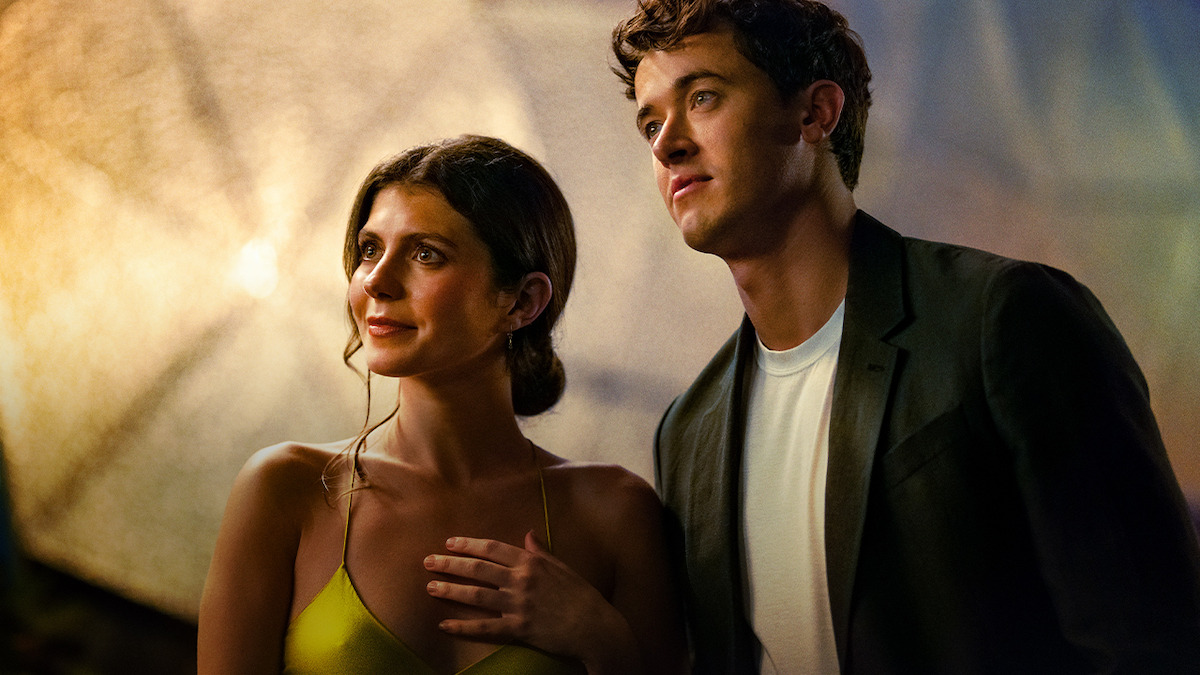
I went into Netflix’s People We Meet on Vacation with some serious skepticism. After sitting through what feels like a hundred rom-coms that all blur into the same predictable mess, I was prepared for disappointment. But this Emily Henry adaptation? It actually got me. There’s something here that feels… different. Like it actually gets that sometimes the hardest person to figure out how to love is your best friend.
When Two Actors Just Get It
Everything in this movie lives or dies on Emily Bader and Tom Blyth, and honestly? They nail it. Watching Poppy (Bader)—this adventurous travel writer who’s always chasing the next experience—play off Alex (Blyth), a high school English teacher who finds comfort in his routines, just feels real. You know how sometimes you watch actors and you can almost see them acting? That’s not what’s happening here. These two have the kind of chemistry that sneaks up on you. It’s not fireworks—it’s all the small stuff. The inside jokes that make them crack up. That scene in Norway where Alex ditches his sightseeing plans just to take care of Poppy when she gets sick.

And can we talk about how refreshing it is that the movie doesn’t try to “fix” Alex? He gets anxious in crowds. He likes his routines. The film just… lets him be that way. When he loosens up in New Orleans—dancing with Poppy, joking around and pretending they’re newlyweds—it works because it doesn’t feel like he’s becoming a different person. He’s just comfortable with her. As someone who appreciates when rom-coms actually respect introverted characters, this meant a lot.
The Book-to-Screen Thing
Here’s where I have to switch gears a bit. Emily Henry’s novel works because you’re in Poppy’s head the whole time. You feel her ambition, her insecurity about being “too much,” that slow-burn realization that maybe the person who grounds you is also the person you’re meant to be with. That’s incredibly hard to translate to screen without a voiceover, and yeah, some stuff gets lost. Like, in the book, even Poppy’s suffocatingly hot apartment means something. On screen, those layers just don’t hit the same way.
The movie jumps around in time a lot, showing us different vacations across the years. Sometimes it works great—you really see how they went from friends to… whatever they are. But other times I found myself a little lost in the timeline. And Poppy’s big emotional moment near the end? It happens fast. Maybe too fast, especially if you haven’t read the book.
What Totally Works
I was genuinely surprised by how well the pacing works. Nearly two hours could’ve dragged, but it doesn’t. The camping trip from hell. That rainy confession in Barcelona. The pregnancy scare that almost—almost—leads to their first kiss. It all keeps moving. Even when I could see exactly where things were headed (because let’s be real, we all know how this ends), I didn’t mind.
The supporting cast is fun when they show up. Molly Shannon and Alan Ruck as Poppy’s parents give the movie these little bursts of that cozy Nancy Meyers energy. But then they’re gone. Same with Jameela Jamil, Lucien Laviscount, and Lukas Gage—they’re barely in it! I get that the focus needs to stay on Poppy and Alex, but man, what a waste of talent.
Why the Friends-to-Lovers Thing Actually Works Here
I’m a sucker for friends-to-lovers stories, and this one does it better than most because the stakes feel genuine. They’re not being kept apart by some ridiculous misunderstanding or contrived drama. They’re scared. Scared of ruining what they have. Scared of wanting something the other person might not want. That scene where Alex finally admits he broke up with his girlfriend Sarah because of his feelings for Poppy, and they’re standing in the rain in Barcelona just laying it all out there? Yeah, I bought it completely.
There’s this moment in Tuscany where they almost kiss, and then they both immediately freak out and pretend it didn’t happen. That got me. Because sometimes the timing is just… off. Even when everything else is right. That feels true in a way that grand romantic gestures never do.
Where It Falls Short
My main complaint? This probably should’ve been a limited series. You’re compressing a decade of friendship into two hours, and something’s gotta give. The movie hits all the emotional beats, but it’s missing some of the texture that made people fall in love with the book in the first place.
Also, Poppy feels a little too put-together? In my head, she had this eclectic, slightly chaotic art-school vibe—someone whose clothes and apartment reflected her creative restlessness. Movie Poppy is gorgeous and stylish in this very polished way that doesn’t quite match the quirky energy I imagined.
Bottom Line
People We Meet on Vacation is exactly the kind of comfort watch we need in early January when everything feels cold and bleak. It’s warm, it’s hopeful, and it doesn’t treat you like you’re stupid. Is it going to change cinema forever? No. But it’s thoughtful, the acting is solid, and it’s emotionally honest in ways that a lot of mainstream rom-coms just… aren’t.
If you’re someone who believes the best love stories happen in the quiet moments—not the manufactured drama—you’ll probably enjoy this. Just go in knowing it’s an adaptation, not a word-for-word recreation. It understands what Emily Henry was going for, even if it can’t capture every single detail.
And honestly? Sometimes that’s enough.
Check out It’s Netflix Nerd for our latest reviews, ending explanations, and recommendations.