
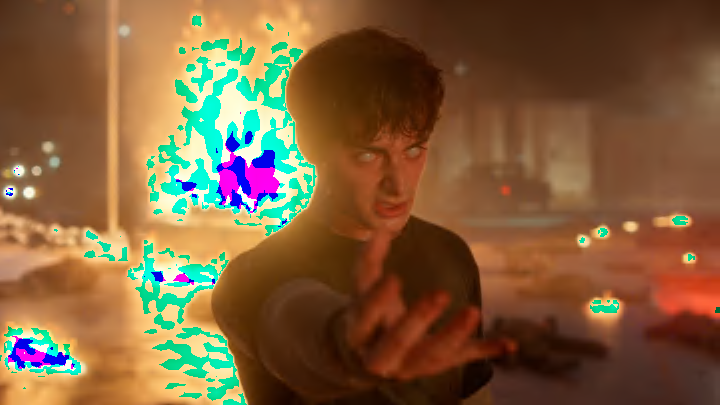
For devoted Stranger Things fans like Sarah Chen, a high school English teacher from Portland who’s hosted viewing parties for every season premiere since 2016, the announcement of a live-action spinoff brought mixed emotions.
“Part of me wants more time in that world,” Sarah admits. “But another part worries they’ll mess with what made the original special. I just want to know—will this feel like Stranger Things, or will it be something else entirely?”
Sarah’s concerns echo across the fandom. After eight years following Eleven, Mike, and the gang through the Upside Down, fans are cautiously optimistic but understandably protective of a series that’s meant so much to them.
What We Actually Know About the New Show
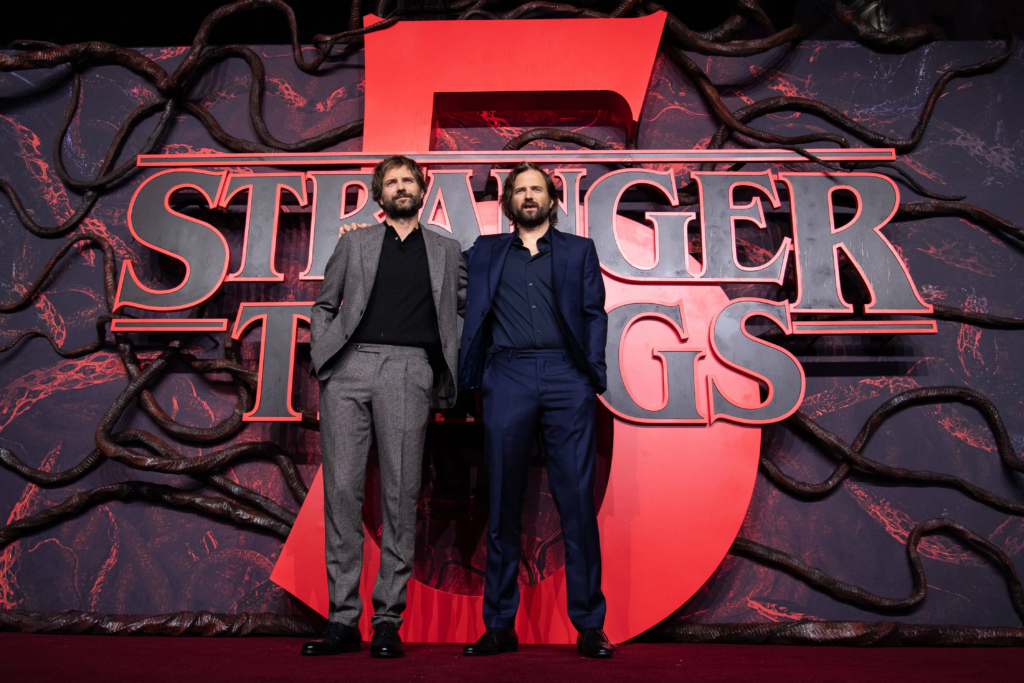
The Duffer Brothers—Matt and Ross, the creative minds behind the original series—have confirmed they’re developing a live-action spinoff set in the Stranger Things universe. But here’s what makes this different from typical spinoffs: it won’t follow the familiar faces of Hawkins.
According to statements from the Duffer Brothers in interviews conducted throughout 2024 and 2025, this new series will feature:
- Entirely new characters you’ve never met before
- A different town outside of Hawkins, Indiana
- A different time period than the 1980s setting of the original
- Minimal connection to the main series’ storyline
Dr. Emily Rodriguez, a media studies professor at NYU who’s published research on franchise expansion and audience retention, explains why this approach could work: “When creators try to artificially extend beloved characters’ stories, they risk diminishing what made those arcs powerful. Fresh characters allow exploration of similar themes—friendship, courage, the ordinary versus the extraordinary—without retreading ground that’s already been covered beautifully.”
Why No One Knows the Release Date Yet (And That’s Okay)
If you’ve searched online for a premiere date, you’ve probably found speculation ranging from 2027 to 2029. The truth? No official date exists, and fans should be skeptical of any source claiming otherwise.
Marcus Williams, a television production coordinator who’s worked on Netflix series (though not Stranger Things specifically), offers context: “Quality shows—especially those building new worlds with new characters—require extensive development. We’re talking 12-18 months of pre-production before cameras even roll: writing, casting, location scouting, set design. Then production takes 6-9 months, and post-production another 6-8 months minimum.”
Based on industry timelines, if writers are currently developing the show (which appears to be the case as of early 2026), a realistic premiere window would be late 2027 at the absolute earliest, with 2028 being more probable.
For fans like Sarah, this waiting period is familiar territory. “Stranger Things has always made us wait,” she laughs. “Two years between some seasons. We’re trained for patience. I’d rather wait and get something great than rush and get something mediocre.”
The “New Characters” Question: Why Fans Shouldn’t Worry
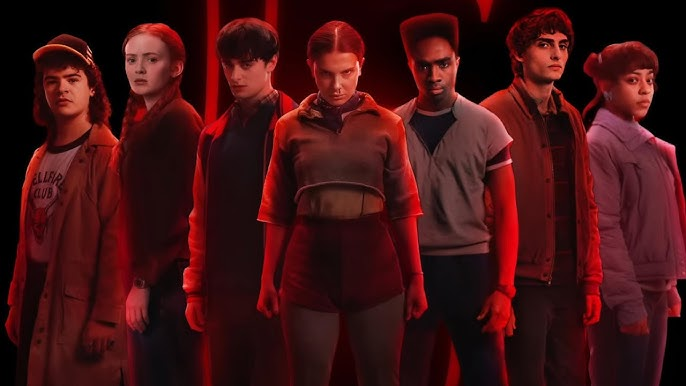
When Netflix first announced the spinoff wouldn’t feature Eleven, Dustin, or the core group, social media reactions ranged from disappointed to outraged. Fan forums filled with questions: “How can it be Stranger Things without them?” and “Will anyone even watch this?”
These concerns are valid—but there’s precedent for success.
Consider Better Call Saul, which featured almost entirely new characters separate from Breaking Bad‘s main storyline. Or The Mandalorian, which launched without a single original trilogy character. Both became critically acclaimed hits precisely because they told fresh stories within established universes.
“The original cast’s story has been told,” notes Dr. Rodriguez. “Eleven’s journey from lab experiment to found family to hero—that’s complete. Trying to extend it artificially would diminish the impact of that arc. New characters give writers freedom to surprise us again.”
Jessica Park, a longtime fan who runs a popular Stranger Things podcast from her home in Austin, has come around to this approach: “At first I was skeptical. But then I thought about what I actually love about the show. It’s not just those specific kids—it’s how the show captures that feeling of being young and scared and brave all at once. It’s the supernatural mystery. The 80s atmosphere. The sense that small-town America is hiding big secrets. You can absolutely do that with new people.”
What the Setting Might Tell Us
The decision to set the spinoff in a different decade opens intriguing possibilities. While the Duffer Brothers haven’t confirmed the exact time period, industry observers have speculated on several options:
The 1960s-70s: This would allow exploration of the Upside Down’s origins or early government experiments, providing historical context for the Hawkins Lab storyline.
The 1990s-2000s: Moving forward in time could show how the supernatural phenomena evolved with technology and changing American culture.
The 1950s: Going further back could explore post-World War II paranoia and early Cold War experiments, thematically rich territory for the show’s government conspiracy elements.
Film historian Dr. James Chen, who’s written about nostalgia in contemporary television, notes: “Each decade offers distinct visual and thematic possibilities. The 1950s gives you conformity and hidden darkness. The 1990s gives you early internet culture meeting ancient supernatural forces. The choice of decade will fundamentally shape the show’s identity.”
The Different Town Strategy
Setting the spinoff outside Hawkins is perhaps the boldest creative decision. It positions the show as less of a direct sequel and more of a parallel story—same universe, different corner.
This approach treats the Stranger Things universe like The Twilight Zone: different stories sharing thematic and supernatural connections rather than narrative continuity.
“It’s actually liberating,” explains Marcus Williams. “New viewers can jump in without homework. They don’t need to remember who died in season three or what happened to the Mind Flayer. It’s accessible while still rewarding longtime fans who understand the deeper mythology.”
For fan communities, this raises exciting questions. Jessica Park’s podcast has dedicated entire episodes to speculation: “What if there are other towns with their own Upside Down portals? What if Hawkins wasn’t the first? What if the government was running experiments everywhere, and we only saw one piece of a much bigger picture?”
What Fans Should Actually Look For
Rather than chasing release date rumors, here’s what will provide legitimate insights as the show develops:
Casting Announcements
The actors chosen will signal the show’s tone, target audience, and overall approach. Pay attention to:
- Age range of lead actors (teens? adults? mixed ensemble?)
- Whether they cast known names or unknowns (unknown actors often signal character-driven storytelling)
- Diversity of the cast (which could indicate different regional or cultural settings)
Writer and Director Information
The creative team matters enormously. If the Duffer Brothers bring in writers who’ve worked on the original series, that suggests tonal consistency. New voices might indicate deliberate evolution.
Official Social Media and Press Releases
Netflix’s official Stranger Things accounts and the Duffer Brothers’ verified social media are the only truly reliable sources. Bookmark these and enable notifications:
- Netflix’s official Stranger Things Twitter/X and Instagram accounts
- The Duffer Brothers’ verified social media
- Netflix’s press site (media.netflix.com)
Production Announcements
When filming begins, location scouts and production crews will be active in whatever town they choose to shoot. Local news from that area often breaks these stories first.
Managing Expectations: What Success Actually Looks Like
Sarah Chen, our Portland teacher, has developed a healthy perspective: “I’m not expecting it to replace the original. Nothing could. But if it gives me that same feeling—where I’m staying up too late because I need to watch one more episode, where I’m texting my friends theories at midnight—then it’s succeeded.”
This is perhaps the wisest approach. The spinoff shouldn’t be measured solely against the original series, but on whether it:
- Tells a compelling story with characters worth caring about
- Captures the atmosphere and tone that made Stranger Things special
- Respects the established mythology while finding its own identity
- Provides genuine scares, laughs, and emotional moments
Dr. Rodriguez emphasizes this point: “Franchise fatigue is real—we’ve seen it with Marvel, Star Wars, and others. But it happens when quantity replaces quality, when every release feels obligatory rather than inspired. The fact that the Duffer Brothers are taking their time, being selective about what stories to tell, and willing to explore new territory rather than retreading the familiar—those are all positive signs.”
The Waiting Game: What to Do Until Then
For fans eager for more Stranger Things content, the live-action spinoff isn’t the only option. The animated series Tales From ’85 is expected in spring 2026, offering a more immediate return to familiar characters.
Meanwhile, Jessica Park recommends embracing the anticipation: “The wait is part of the experience. It gives us time to rewatch the original, to appreciate what we have, to speculate with other fans. Some of my best friendships started in online forums discussing Stranger Things theories. The community that forms around these shows—that’s real and valuable, regardless of what the spinoff ends up being.”
The Bottom Line: Trust the Process
The Stranger Things live-action spinoff represents a leap of faith—both for creators and fans. The Duffer Brothers are asking audiences to trust that they understand what made the original special and can recapture that magic with entirely new elements.
Based on their track record—four seasons of critically acclaimed television, careful attention to character development, and demonstrated understanding of genre storytelling—that trust seems warranted.
But only time will tell. For now, fans can do what they’ve always done: wait, speculate, and hold onto hope that the next journey into the strange and supernatural will be worth taking.
As Sarah puts it: “Stranger Things taught me that sometimes the scariest thing is the unknown. But it also taught me that facing the unknown with the right people—or in this case, the right creators—makes all the difference.”
Have thoughts on the Stranger Things spinoff? What would you want to see in a new series? Share your hopes and concerns with It’s Netflix Nerd.