

Character: William “Will” Byers
Portrayed by: Noah Schnapp
Seasons: 1-5 (Main Cast)
First Appearance: Season 1, Episode 1 (“The Vanishing of Will Byers”) – though mostly absent
Key Traits: Resilience, Artistic Sensitivity, Emotional Depth, Psychic Connection, Quiet Strength
Role in Party: The Artist, The Cleric, Upside Down Survivor, Emotional Core
Signature: Castle Byers, “Now Memories,” his connection to the Upside Down, choosing himself
Will Byers spent four seasons being the victim.
Let me be blunt about that. After covering Stranger Things since 2016, watching Noah Schnapp bring this character to life with devastating vulnerability and hard-won strength, I need to address the elephant in the room: Will got the worst deal of anyone in Hawkins.
Season 1: Kidnapped by the demogorgon, trapped in the Upside Down for a week, traumatized beyond measure.
Season 2: Possessed by the Mind Flayer, his body used as weapon against everyone he loves.
Season 3: Ignored by his friends, his trauma dismissed, his needs sidelined.
Season 4: Pining, supporting, sacrificing his own happiness for Mike and Eleven’s relationship.
Will Byers was the boy things happened to instead of the boy who made things happen. The catalyst whose suffering drove plots forward. The sensitive kid whose pain everyone acknowledged but nobody quite knew how to help.
But Season 5? Season 5 finally gave Will agency. Power. Choice.
Let me break down why Will’s journey from the missing boy on the poster to the artist who weaponized his trauma and chose his own future is one of Stranger Things’ most painful, necessary, and ultimately triumphant character arcs.
The Boy Who Disappeared (Season 1)
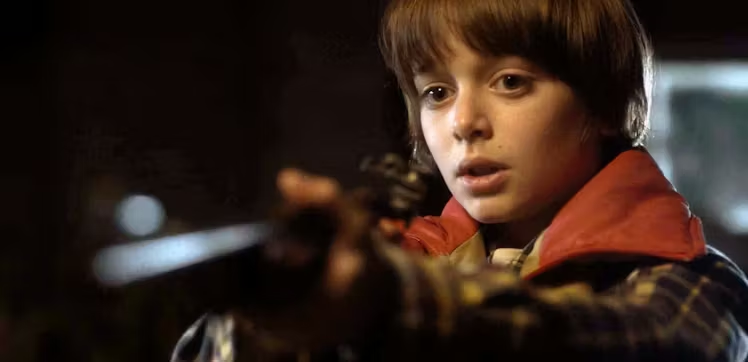
Will Byers starts the series by vanishing. That’s his introduction: absence.
November 6, 1983
Will’s bike is found on the road. He’s gone. The entire town searches for a boy we barely know except through other people’s grief.
That’s genius narrative structure—making us care about Will through how much everyone else cares about him. Joyce’s desperate breakdown. Jonathan’s guilt-driven investigation. Mike, Dustin, and Lucas refusing to believe he’s dead.
Will’s characterized by the hole he leaves. By what his absence does to people who love him.
The Upside Down Week
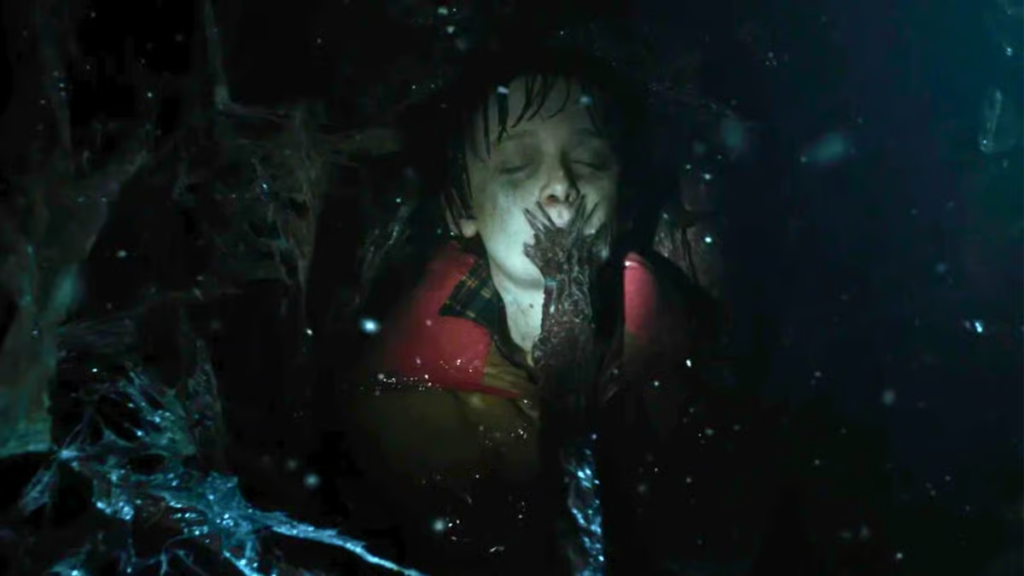
When we finally see Will in the Upside Down, he’s alone. Terrified. Hiding in Castle Byers—the fort he built with Jonathan, now his only shelter in a nightmare dimension.
He’s singing “Should I Stay or Should I Go” to himself. The song Jonathan taught him. The song that represents their brotherhood and Will’s desperate need for connection even while isolated.
Watch Noah Schnapp’s limited Season 1 scenes. Will’s not action hero. He’s scared kid doing everything he can to survive hour by hour. Hiding from monsters. Using Christmas lights to communicate with Joyce. Clinging to hope that someone will find him.
That’s Will’s core trait from the beginning: survival through hope and love, not through power.
The Rescue
When they pull Will out of the Upside Down, he’s nearly dead. Covered in the tendrils that were consuming him. He survives, but he’s changed.
You can’t spend a week in hell and come back unchanged. Will’s rescue isn’t happy ending—it’s beginning of different nightmare.
The Possession (Season 2)
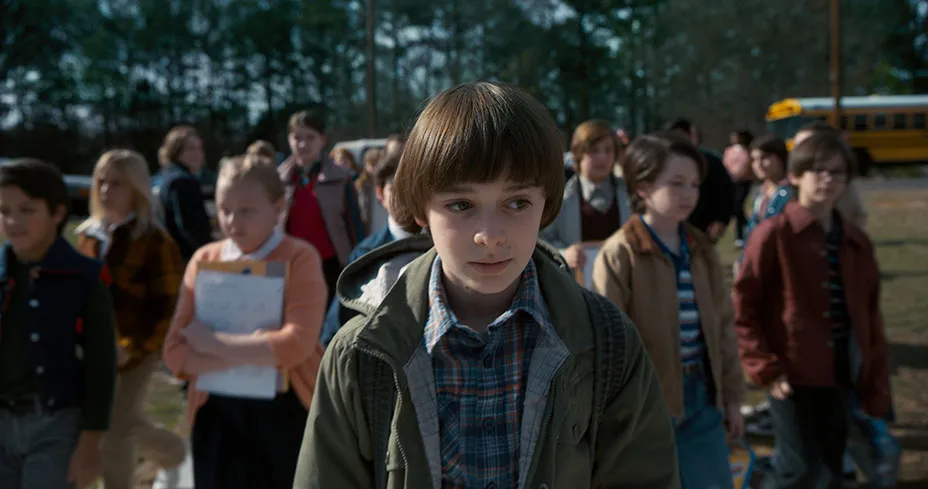
Season 2 is where Will’s trauma becomes everyone else’s problem. And I mean that sympathetically—his PTSD and possession endanger everyone he loves.
“Now Memories”
Will’s experiencing flashbacks to the Upside Down. Except they’re not flashbacks—they’re “now memories.” The Upside Down is bleeding into his present reality.
He sees the Mind Flayer. This massive, incomprehensible entity that makes the demogorgon look like a pet. And it sees him back.
The therapy sessions with Dr. Owens show Will trying desperately to convince adults something’s wrong. But how do you explain that another dimension is invading your consciousness? That you feel a monster lurking at the edge of your mind?
Noah Schnapp’s performance here is heartbreaking. Will knows he’s not okay. Knows something terrible is coming. But nobody fully believes him until it’s too late.
The Mind Flayer Takes Control
The possession scenes are genuinely disturbing. Will’s body becomes vessel for interdimensional entity. He’s conscious sometimes—trapped inside his own mind watching the Mind Flayer use him as spy.
The scene where Joyce and Jonathan try to burn the Mind Flayer out of Will by overheating the shed? That’s torture. Necessary torture to save him, but torture nonetheless.
Will screaming, begging them to stop while simultaneously begging them to continue because he knows the Mind Flayer needs to be expelled—that’s acting and writing that refuses to make trauma simple or clean.
“He Likes It Cold”
Will’s the one who figures out the Mind Flayer’s weakness. Even while possessed, even while being used as weapon, Will’s observing. Gathering intelligence. Helping however he can.
His ability to spy on the Mind Flayer while it spies through him gives the party crucial tactical advantage. Will’s not powerful like Eleven. But he’s perceptive. Resilient. Refusing to give up even when giving up would be so much easier.
The Exorcism
Burning the Mind Flayer out of Will is the season’s emotional climax. Joyce, Jonathan, and Mike surrounding him with heat and love and memories of who he really is.
The Mind Flayer leaves. Will collapses, finally free.
But freedom comes with cost. Will’s been violated in ways he can’t articulate. His body used against his will. His mind invaded. That trauma doesn’t vanish just because the monster left.
Being Ignored and Outgrowing Childhood (Season 3)
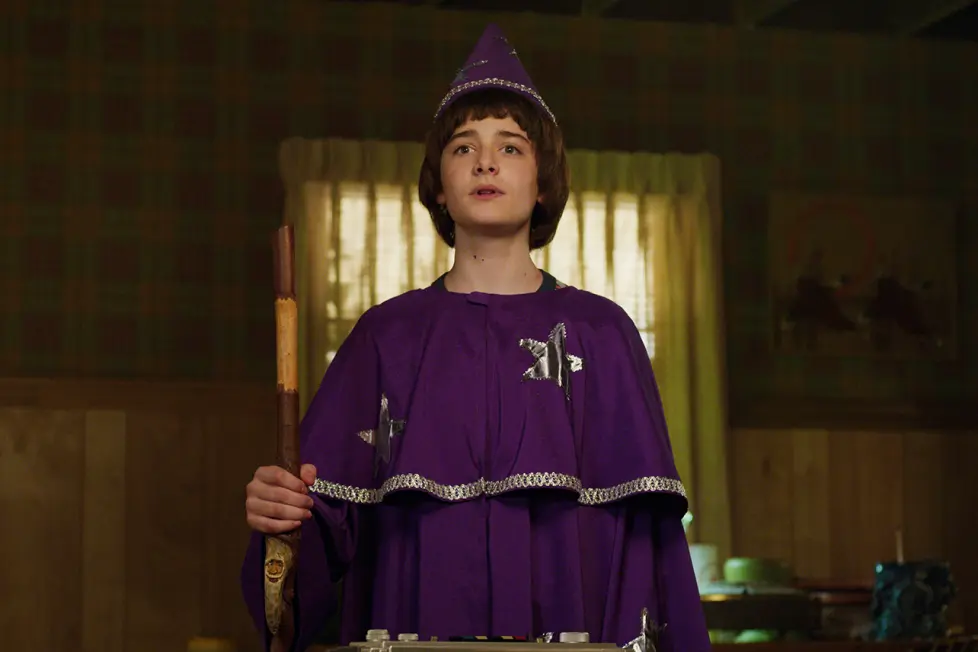
Season 3 is where the show—and Will’s friends—fail him most obviously.
“It’s Not My Fault You Don’t Like Girls!”
The rain fight with Mike and Lucas is devastating because Will’s right. They’re growing up. Discovering romantic interests. And Will’s being left behind.
Not because he’s immature. Because he’s traumatized. Because after being kidnapped and possessed, the idea of “growing up” and abandoning the safe world of D&D and friendship feels like betrayal.
Mike’s cruel dismissal—”It’s not my fault you don’t like girls!”—cuts deep because it’s misunderstanding Will’s actual pain. Will’s not mad about girlfriends. He’s terrified of losing the one safe space he has: the party’s friendship.
Castle Byers Destroyed
Will destroying Castle Byers in the rain is one of the series’ most powerful visual metaphors.
He’s destroying his childhood refuge. The fort that symbolized safety and imagination and brotherhood. He’s tearing it apart with his own hands because holding onto it hurts more than letting it go.
Noah Schnapp plays this scene with such raw pain. Will’s not just destroying a fort—he’s mourning the childhood he lost to the Upside Down. The innocence stolen. The years he can’t get back.
Sensing the Mind Flayer’s Return
When the Mind Flayer returns through the possessed rats and Billy, Will’s the first to sense it. The back-of-neck crawling sensation. The certainty something’s wrong.
And nobody believes him initially. Mike’s distracted by Eleven. The adults are focused on other threats. Will’s relegated to “the boy who cried wolf” despite being right every single time.
That dismissal—being the only one who sees danger coming and having everyone ignore you—is its own kind of trauma.
The Sauna Test
Will helps identify Billy as the Mind Flayer’s host. His connection to the Upside Down, the thing that’s tortured him for two years, finally becomes useful tactical advantage.
But it’s also reminder: Will can’t fully escape. His link to that dimension persists. He’s marked permanently by what happened to him.
Unrequited Love and Self-Sacrifice (Season 4)
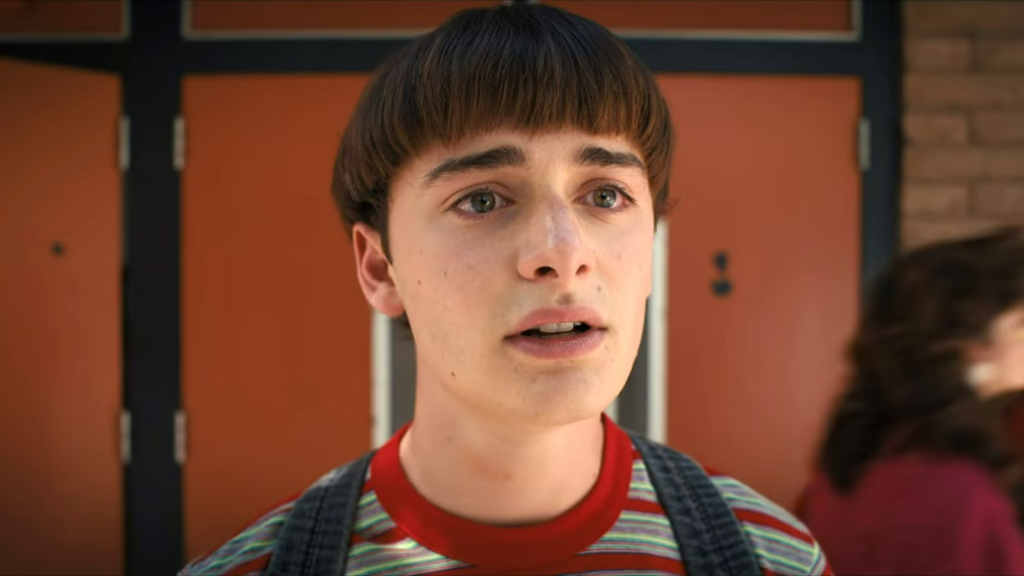
Season 4 is where the show finally addresses what’s been subtext since Season 1: Will’s sexuality and his feelings for Mike.
The California Awkwardness
Will’s awkward around Mike in California. There’s tension. Unspoken feelings. The careful way Will watches Mike when Mike’s not looking.
Noah Schnapp’s performance here is masterclass in showing love you can’t express. The micro-expressions. The body language. The way Will lights up when Mike pays attention to him and dims when Mike focuses on Eleven.
The Painting
Will’s been painting something for Mike. Something important. Something he won’t show yet.
That painting becomes the season’s most loaded object. What Will can’t say in words, he’s trying to express through art.
The Van Confession
The van scene where Will talks to Mike about Eleven is gutting because we know—and Will knows—he’s talking about himself.
“When you’re different, sometimes you feel like a mistake. But you make her feel like she’s not a mistake at all. Like she’s better for being different.”
Will’s describing his own feelings. His own need to feel accepted. His own love for Mike that he can’t speak directly.
He gives Mike the painting—a representation of Mike as the heart of the party, the leader, the paladin—and attributes it to Eleven’s commission. He lies so Mike will accept this expression of love without knowing it comes from Will.
That’s heartbreaking selflessness. Will sacrificing his own emotional honesty to support Mike and Eleven’s relationship because making Mike happy matters more than Will’s own happiness.
Mike’s Monologue to Eleven
When Mike finally tells Eleven he loves her (using Will’s painting and words as catalyst), Will’s crying in the front seat.
He’s crying because Mike’s happy. Because Eleven’s saved. Because his words helped.
But he’s also crying because the boy he loves just declared love for someone else using sentiments Will provided. Will literally gave Mike the language to love Eleven.
Noah Schnapp doesn’t make this melodramatic. The tears are quiet. Private. Will’s grief is his own.
Coming Out (Sort Of)
Noah Schnapp confirmed in interviews what was textually obvious: Will is gay and in love with Mike.
The show never has Will explicitly come out in Season 4. That’s both frustration and realistic—it’s 1986 Indiana. Coming out isn’t safe. Will’s already the kid who was kidnapped and possessed. Adding “gay” to that list risks further isolation.
But the subtext is text. Will’s coded as queer from Season 1 (Lonnie calling him slurs, Joyce defending him, the general “different” framing). Season 4 makes it explicit without requiring Will to speak words that could endanger him.
Weaponizing Trauma and Choosing Life (Season 5)

Season 5 finally—finally—gives Will active role instead of passive suffering.
The Psychic Connection Becomes Weapon
Will’s lingering connection to the Upside Down, the curse that’s haunted him since age 12, becomes tactical advantage.
He uses it to track Vecna. To block the Mind Flayer’s escapes. To provide intelligence the party desperately needs.
Will weaponizes his trauma. Takes the thing that victimized him and turns it into tool for protecting others.
That’s not just character growth. That’s Will reclaiming agency over his own narrative.
Fighting Alongside Eleven
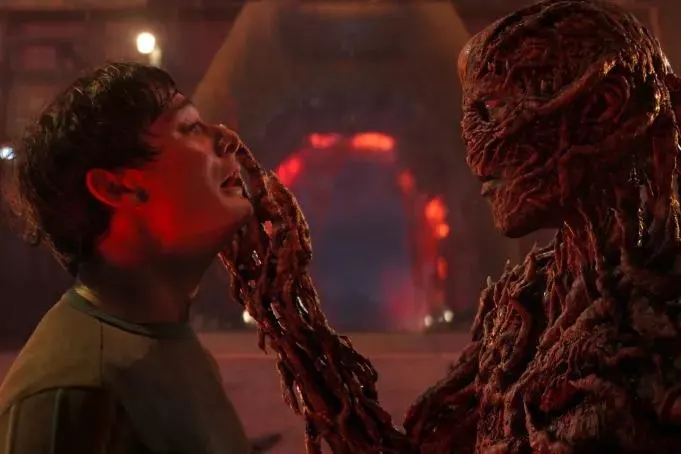
The final psychic battle has Will supporting Eleven against Vecna. Not as sidekick or victim, but as genuine partner.
His powers aren’t flashy. He can’t throw people with his mind or open gates. But he can feel the Upside Down. Navigate it. Understand it in ways even Eleven can’t.
That understanding—born from suffering—makes him essential to victory.
The Graduation and NYC Future
Season 5’s epilogue shows Will graduated and moved to New York City’s West Village for art school.
Let me emphasize: West Village. Historically queer neighborhood. Arts-focused. Progressive. About as far from Hawkins, Indiana conservatism as you can get while staying in America.
Will chose himself. Chose art. Chose community where he can be openly gay. Chose life beyond trauma and unrequited love and small-town judgment.
The Relationship Resolution
The show doesn’t give Will romantic happy ending in Season 5. No boyfriend revealed. No dramatic love confession reciprocated.
And honestly? That’s okay.
Will’s arc isn’t about getting the guy. It’s about choosing himself after years of being chosen by trauma.
He loved Mike. Mike loves Eleven. Will accepted that and moved forward instead of staying stuck in painful longing.
That’s maturity. That’s growth. That’s Will finally prioritizing his own happiness over everyone else’s needs.
The Art That Saved Him
Will’s always been the artist. The sensitive one. The kid who drew and painted and saw the world differently.
In Hawkins, that sensitivity made him target. Made him victim. Made him “different” in ways that invited cruelty.
In New York, that sensitivity becomes his strength. His career. His identity outside “the boy who was taken.”
Will’s ending says: the things that make you different, that make you target in hostile environments, can become your greatest assets in accepting spaces.
Will’s Relationships: The Bonds That Shaped Him
Will and Joyce: The Mother Who Never Stopped Fighting
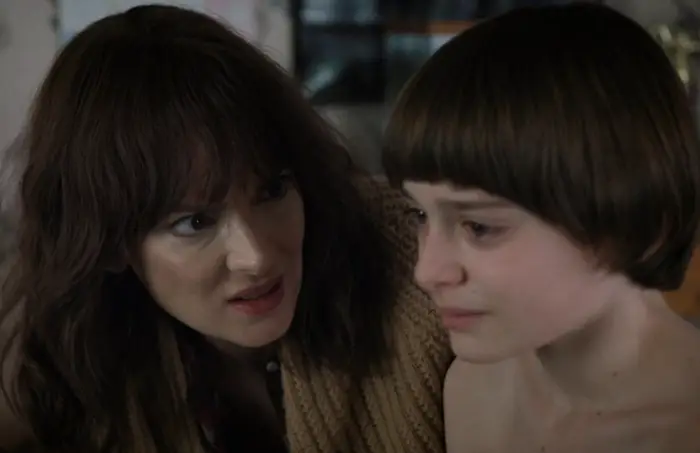
Joyce moved dimensions for Will. Literally. Her refusal to believe he was dead in Season 1 saved his life.
Their relationship is built on unshakeable maternal love. Joyce knows Will. Knows when he’s struggling. Knows he’s different and loves him fiercely for it.
Joyce defending Will against Lonnie’s homophobia (implied more than explicit) established her as safe parent. Will could come out to Joyce and be accepted completely.
That secure attachment gave Will foundation to survive everything else.
Will and Jonathan: The Brother Who Raised Him
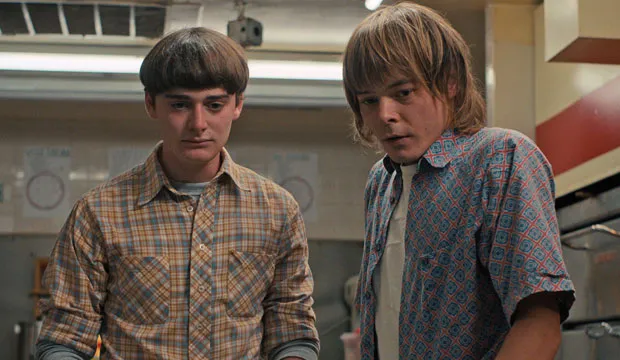
Jonathan’s more parent than brother to Will. He taught him music. Built Castle Byers with him. Protected him from Lonnie’s abuse.
Their relationship is complicated by parentification—Jonathan had to be adult when he should’ve been kid. But the love is real.
Jonathan moving to NYC (NYU) while Will’s also there suggests they maintain closeness. The Byers brothers supporting each other in new city, both pursuing art (Jonathan’s film, Will’s painting), both escaping Hawkins’ limitations.
Will and Mike: The Unrequited Love
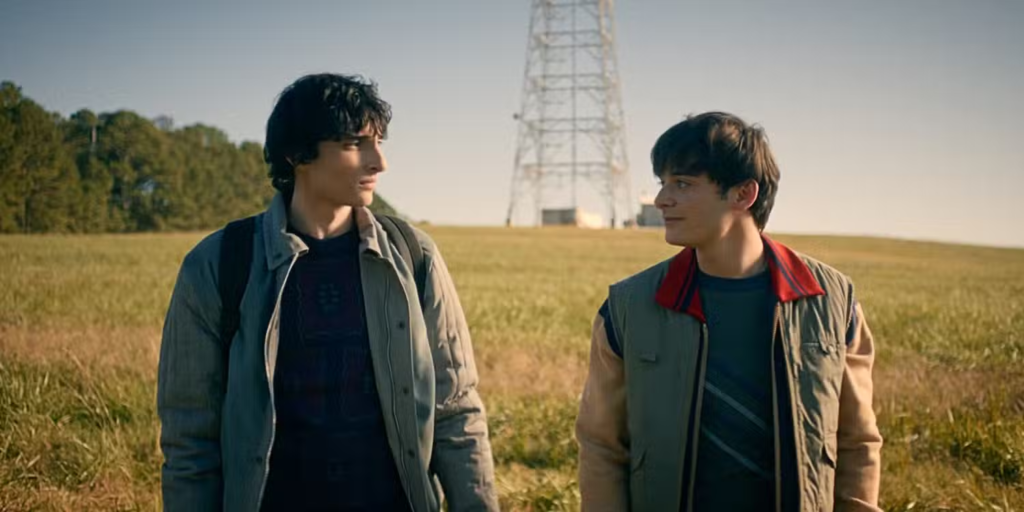
Mike’s Will’s first love. The friend who organized search parties. Who insisted Will was alive. Who believed in him when others gave up.
Will’s feelings evolved from friendship to romantic love somewhere between getting rescued and getting possessed. By Season 3, Will’s desperation to keep Mike close had romantic undertones. By Season 4, it was textual.
Mike doesn’t reciprocate. Not because he’s homophobic—Mike would accept Will completely. Just because Mike loves Eleven romantically and Will platonically.
That hurts. But it’s not tragic. Will’s allowed to love someone who doesn’t love him back and still have a full, meaningful life.
Will and Eleven: The Sibling Bond
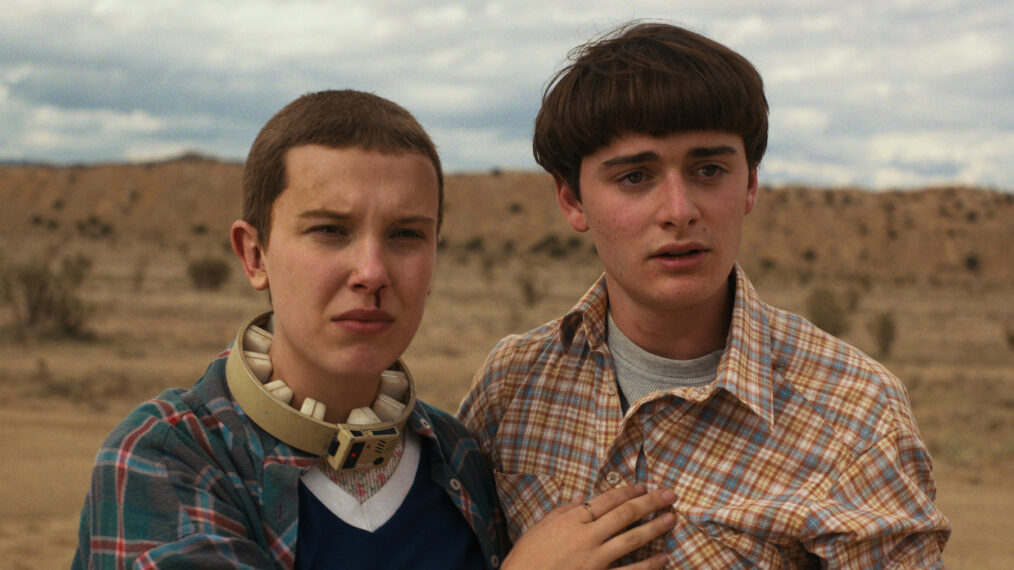
Will and El’s relationship is underexplored but important. They’re both Upside Down survivors. Both marked by experiences others can’t fully understand.
El’s the powerful one. The chosen one. The girl who saves everyone.
Will’s the sensitive one. The connected one. The boy who survives through resilience rather than power.
They complement each other. El’s might. Will’s insight. Together, they defeat Vecna not through individual strength but through partnership.
Will and the Party: Belonging Hard-Won
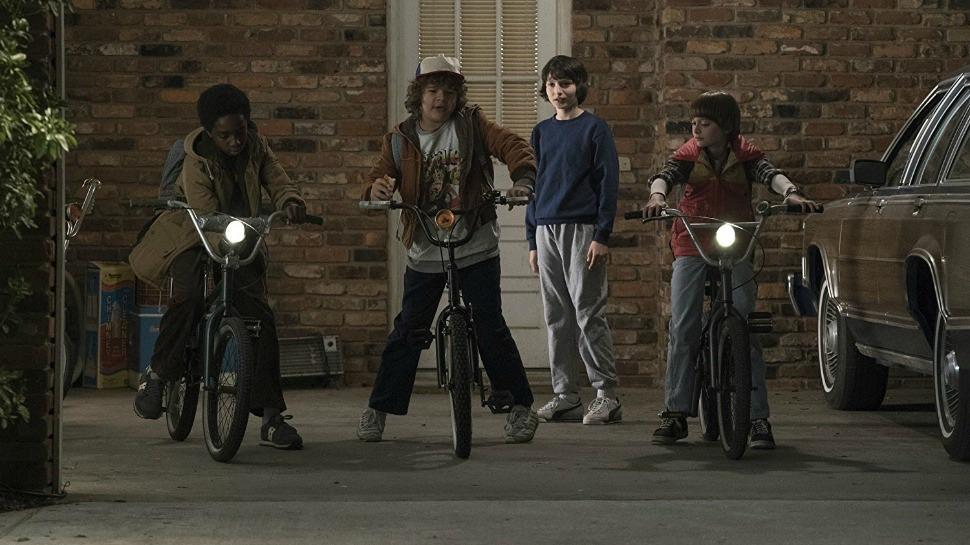
Will’s position in the party is complicated. He’s original member. But he’s also the one always dealing with Upside Down trauma while others move on.
Season 3 showed him being left behind. Season 4 showed him supporting from sidelines. Season 5 finally showed him as active participant.
By the epilogue, Will’s maintained those friendships while also building life outside them. He’s not dependent on the party for identity anymore. He’s Will Byers—artist, survivor, queer man choosing his own path—who also happens to be in the party.
That’s healthy differentiation.
Noah Schnapp’s Performance: Vulnerability as Strength
Let’s talk about what Noah Schnapp accomplished playing Will Byers.
Starting at 11 Years Old
Schnapp was eleven when he auditioned for Stranger Things. He had minimal screen time in Season 1 but had to convey terror, isolation, and hope through those brief Upside Down sequences.
That’s difficult acting for trained adult. For an eleven-year-old? Remarkable.
The Possession Scenes
Season 2 required Schnapp to play three versions of Will: normal Will, possessed Will, and Will fighting the possession from inside his own mind.
The shifts between these states—sometimes within single scene—demanded technical skill and emotional depth. Schnapp delivered.
The exorcism sequence where Will’s begging them to stop while also begging them to continue? That’s acting that makes you forget you’re watching a performance.
The Quiet Suffering
Schnapp’s greatest work is the quiet moments. Will watching his friends grow apart from him. Will crying silently while Mike confesses love to Eleven. Will destroying Castle Byers.
He doesn’t make Will’s pain performative. It’s internalized. Private. Real.
That restraint makes the rare moments when Will breaks hit harder.
The Queer Coding and Text
Schnapp had to navigate playing queer-coded character before the show made it explicit text. The longing looks at Mike. The discomfort with heteronormative expectations. The sense of being different.
Then in Season 4, playing those feelings explicitly—the van confession, the painting, the tears—required vulnerability and honesty.
Schnapp (who came out as gay in 2023) brought lived experience to Will’s struggle. The fear of rejection. The sacrificing your own feelings to maintain connection. The hope that maybe, someday, you can be yourself openly.
Physical Transformation
Like all the young cast, Schnapp grew up on screen. Voice changed. Got taller. Went from child to adult.
But Will’s trauma meant he often seemed younger than his actual age—clinging to childhood when others were ready to move on. Schnapp played that arrested development without making Will pathetic. Just hurt.
Why Will Byers Matters
Will represents experiences that need representation:
Trauma Survivors Who Don’t “Get Over It”
Will’s trauma doesn’t resolve cleanly. Season 2’s possession affects him in Seasons 3, 4, and 5. The Upside Down marked him permanently.
That’s realistic. Trauma isn’t defeated once and forgotten. It’s processed, managed, integrated—but it doesn’t disappear.
Will’s ongoing struggle validates survivors who are tired of being told to “move on.”
Queer Kids in Hostile Environments
Will couldn’t come out safely in Hawkins. Small-town Indiana in the 1980s wasn’t accepting space for gay teenagers.
His coded queerness in early seasons and textual queerness in later ones shows: sometimes staying closeted is survival strategy, not cowardice.
Will moving to West Village represents what many queer people do—leave hostile hometowns for accepting communities where they can finally breathe.
Unrequited Love Doesn’t Destroy You
Will loved Mike. Mike didn’t love him back. Will survived and built meaningful life anyway.
That’s important message: romantic rejection isn’t end of your story. You can love someone who doesn’t reciprocate and still have full, joyful life.
Sensitivity as Strength
Will’s sensitivity made him target. But it also made him artist. Gave him empathy. Allowed him to connect with others’ pain and offer comfort.
The traits that made him vulnerable in Hawkins became assets in accepting environment.
That’s hope for every sensitive kid told to “toughen up.” Your sensitivity isn’t weakness. It’s different kind of strength.
The Art That Saves
Will’s art was his refuge. His way of processing trauma. His method of communication when words failed.
It became his career. His purpose. His way forward.
That validates art as legitimate path—not indulgence or hobby, but essential human expression that can build meaningful life.
My Take After Nine Years
I’ve watched Will Byers be kidnapped, possessed, ignored, heartbroken, and sidelined for nine years. Watched him suffer more than almost any character. Watched the show sometimes forget he existed beyond “trauma victim” or “Mike’s friend with unrequited feelings.”
And here’s what I keep coming back to:
Will’s journey is about reclaiming agency after years of things happening to you.
He didn’t choose to be taken. Didn’t choose possession. Didn’t choose his sexuality (not how that works). Didn’t choose unrequited love.
But he chose New York. Chose art school. Chose community that accepts him. Chose himself.
After five seasons of being the victim, Will Byers became the person who decides his own story.
That’s not flashy heroism. That’s the quiet courage of trauma survivors who refuse to let their worst experiences define their entire lives.
Will’s ending—painting in West Village, free from Hawkins’ judgment, building life on his own terms—is the happy ending he earned through surviving every terrible thing the show put him through.
He’s not the boy on the missing poster anymore. He’s not the possession victim. He’s not the kid whose friends outgrew him. He’s not the boy hopelessly in love with his straight best friend.
He’s Will Byers. Artist. Survivor. Queer man choosing himself.
And after nine years of suffering, that’s everything.
Will Byers: Complete Journey Explained
From the missing boy poster to the artist painting his own future in NYC—Will’s nine-year arc proves that surviving trauma, accepting unrequited love, and choosing yourself is the bravest journey of all.
The Actor Who Brought Will to Life
About It’s Netflix Nerd
This deep character analysis was brought to you by It’s Netflix Nerd, where I’ve been obsessing over Stranger Things since Will first went missing. I break down every character arc, analyze every thematic choice, and help you understand why these stories matter beyond the monsters and special effects.
Want more Stranger Things character breakdowns? Check out It’s Netflix Nerd for complete analyses built on years of actually caring about these characters’ journeys.